








They Said It Couldn’t Be Done. They Were Wrong.
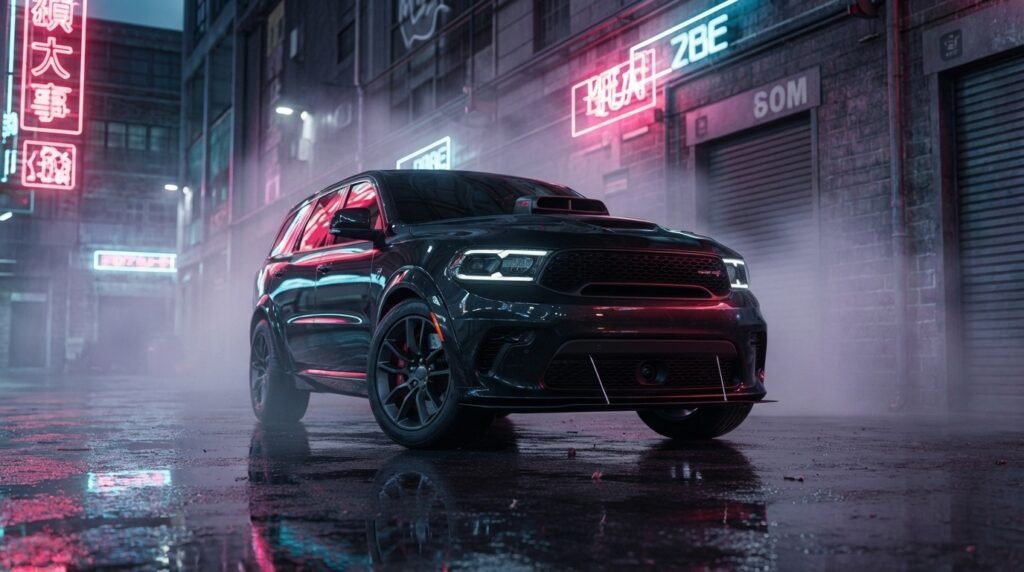
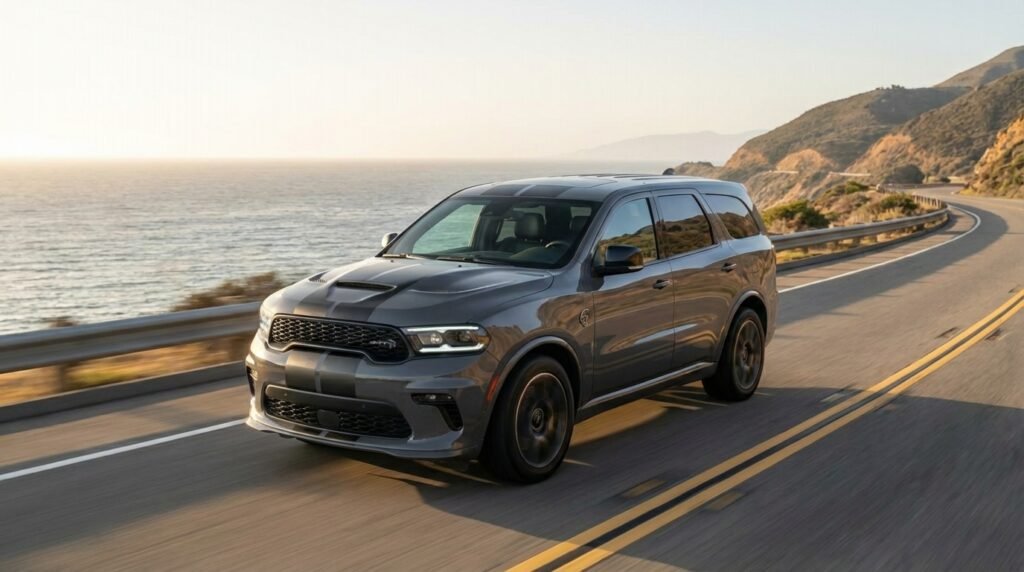
Let’s cut the corporate fluff: the Dodge Durango Hellcat is finally legal to sell in every state. For years the Dodge Durango Hellcat was forbidden in California and in the other CARB-adopting states, so buyers in large markets simply could not purchase one. However, engineers at Dodge went back to the drawing board and delivered a 710-horsepower, supercharged version that meets emissions rules without sacrificing performance. As a result, the supercharged beast is now officially 50-state legal, and that is not a rumor. Consequently, fans across the country can expect tire-shredding family trips from coast to coast. Moreover, this change removes a long-standing geographic split between enthusiasts who could enjoy the Durango’s whine and those who were left watching from the sidelines. Therefore, what was once an impossible dream for many buyers is now real, opening a huge market and restoring the V8’s place in the three-row SUV world.
The Emissions Wall: Why Was the Dodge Durango Hellcat Banned?
So what caused the holdup? In short, emissions rules. The California Air Resources Board sets the nation’s toughest air quality standards, and many states follow suit. For example, CARB’s evaporative emissions, or EVAP, rules aim to stop fuel vapors from escaping tanks, lines, and connectors. Therefore, every small leak matters and manufacturers must seal or capture hydrocarbons tightly. Unfortunately, the Durango’s 6.2-liter supercharged HEMI V8 made that task unusually difficult. Engineers had to prevent vapor permeation around high-flow components and during complex driving cycles. As a result, Dodge could not legally offer the Hellcat in roughly a third of U.S. states, leaving buyers in major markets unable to purchase the SUV. Meanwhile, eager owners elsewhere enjoyed the supercharger’s signature whine. In contrast, the regulatory barrier turned a global product into a regional one until engineers engineered a solution.
The Engineering Fix: How Did Dodge Tame the Beast?
This is the million-dollar question, and Dodge has kept details close to the vest. Still, multiple insiders and technical observers point to a focused engineering push rather than a simple bolt-on fix. In short, the team did not detune the 710-horsepower V8; instead, they attacked emissions at the source by reworking fuel containment, vapor capture, and aftertreatment systems. Consequently, engineers likely redesigned routing, materials, and hardware to cut permeation and leaks under pressure. Moreover, software changes probably complemented hardware, coordinating purge cycles and venting to minimize evaporative losses. Therefore, the objective was clear: trap every last hydrocarbon while keeping performance intact. Ultimately, that approach preserved the Durango’s raw power yet brought it into compliance. Meanwhile, the quieter public narrative focused on the result rather than technical minutiae, which explains why Dodge has been cautious about disclosing specifics.
Related Post




A Beefed-Up Fuel System
To satisfy EVAP standards engineers almost certainly strengthened the fuel delivery and containment architecture. For example, they could have switched to lower-permeability fuel lines and fittings. Additionally, they may have used improved seals and connections at tank and rail interfaces to cut microscopic leaks. A more robust carbon canister likely plays a central role, because the canister stores and later burns captured vapors. Therefore, increasing canister capacity or efficiency would make sense for a high-displacement V8. In addition, engineers probably adjusted venting and purge controls so the system handles heavy-duty drive cycles without releasing vapors. The goal remained simple: stop hydrocarbons from escaping while maintaining fuel flow and pressure for full power. Consequently, these targeted upgrades would allow the hellacious V8 to meet strict evaporative rules without reducing torque or horsepower.
Recalibrated Engine Tuning
Modern engines depend heavily on software, so tuning almost certainly formed a big part of the fix. For instance, engineers likely revised fuel maps and ignition timing to stabilize combustion during cold starts, when emissions spike. In addition, they probably refined idle and transient management to reduce unburned fuel events. Consequently, coordinated control of purge valves, canister venting, and exhaust temperature becomes vital. Moreover, software can balance performance demands with emissions limits by altering throttle response and torque delivery under specific conditions. Therefore, Dodge’s calibration work would focus on keeping the HEMI’s power delivery crisp while ensuring regulatory cycles show compliant pollutant levels. As a result, the vehicle can still deliver neck-snapping acceleration yet pass stringent certification tests. Overall, these software strategies let engineers preserve horsepower without relying solely on hardware changes.
Exhaust and Catalyst Improvements
Exhaust after treatment likely received upgrades as part of the compliance package. Modern catalytic converters do more than scrub gases; they manage heat, flow, and conversion efficiency. Therefore, engineers may have used advanced catalyst substrates or optimized substrate volumes to improve surface reaction without overly restricting flow. In addition, placement and insulation can raise operating temperatures faster to reduce cold-start emissions. Consequently, a higher-flow yet more efficient converter allows the 6.2-liter supercharged engine to breathe while still cutting NOx and hydrocarbons. Moreover, coordinated changes to the exhaust routing and sensors would help the engine computer monitor and react in real time. As a result, Dodge can preserve the Durango’s 710-horsepower output and signature sound while meeting stricter tailpipe standards. Ultimately, this balance of flow and chemistry is central to keeping performance high and emissions low.
By the Numbers: A Refresher on Pure Domination
Let’s not forget what this SUV represents: unfiltered, straight-line dominance. Importantly, making the Durango 50-state legal did not neuter its character or its output. In fact, Dodge kept the core HEMI intact and preserved the 710-horsepower rating that defines the model. Consequently, the Durango Hellcat remains the most powerful gas-powered SUV in production. Moreover, enthusiasts should note that engineers balanced emissions controls with performance, so the vehicle still delivers the visceral supercharger sound and instant acceleration people expect. Therefore, this legal clearance matters beyond paperwork; it ensures customers nationwide can choose a high-capacity, three-row SUV without sacrificing raw muscle. Overall, the Durango’s combination of brute force and everyday utility sets it apart in a crowded market, and it continues to stand as a statement about what a gas-powered SUV can be.
Engine and Raw Power
Under the hood the headline figures remain unchanged: a 6.2-liter supercharged HEMI V8 delivering 710 horsepower and 645 lb-ft of torque. Consequently, the Durango produces neck-snapping acceleration that few SUVs can match. Moreover, engineers focused on maintaining power delivery across rev ranges, so drivers feel instant throttle response whether merging or launching. In addition, the transmission and drivetrain systems work to harness that torque and distribute it to all four wheels when needed. Therefore, the combination of massive torque and robust gearing gives the SUV real-world performance for towing and spirited driving alike. Importantly, Dodge did this without sacrificing reliability claims, and the powertrain retains its muscle-car heritage. Overall, these strengths explain why owners prize the Hellcat as both a daily driver and a weekend performer. Additionally, modern traction and stability systems help manage that output on road and track.
Mind-Bending Performance
Performance numbers place the Durango Hellcat in supercar territory, not in typical SUV benchmarks. For example, Dodge claims a 0–60 mph time around 3.5 seconds, and the NHRA-certified quarter-mile runs near 11.5 seconds. Moreover, the SUV reaches a top speed of roughly 180 mph, which is extraordinary for a three-row vehicle. Therefore, drivers who value straight-line speed get a rare blend of practicality and raw acceleration. In addition, the chassis and brakes receive upgrades to handle the power, so the vehicle can safely exploit its pace on road or track. Consequently, these performance credentials let the Durango embarrass many sports cars while still carrying family and cargo. Overall, the numbers back up the hype: this is no ordinary large SUV, but rather a full-blown performance machine with real-world credentials. Moreover, the three-row layout makes that performance usable for true families.
More Than Just a Motor
However, the Durango Hellcat is more than just its engine. It pairs brute force with surprising practicality and capability. For instance, the SUV features an all-wheel-drive system that helps deliver grip in poor weather and during hard launches. In addition, it offers a towing capacity rated at 8,700 pounds, so owners can haul boats, toy haulers, or even a race car. Moreover, the interior provides three rows of seating and modern infotainment and safety tech expected at this price point. Therefore, buyers get a vehicle that serves daily family needs and weekend thrills alike. Consequently, the Hellcat competes not only on speed but also on utility, which is why it appeals to enthusiasts who refuse to choose between performance and usefulness. Overall, this combination makes the Durango a uniquely versatile high-performance SUV.
The Competition: Who Dares Step in the Ring?
Frankly, there is no true apples-to-apples rival to the Durango SRT Hellcat in terms of straight-line power, three-row seating, and price. For example, several European luxury SUVs chase similar performance, but they trade the Hellcat’s blue-collar character for refined luxury. Moreover, those contenders typically carry much higher price tags, especially after options. Therefore, the Durango sits in a unique market niche that few manufacturers seem willing to fill. In addition, domestic rivals have pushed performance, yet they often prioritize luxury over raw, supercharged force. Consequently, buyers seeking brutal power and everyday practicality still find the Durango hard to beat. Ultimately, that scarcity of direct competition helps explain why Dodge doubled down on keeping the V8 alive in the three-row segment. Additionally, where European rivals aim for six-figure totals, the Durango arrives at a more attainable starting point for many buyers.
The German Contingent
German rivals such as the BMW Alpina XB7 (631 hp) and the Mercedes-AMG GLS 63 (603 hp) deliver impressive performance and high-end craftsmanship. For instance, they offer sophisticated chassis tuning, luxurious interiors, and a refined driving experience. However, these SUVs aim for a different customer: one who prioritizes comfort and finish over raw, supercharged aggression. Moreover, they often command six-figure price tags once options get added, which tends to push them well beyond the Durango’s market position. Therefore, although technically fast, they lack the Durango’s visceral character and accessible fury. In addition, maintenance and ownership costs for high-end European luxury SUVs can differ from those of American muscle models. Consequently, buyers seeking a throatier, supercharger-driven experience at a comparatively lower entry point will likely remain loyal to Dodge’s offering. Overall, the German approach emphasizes polish over the in-your-face muscle that defines the Hellcat.
An American Rival
The closest domestic alternative is the Cadillac Escalade-V, which uses a supercharged V8 to produce about 682 horsepower. However, Cadillac packages that power with an emphasis on luxury appointments, premium materials, and a tech-laden cabin. Therefore, the Escalade-V trades some of the Hellcat’s rawness for a more opulent driving environment. Moreover, it typically carries a higher starting price, putting it in a different value category for many buyers. In addition, Cadillac aims to blend refinement with speed, so the Escalade-V targets customers who want both cresting performance and a plush ride. Consequently, while the Escalade-V challenges the Durango on straight-line pace, it does so from a luxury-first perspective. Ultimately, that distinction helps keep the Durango Hellcat unique as a relatively attainable, hard-charging three-row SUV for buyers who value unapologetic performance. In short, each pick serves a distinct buyer profile, and price often decides the winner.
Ultimately, the Durango SRT Hellcat occupies a singular position in the market, blending muscle-car DNA with three-row practicality. For many buyers that combination is irresistible. Moreover, Dodge’s decision to keep horsepower high while solving emissions issues preserved its appeal to traditional gearheads. Therefore, the Hellcat appeals to people who need family seating and towing capacity yet refuse to compromise on straight-line performance. In addition, the vehicle’s relative affordability compared with European rivals means enthusiasts can enjoy supercar-level numbers without entering the ultra-luxury price tier. Consequently, this mix of capability, power, and value creates a product few competitors can match. Overall, the Durango stands as both a statement of what an American performance SUV can be and a practical tool for owners who demand speed and utility in one package. In short, it fills a gap that few other automakers even try to serve.
The Bottom Line: A Victory for the V8
The Durango Hellcat’s 50-state approval matters beyond one model launch. In an industry leaning hard toward downsizing and electrification, Dodge chose to preserve an unabashed V8 experience, and that decision required serious engineering. Essentially, the company faced a tough regulatory challenge and met it by reworking containment, aftertreatment, and calibrations rather than by killing power. Consequently, the outcome represents a win for drivers who value traditional internal combustion thrills. Moreover, it signals that manufacturers can still find pathways to reconcile high output with modern emissions standards when they prioritize focused development. Therefore, for enthusiasts the Durango’s clearance feels like a small cultural victory, and for the broader market it is evidence that the V8 can remain relevant if manufacturers commit resources to smart engineering. Ultimately, the move may influence how other automakers approach high-performance combustion models.
So if you live in a state that once barred the Hellcat, your wait is over. Dealers nationwide can now sell the 710-horsepower Durango to buyers in California, New York, Oregon, and every other jurisdiction that previously followed CARB restrictions. Therefore, customers who refused to compromise on seating, towing, and performance can finally buy the genuine article. Moreover, Dodge’s solution preserved the supercharged soundtrack and thrust that define the model, so owners won’t miss the experience that made the Hellcat famous. In addition, this wider availability helps normalize high-performance three-row SUVs and gives shoppers more choice in a segment that had few true performance options. Ultimately, the king of SUVs is coming to every market, and for many buyers the arrival will feel worth the long wait. Expect to see examples on dealer lots and test drives in the months ahead.