









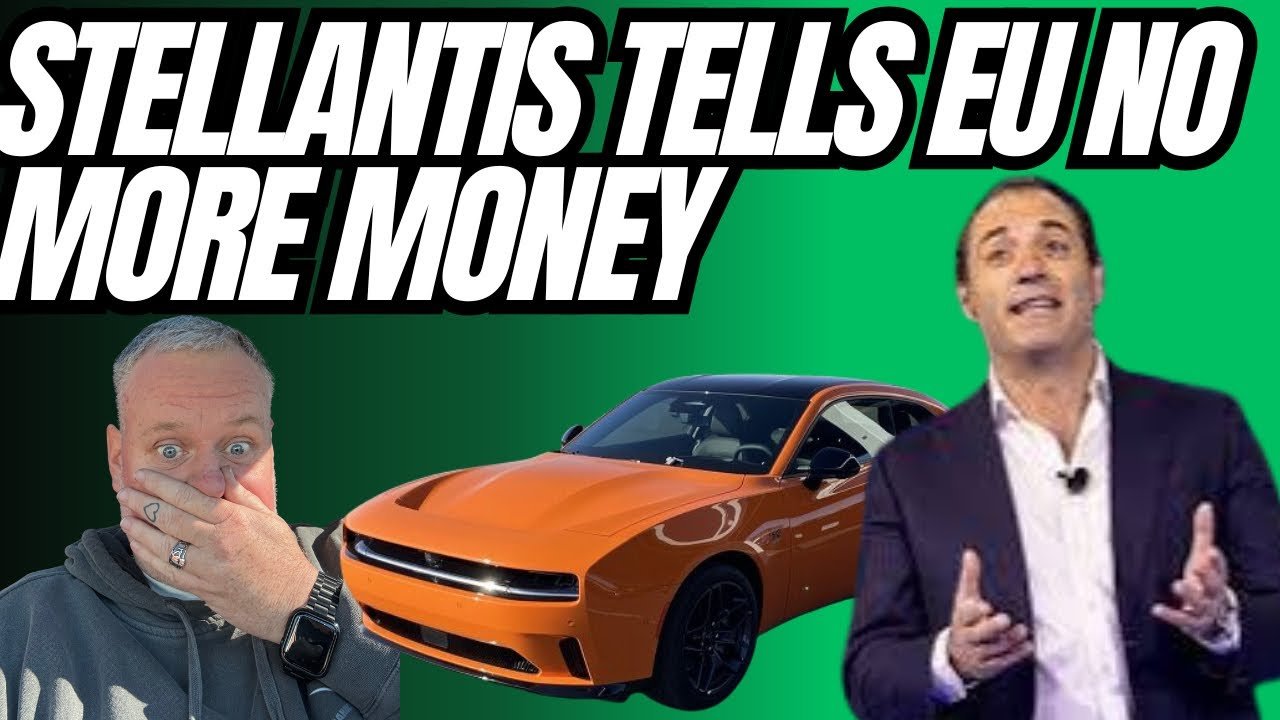
Stellantis is reportedly suspending investment into Europe due to conflicting regulatory policies. In a bold move, the company is instead prioritizing markets that offer stability. Consequently, the automotive giant sends a clear message to European lawmakers. The man behind this message is Stellantis CEO Antonio Filosa. Notably, he is not playing around with the future of the company. In fact, Filosa recently issued a blunt warning regarding the European Union’s latest auto industry measures. According to him, these policies could undermine long-term investment in the region. Furthermore, this deepens uncertainty for manufacturers who are already under immense pressure.
Filosa Warns of an Investment Freeze
The current automotive landscape faces weak demand and high costs. In addition, global competition is intensifying rapidly. Speaking to the Financial Times recently, Filosa criticized the new proposals. He stated that the measures from the European Commission lack urgency. Moreover, they lack the coherence needed to actually revive growth. The automotive sector remains one of the bloc’s most strategically important industries. However, without growth, investing more capital becomes nearly impossible.
Filosa was specific about the dangers of these policies. He noted that the plan lacks urgent measures to return the sector to profitability. Consequently, if the market does not grow, Stellantis cannot justify spending money there. This sentiment reflects a shift in priority toward American markets. As a result, American companies are effectively paying the bills. Europe risks falling behind if policymakers continue to ignore market realities. Therefore, the CEO is prioritizing regions where business conditions are favorable.




The Combustion Ban Controversy
A major point of contention is the planned combustion engine ban. The European Commission announced a plan recently that includes a controversial shift. Effectively, this involves dropping the planned ban on new combustion engine cars from 2035. On the surface, this sounds like a positive development. However, the move has exposed deep divisions within the industry. Policy makers also disagree on the decision. For instance, some automakers argue that easing the rule offers necessary breathing space.
This pause is critical amid slowing electric vehicle adoption. Furthermore, significant infrastructure gaps still exist across the continent. On the other hand, others fear this shift dilutes regulatory clarity. They argue it weakens Europe’s credibility in the global transition to cleaner transport. Nevertheless, the uncertainty itself is the problem. Filosa framed the issue as one of strategic certainty. Unfortunately, frequent policy shifts make it incredibly hard to commit capital. As a result, factories, suppliers, and innovation hubs suffer from the hesitation.
Strategic Certainty and Supply Chains
Stellantis operates roughly 14 different brands. For example, these include names like Peugeot, Fiat, Opel, and Citroen. Additionally, they manage Jeep and Alfa Romeo. For a company of this size, stability is absolutely mandatory. Filosa argued that without sustained and predictable investment, Europe loses its ability to build. Specifically, they risk losing the ability to build a resilient automotive supply chain. He linked this failure directly to employment issues. Furthermore, it impacts competitiveness and security.
Without additional investments, building that supply chain becomes very difficult. Filosa told the Financial Times that this chain is vital for European jobs. Moreover, it is essential for European prosperity and security. If the EU continues to shift goals, they will lose this investment. Europe could eventually find out the hard way what happens when industry leaves. Meanwhile, America continues to build trucks and combustion engines. Consequently, the United States remains a stable environment for these traditional technologies.
The Reality of EV Infrastructure
The push for a 100% electric transition faces hurdles beyond policy. Specifically, the power grid and infrastructure are not ready. You could try to transition every car in the United States to electric right now. However, that is simply not going to happen. The grid currently cannot handle that load. Additionally, there are not enough charging stations to support such a fleet. Drivers would end up waiting hours just to plug in their vehicles. Then, they would have to wait another hour to actually charge the car.
This model is not feasible for the mass market yet. While EVs work for some, they do not work for everyone. China may continue to build all the EVs they want. However, without a robust power grid, the utility is limited. We can have clean gas-running vehicles instead. Therefore, we do not need a forced transition to all-electric fleets immediately. Instead, the market should dictate production based on what works.
Real Experience with Electric Vehicles
Critics often dismiss these warnings as “EV hate.” However, realistic criticism comes from actual ownership experience. TK’s Garage currently owns multiple electric vehicles. For example, the fleet includes a Tesla Cybertruck and the BMW i4. In the past, the channel has featured the BMW i3 and the Fisker Karma. Owning these cars provides a clear view of the pros and cons. Driving a Tesla across the country is possible. It can even be a great experience with free supercharging.
However, that trip still added three hours of travel time. While it works in some cases, a blanket mandate is impossible. You simply cannot force this technology on everyone yet. It is not about hating the technology. Rather, it is about acknowledging the physical limitations of the current infrastructure. The grid limitations are real. As a result, forcing a switch before the system is ready is a recipe for failure.
Car People Running Car Companies
The industry needs leadership that understands these realities. Finally, we have someone in charge like Antonio Filosa. He appears to understand the actual market dynamics. Having actual car people in charge of a car company is a refreshing change. It is a noble idea that has been missing for too long. Filosa recognizes that without profit and growth, the mission fails. Consequently, he is protecting the company from bad policy.
If the EU wants to keep its industrial base, it must listen. They need to provide a stable roadmap for manufacturers. Otherwise, companies like Stellantis will simply stop spending money there. The ball is now in the EU’s court. They must decide if they want a thriving auto sector or strict mandates. As it stands, they cannot have both. The warnings from Stellantis are loud and clear.