





SRT Dakota? The Midsize Hammer Stellantis Is Quietly Loading
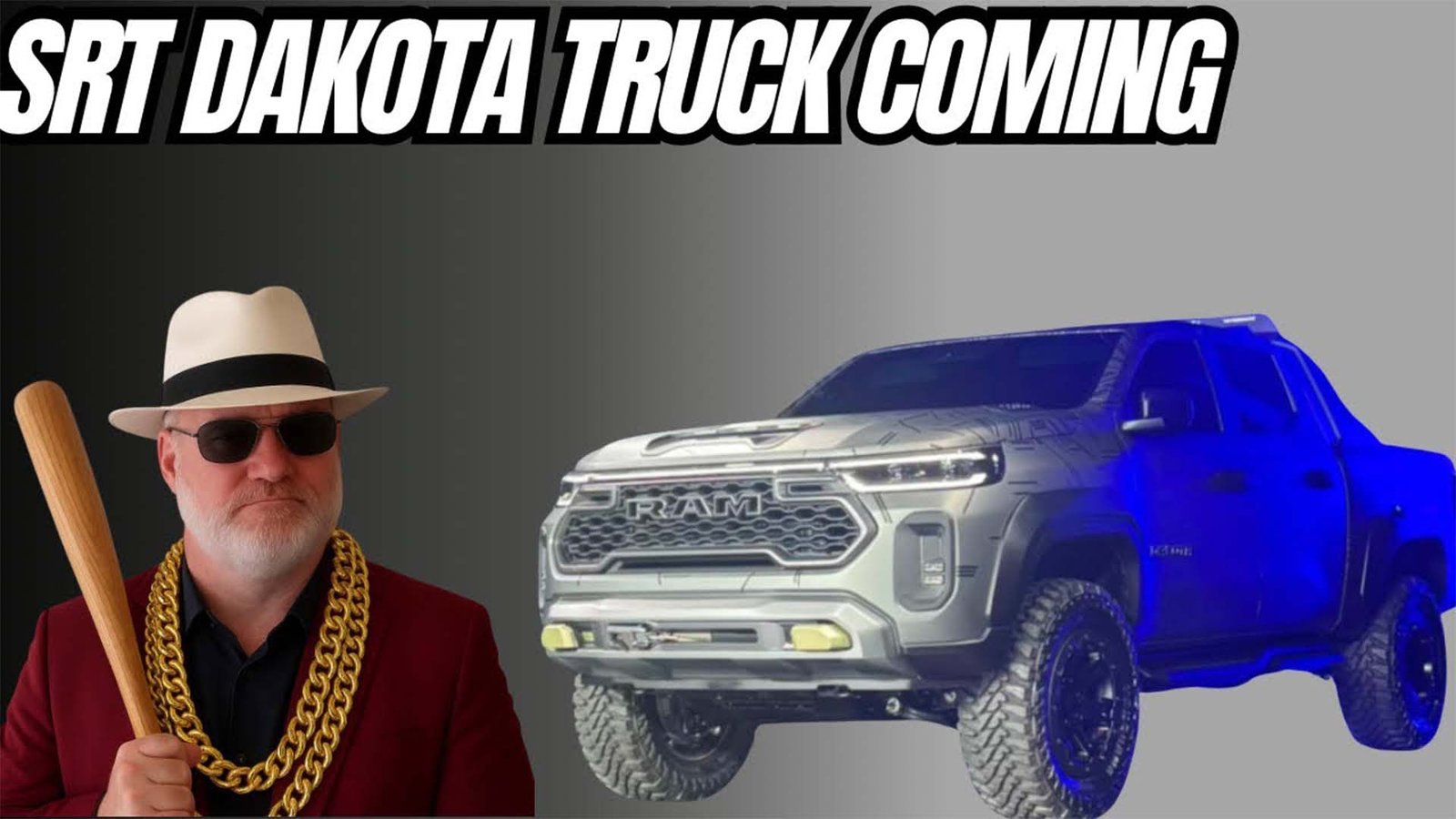
What is up, guys—welcome back to Auto Intel Daily. I’m on the road in Memphis, but this one couldn’t wait. A new SRT-branded midsize truck has been floated inside Stellantis. The documents don’t say “Dakota” on the face… but the footprint, options, and timing scream Dakota playbook. Think Gladiator bones, Dodge bodywork, Toledo build. And the engines? That’s the headline.
I’ve been telling you the midsize return was coming. Now we’ve got a clearer look at the powertrain spread, where the Pentastar fades, the 5.7 HEMI returns, and the Hurricane high-output shows up in a badge that matters: SRT.




The Powertrain Picture (From Mild to Wild)
Here’s what’s in those internal layouts I’m hearing about—three confirmed tiers, with two spicy maybes down the road:
- 2.0-liter turbo (gas & hybrid): Essentially a “Hurricane minus two cylinders.” Expect solid torque, fleet-friendly MPG, and a scalable hybrid assist for city duty and off-idle grunt.
- 5.7-liter HEMI V8: The people’s choice. If they build it, they won’t keep it in stock. It’s the sound, the shove, the simplicity—exactly what the midsize buyer has been begging for.
- 3.0-liter Hurricane H/O (SRT): The halo. If you’ve watched what the new Charger can do with this motor, drop that into a lighter pickup shell and you’ve got a street-fighter with a bed.
Possible later adds being discussed across the platform family: 392 and Hellcat–tier specials. Expensive? Yep. Limited? Probably. But the ladder makes sense: 2.0 → 5.7 → Hurricane H/O, with occasional lunacy for the faithful.
Why “Not Saying Dakota” Still Looks Like Dakota
Paperwork can hide a name; it can’t hide a plant, platform, or purpose. Everything points to Toledo, to a body-on-frame midsize, and to a product that can share hard points with Gladiator while wearing a Dodge/Ram face. That gives Stellantis three wins:
- Scale: Shared components keep costs in line.
- Speed: Faster to certify, validate, and launch.
- Separation: Gladiator stays Jeep; the SRT truck becomes the street weapon.
Read Between the Lines: Gladiator Just Got Interesting
If this truck gets 5.7 HEMI, the “Gladiator will never get a 5.7” crowd has a problem—because the hardware path suddenly exists. And we already know about 392 movement I’ve talked about before. If the midsize SRT truck rolls with Hurricane H/O, don’t be shocked if Gladiator’s engine map evolves too. The Pentastar? Looks like it’s getting eased toward niche/hybrid-generator duty as Stellantis rationalizes its lineup.
Why Hurricane H/O in a Truck Is a Big Deal
Two reasons: weight and gearing. The Hurricane H/O is already a trap-speed monster in the Charger. Put it in a lighter pickup with aggressive ratios and you’ve got real, repeatable, usable speed—not just a one-pull dyno number. And for the tuners: the platform is responding. We’ve all seen Boosted Motorsports’ Hurricane-swapped Viper rip. The headroom is there.
The HEMI Factor: Print Money, Please
You want volume? 5.7 HEMI is your volume. Not everyone wants the complexity of hybrid or the premium on an SRT. A V8 midsize with real tow/haul credibility and that old-school throttle feel would own dealer lots from Texas to Tennessee. If Stellantis is smart, they’ll price it to land below the full-size jump, not cannibalize Ram 1500, and give buyers a reason to come back to Dodge-style fun.
Where This Leaves Pentastar Fans
I get it—reliable, proven, easy to wrench. But the writing’s on the wall. Between Hurricane modularity and emissions math, Stellantis is consolidating. Pentastar likely lives on where it’s cheapest or most flexible, and steps back where turbo-hybrids and Hemi brand power sell the story.
What I Expect the Trim Logic to Look Like
No promises on naming yet, but this is the logic that makes sense and matches what I’m hearing:
- Work/Fleet: 2.0T (with or without hybrid), steel wheels, vinyl/cloth, real payload.
- Sport/Street: 5.7 HEMI, appearance and brake/tire packages, limited-slip, real exhaust note.
- SRT: Hurricane H/O, wide rubber, serious cooling, aero bits, and the calibration you buy a TunerBox for on day two.
Give us locking diffs, proper tow ratings, and gearing that isn’t just for EPA cycles, and this thing becomes the default fun truck.
Timing, Badges, and the Name Game
The docs I’ve seen referenced don’t print “Dakota.” That’s not unusual. Stellantis has been cagey with labels until late in the game. What matters is capacity (Toledo), supply chain (shared with Gladiator where it’s smart), and certification (stack it on already-proven pieces to move faster). If they call it Dakota, awesome. If they don’t, but it drives like one and sells like one, nobody will care what the tailgate says.
Why This Strategy Works Right Now
EV headwinds, tariff noise, and a buyer base that’s done being force-marched into the wrong vehicle have created a lane for enthusiast-first ICE products. A three-engine ladder lets Stellantis hit price points, insurance brackets, and fuel expectations—while giving the rest of us a legit SRT badge to chase again.
Final Word
If you’ve been waiting for a real midsize with attitude, this is it. 2.0T for the commuters, 5.7 HEMI for the everyday hooligans, and Hurricane H/O for the SRT faithful. The name on the paper can play coy; the spec sheet doesn’t. Build it, price it right, and the lots will turn.
Drop your take below—what’s your spec? I’m HEMI + street pack out the door, but that Hurricane H/O is calling my name. As always: stay petty, my friends.