






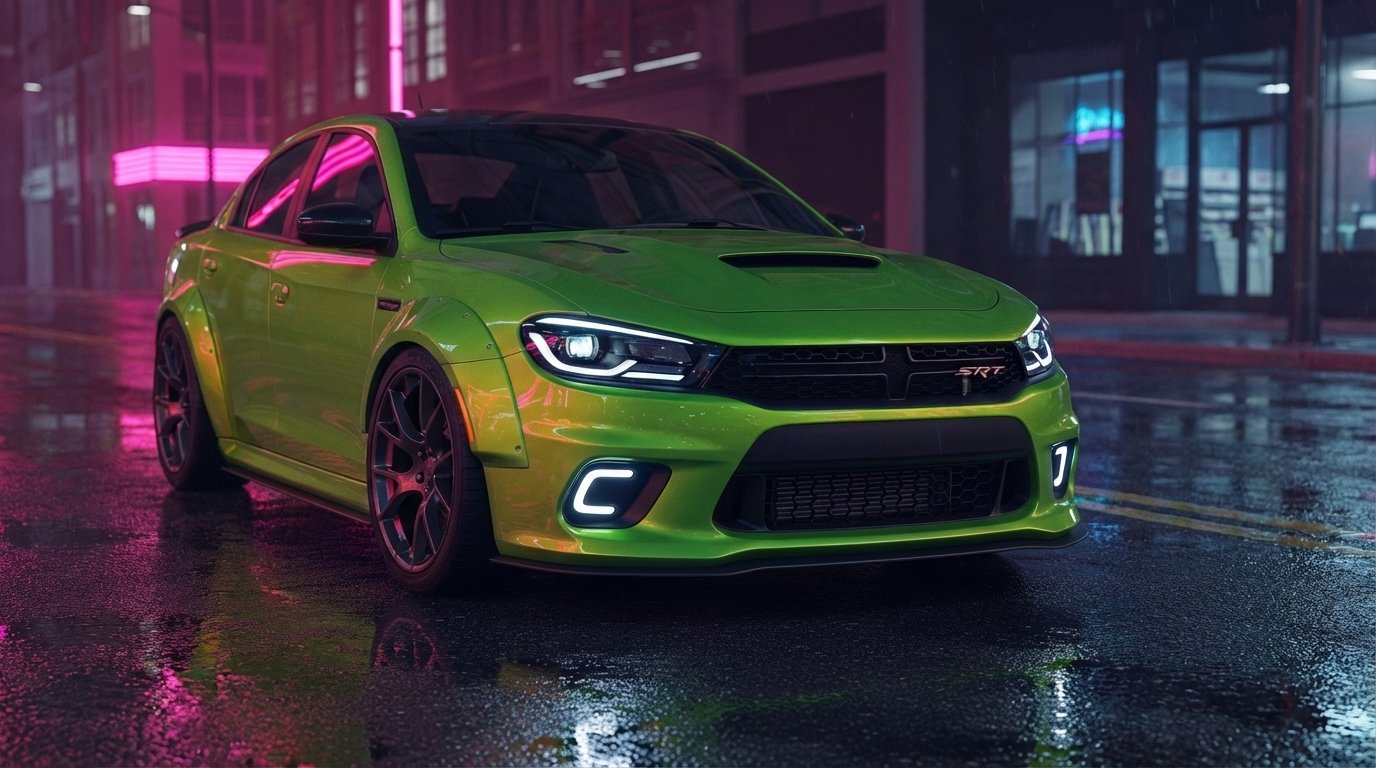

The case for a Dodge Neon SRT is simple and urgent, and it begins with identity. Dodge built its modern reputation on affordable horsepower, yet today the lineup leans heavily toward expensive halo cars and electrified flagships. Meanwhile, the Hemi V8 era winds down and the electric Charger ushers in a new chapter, so the brand needs a distinct, accessible performance halo more than ever. For these reasons, an entry-level performance car would reconnect Dodge with working-class enthusiasts who first fell for the brand via loud, cheap speed. Therefore, bringing back a compact, turbocharged Neon SRT would provide a clear entry point for new buyers. Ultimately, this model would rebuild the foundation of the SRT name and give younger drivers a realistic way into the Mopar family instead of leaving that market to Honda, Toyota, and Hyundai.
1. An Attainable SRT for the People
Remember the original Neon SRT-4: it delivered brutal performance at a bargain price, and it created fans for life. For roughly twenty years ago’s street price, buyers got a turbocharged compact that outgunned many pricier rivals. Consequently, that car put the SRT badge on the map for thousands of young drivers. Today, however, the SRT roster sits firmly in premium territory; models like the Durango SRT 392 and Hellcat variants now cost far more than most enthusiasts can afford. As a result, Dodge risks becoming a marque defined only by expensive halo cars. Bringing back a Neon SRT priced aggressively in the low-to-mid $30,000s would restore an attainable performance ladder. In addition, such a car would likely convert first-time buyers into lifelong Dodge customers, and it would revive the brand’s grassroots performance culture.
Related Post



2. The Market is Starving for Affordable Speed
Across the industry, demand for fun yet practical performance cars remains strong, and competitors are proving it. Honda continues to sell every Civic Si and Type R it can build, while Hyundai’s Elantra N has become a certified hit. Toyota’s GR Corolla shows there is appetite for rally-bred compact performance, and all these cars prove a single point: consumers want accessible speed. Dodge currently stands absent from that fight, which creates a major missed opportunity. Therefore, a new Neon SRT could enter a hungry market with instant brand recognition and Mopar attitude. Moreover, the audience for such a car already exists and actively seeks something loud, fast, and practical. Consequently, building the Neon would not merely fill a gap; it could steal sales from established players and reassert Dodge in a lucrative segment.
3. The Secret Weapon: Stellantis’ Hurricane4 Engine
Stellantis has developed a modern turbocharged engine that makes a Neon revival plausible in a performance sense, and it changes the calculus entirely. The new 2.0-liter Hurricane4 Turbo will debut in the 2026 Jeep Grand Cherokee and in standard tune produces 324 horsepower and 332 lb-ft of torque. In fact, that output already matches or exceeds several top hot-hatches. Furthermore, the Hurricane4 uses advanced combustion technology, including Turbulent Jet Ignition with dual spark plugs and dual injectors per cylinder, which yields efficient, high-power combustion. Since Stellantis already invested heavily to create this architecture, the engine exists and can be adapted. Consequently, Dodge would not need to source an outdated or diluted powerplant for a Neon SRT; instead, it could leverage a modern, compact unit that blends power, weight savings, and packaging advantages for a small sport sedan.
Dodge Neon SRT Potential
Engineers at SRT could tune the Hurricane4 to suit multiple Neon variants, and the platform offers real headroom for higher output. For example, a 324-hp version could anchor an R/T model, while engineers could raise boost and retune fueling for a full-blown SRT. In other words, a high-output Hurricane4 similar to the inline-six’s boosted variant seems plausible. Getting north of 400 horsepower from that platform is not inconceivable, and consequently the Neon could become the most powerful sport compact on the market. Additionally, Dodge could offer a manual transmission and either front-wheel-drive or all-wheel-drive configurations, which would broaden appeal. Ultimately, the engine’s flexibility gives Dodge the freedom to craft several distinct models atop one modern powerplant, thereby maximizing investment and customer reach.
4. A New Neon Would Absolutely Dominate the Competition
Combine a lightweight Neon chassis with a high-output Hurricane4 and the result could upend existing class benchmarks overnight. Competitors currently include highly capable cars such as the Civic Type R, GR Corolla, and Elantra N, yet a 400-plus-horsepower Neon SRT would hold a decisive power edge. Moreover, that advantage would translate into unmatched straight-line performance and compelling real-world speed for buyers seeking thrills. Dodge could further differentiate the Neon with unique tuning, aggressive styling, and driver-focused options. In addition, offering AWD would allow the Neon to exploit traction and deliver better launches than most rivals. Consequently, if Dodge commits to package, tuning, and pricing that emphasize both usability and performance, the Neon could become the new benchmark for accessible super-compact speed and reclaim the “giant killer” mantle the original SRT-4 earned.
5. Dodge Desperately Needs to Expand Its Lineup
Dodge’s current roster feels thin and uneven, and a compact performance car would fill multiple strategic holes at once. The brand still needs volume models that bring younger buyers into showrooms, while many current offerings sit at high price points or are rebadged products. Therefore, a Neon platform would supply a high-volume, lower-priced vehicle that increases overall sales and refreshes Dodge’s customer pipeline. Additionally, buyers who start with an affordable Neon SRT could move up into larger models over time, which strengthens long-term loyalty. Beyond sales, adding a modern Neon would diversify Dodge’s image and demonstrate the marque can build small, focused performance cars as well as big V8 muscle. Ultimately, a new Neon is not merely nostalgic; it is a strategic tool for sustaining the brand’s future.
The Verdict: Build It Now
The logic for reviving the Neon SRT is straightforward: the brand has the engineering, the market has the demand, and the legacy provides instant credibility. Stellantis’s Hurricane4 gives Dodge a modern, compact powerplant to tailor across multiple trims, and consequently the company could deliver both attainable performance and a genuine halo that feeds long-term sales. Moreover, reinstating an affordable speed icon would reconnect Dodge with the enthusiasts who once drove the brand’s growth. Therefore, stop leaving money on the table and stop ceding the hot-hatch battleground to rivals. Listen to the enthusiasts, commit to sensible pricing, and build the Dodge Neon SRT—now is the time to make the giant killer return.
Sources: