



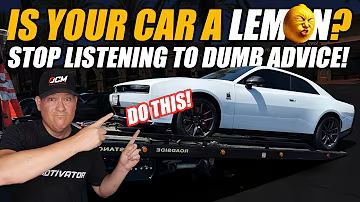
BBB won’t fix your lemon. Here’s what actually works.
I’m going to save somebody months of headaches. The BBB is not your cop, not your court, and not your refund machine. It’s a private, nonprofit outfit that promotes marketplace “self-regulation”—useful in some corners, but it has zero government power to force an automaker to buy back your car.
Yes, there’s a BBB AUTO LINE arbitration program. It can help if your brand participates. Go look: the BBB AUTO LINE site shows participating manufacturers (Ford, GM, Hyundai, Kia, Toyota, etc.)—you’ll even see Maserati—but Dodge, Chrysler, Jeep, and Ram are not displayed there. Translation: marching into a dealership yelling “I’m calling the BBB” won’t move the needle for most Stellantis owners.
Related Post


So what should you do? Use the tools that actually have teeth.
First, know your state’s lemon-law triggers. Example: Maryland’s Automotive Warranty Enforcement Act (the one a lot of you cite) gives you protections within 24 months or 18,000 miles if either (a) the car’s out of service 30+ days, (b) four repair attempts fail, or (c) a serious brake/steering defect fails inspection and isn’t fixed. Those are clean, objective thresholds that support a buyback or replacement—far stronger than a BBB complaint.
Second, stack the right pressure in the right order. Do this:
- Document everything (dates, mileages, repair numbers, tow slips, texts, screenshots of warnings). This is your ammo, not a rant thread.
- Open a case with the manufacturer and get a case number—stay factual and non-threatening.
- File a safety complaint with NHTSA if issues involve braking, power loss, shutdowns, or charging faults; patterns get attention. Federal Trade Commission
- Consult multiple lemon-law attorneys in your state (free case reviews are common). Pick the one who’ll actually work your file, not stack it.
- Keep the car available for inspection/repair attempts—don’t sabotage your own claim by refusing access.
- Negotiate rentals and reimbursements in writing while the case is active; keep receipts.
Notice what’s not on that list: threatening class actions, empty “my lawyer will…” lines, or BBB filings that the automaker can simply ignore. If you say “my lawyer,” make sure you’ve retained one. Otherwise, you may freeze normal communications without gaining legal leverage.
A few realities to set expectations:
- Arbitration ≠ court order. Even when arbitration exists, it’s usually voluntary and program-specific. If your brand isn’t in BBB AUTO LINE (again: Dodge/Chrysler/Jeep/Ram aren’t shown), you’ll likely be headed straight to state lemon procedures or a Magnuson-Moss warranty claim via counsel.
- State law rules. The exact thresholds, timelines, and remedies vary. Maryland’s are clear (24 months/18k; 4 tries; 30+ days; brake/steering clause). Your state might use different numbers—check your AG’s site.
- Safety complaints help the herd. NHTSA complaints create a public record that regulators and media can see—use it whenever the defect implicates safety (stalling, brake faults, no-start/brick tied to safety systems). Federal Trade Commission
Bottom line: if your car keeps failing and the dealer can’t fix it, stop burning cycles on BBB theatrics. Build the record, hit the statutory triggers, and let a lemon-law attorney drive the process the minute you qualify. That’s how you get real outcomes—repurchase, replacement, or cash-and-keep. The rest is noise.
Not legal advice; I’m telling you what actually moves manufacturers. If you’re in Maryland, start by reading the AG’s lemon-law explainer so you know exactly which boxes to tick before you call counsel.