




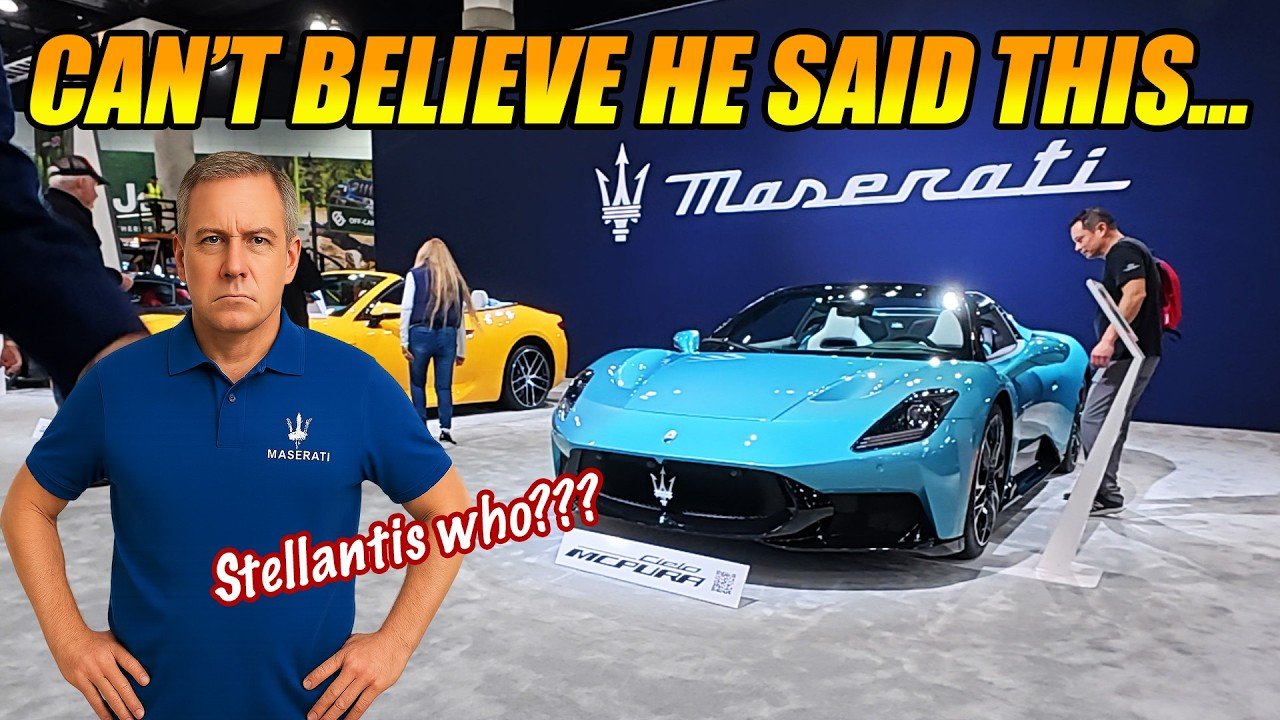
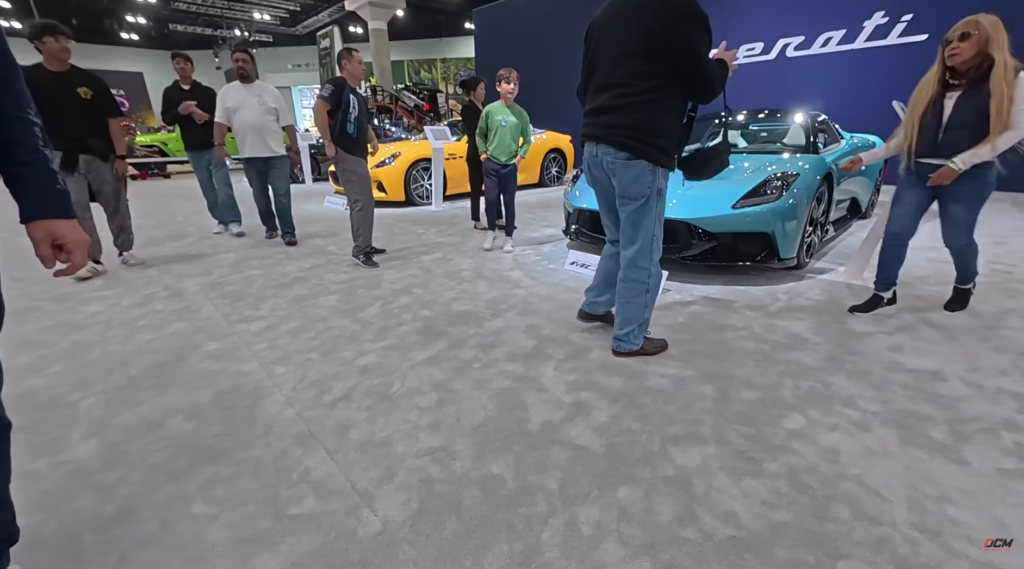
Stellantis has been making headlines recently, and rarely for good reasons. However, at the recent LA Auto Show, I noticed something immediately. The massive Stellantis sign, which typically lists all their brands, was missing a key name. Specifically, Maserati was not on it. As a result, I spoke directly with a Maserati representative to find out why. The answer was shocking. Currently, they are actively trying to distance themselves from the parent company of Dodge, Ram, and Chrysler.
Escaping the Stellantis Shadow
For years, Maserati has suffered under the Stellantis umbrella. In fact, many enthusiasts believe the tenure of Carlos Tavares did immense damage to the brand. Previously, the strategy seemed to focus on volume rather than prestige. Consequently, cars flooded the market that shared visible components with cheaper vehicles. For example, they often ripped the window controls in six-figure Maseratis straight from the Dodge parts bin. This association hurt the brand’s image significantly.
During my conversation at the show, the representative was blunt. He stated clearly that the “beautiful thing about that Stellantis sign” is that they are not on it. Furthermore, he confirmed that Maserati is now the only standalone company under the Stellantis group. They now possess their own board of directors and their own balance sheet. Therefore, they can finally do what they want. While they are not for sale, they are certainly separating themselves from the mass-market tactics of Dodge and Jeep.




The End of the Cheap Lease Era
In the past, Maserati chased sales volume aggressively. As a result, they offered insane lease deals. You could pick up a $100,000 Maserati Ghibli for $399 or $500 a month. Similarly, you could get a Quattroporte for $799 a month. This strategy put high-maintenance Italian supercars into the hands of people who could barely afford them. The rep noted that customers would lease the car cheaply. Yet, they couldn’t afford the $4,000 brake job when necessary.
However, this era is officially over. The representative confirmed that Maserati has discontinued the Ghibli, Quattroporte, and Levante. Additionally, they are slashing overall production dramatically. Previously, the brand was moving about 35,000 units a year. Under the new strategy, that number will drop to just 5,000 units globally. This move aims to restore exclusivity. Consequently, you won’t see yourself in traffic every day. The goal is to return Maserati to being a bespoke manufacturer of proper motor cars.
The MC20 Market Correction
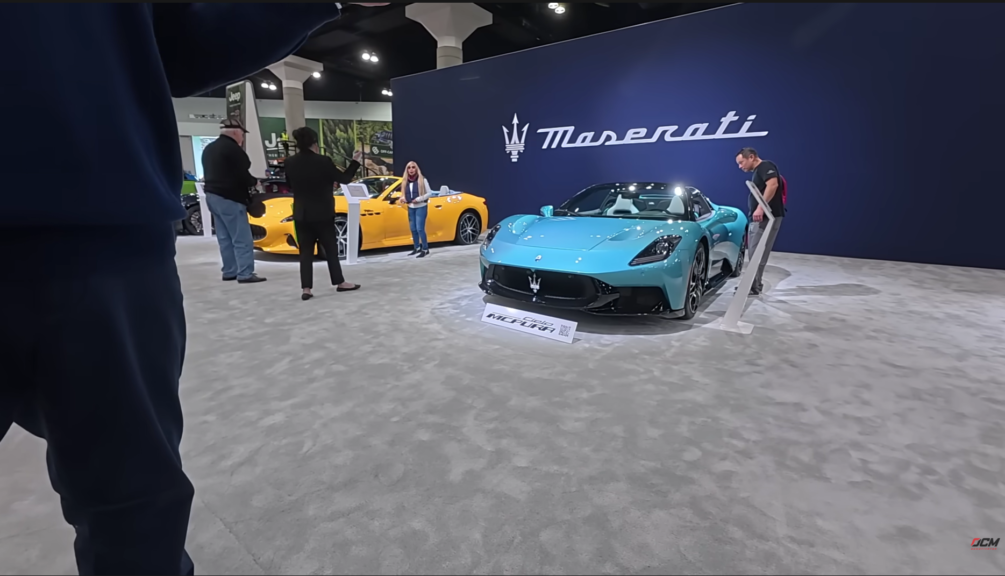
The Maserati MC20 is a prime example of where things went wrong previously. When it launched, it was a legitimate supercar competitor to McLaren and Lamborghini. I admit, when I first saw it, I thought it was badass. However, they built too many. Between the US and Canada, they flooded the market with roughly 1,400 to 1,500 units. As a result, values tanked. You used to see these listed for $350,000. Now, you can find them all day long for $170,000 or $180,000.
To fix this, the new CEO, who previously ran Lucid for three years, has implemented a strict limit. Maserati will limit the new evolution of the MC20 to just 130 units per year for North America. Specifically, that is 120 for the US and 10 for Canada. This scarcity should help stabilize residuals. If you want one, you will have to pay for it. The representative argued that this avoids the drama of news outlets reporting low sales. Instead, it creates demand through exclusivity.
The Ferrari Divorce Is Final
For a long time, the allure of a Maserati was the Ferrari engine under the hood. However, that relationship has ended. The representative confirmed that the “divorce is final.” Ferrari no longer assembles any motors for Maserati. Consequently, the V8 is gone. In its place is the Nettuno V6 engine. Maserati uses this single block and head configuration across the entire range with different tunes.
The representative broke down the power figures for the new lineup:
- Grecale Trofeo: Produces 523 horsepower for low-end SUV grunt.
- GranTurismo: Generates 540 horsepower for sustained high-speed cruising.
- MC20: Delivers 621 horsepower for explosive power off the line.
I will always prefer the naturally aspirated V10 in my Lamborghini Huracán. However, the numbers on these V6 engines are undeniable. They are fast. The new MC20 evolution features an all-new front end, back end, and exhaust. Still, it keeps the same carbon fiber tub.
Technology Ties to Dodge Remain
Despite the push for independence, some ties to Stellantis remain. Specifically, the technology. The representative admitted that their relationship with Stellantis is still “heavy on technology.” There is no financial reason for Maserati to develop its own infotainment system from scratch. Therefore, the cars still use the Uconnect system that Dodge and Ram products use.
However, the execution is different. It is no longer a screen they literally ripped from a Dodge Charger. Now, they use their own high-definition screens with a bespoke interface overlay. The rep insisted it works well. Also, there is no need to redesign it. Additionally, for large projects, they can still ask the parent company for a loan. Yet, operationally, they are making their own decisions.
EV Strategy and Future Pricing
The previous leadership under Tavares pushed for a heavy transition to full electric vehicles. Unfortunately, that didn’t work out. Now, the approach is more measured. They have a full battery electric vehicle (BEV) option, the Folgore, which utilizes an 800-volt architecture. This is a massive spec. Even the new electric Dodge Charger does not seem to match it in all trims. However, Maserati is not going all-in on EVs at the expense of internal combustion just yet.
Finally, we discussed pricing. With volume decreasing, prices are increasing. The new models start in the high $200,000 range. For instance, the specific car we looked at on the floor had a sticker price of $320,000. This places Maserati firmly in supercar territory. It creates a barrier to entry that keeps the brand exclusive. Dealer markups might be an issue with only 130 units available. However, the representative believes getting people comfortable with the brand again is the priority.
Overall, Maserati is attempting a massive turnaround. They are cutting ties with the mass-market strategies of Stellantis and Dodge. Furthermore, they are killing the cheap leases. They are focusing on bespoke quality. I am rooting for them to succeed. The industry needs more strong competitors. Whether they can convince buyers to spend $300,000 on a V6 instead of a Lamborghini remains to be seen.