




I need your help to explain exactly what is going on with these Wrangler 392 prices. Currently, the pricing strategy for Stellantis and Jeep makes absolutely no sense. For example, in 2021, a Wrangler 392 First Edition cost roughly $75,000. However, fast forward to the 2025 model year, and a Final Edition sticker price jumped to over $100,000. That is a massive increase in just a few short years.
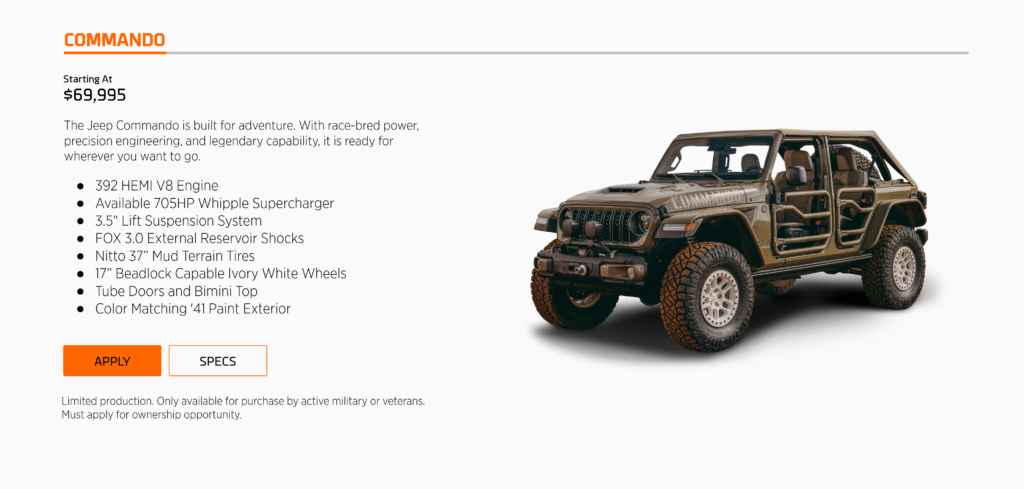
Now, things have become even more confusing. For the 2026 model year, Jeep has released a Wrangler 392 Moab Edition for $80,000. Surprisingly, this vehicle has essentially the exact same parts as the $100,000 Final Edition from the year before. As a result, buyers can now get the same performance for $20,000 less. In addition, Jeep dropped yet another version around the same time called the Commando Edition. This model is even cheaper at roughly $70,000.



This situation leaves many questions about the value of these performance cars. Specifically, how can a manufacturer justify a $25,000 markup on the same hardware within a single year? It seems the market is finally correcting itself. Consequently, we need to look at what drove these prices up and what this means for current owners.

The Timeline of Price Inflation
Let’s look at the history here. In 2021, the market introduction of the V8 Wrangler was aggressive but somewhat attainable at $75,000. However, over the last few years, prices skyrocketed. By 2025, the Final Edition suggested that the V8 Wrangler was going away forever. Because of this exclusivity, the price tag hit six figures. Dealers and the manufacturer capitalized on the “last call” panic.
Yet, the V8 did not die. Instead, it returned for 2026 with a massive price cut. The drivetrain is basically exactly the same. Additionally, the engine output is the same. The suspension components are largely identical too. Therefore, the $20,000 price drop on the Moab edition exposes just how inflated the 2025 pricing really was. Simply put, there were virtually zero changes to the mechanicals to justify the previous premium.
This trend wasn’t just limited to the Wrangler. For instance, the Dodge Challenger Hellcat went through similar pricing games. Previously, you could get a Hellcat for $60,000. However, during the “Last Call” era, those same cars sold for $80,000 or $90,000. Similarly, the Ram TRX followed the same path. In 2021, a TRX was $69,000 out the door. Yet, by the time the Final Edition arrived four years later, the price was over $100,000.
The Burn for Final Edition Owners
I genuinely feel for the people who bought the 2024 or 2025 Final Edition Wrangler 392. These buyers likely thought they were securing a collector’s item. However, the release of the 2026 models has severely undercut the value of their vehicles. If you try to trade a Final Edition back to the dealer today, you will likely be underwater. In fact, you could be $10,000 or $20,000 in the hole immediately.
The existence of the Moab Edition at $80,000 destroys the resale value of the $100,000 Final Edition. After all, why would anyone buy a used 2025 model for six figures when they can buy a brand-new 2026 model for significantly less? This is a prime example of market volatility. Unfortunately, the market for muscle cars and performance SUVs has become unstable under the current leadership.
However, Final Edition owners are not the only ones taking a loss. Other enthusiasts suffered losses during this era too. For example, look at the Dodge Demon 170. Some buyers paid $150,000 over sticker price. They believed it would be a half-million-dollar car. A year later, those values have dropped substantially. Some owners have lost $100,000 in value while the car just sat in a garage.
Why Did Prices Get So High?
You cannot use the word “greed” without raising flags, but the pricing strategy tells a clear story. Under the former CEO, automakers intentionally jacked up the MSRP of internal combustion engine (ICE) vehicles. Apparently, the goal was forcing a price parity with electric vehicles (EVs). By making gas cars more expensive, the high price of EVs would seem normal by comparison.
In addition, these high prices on gas vehicles likely helped subsidize the massive losses on EV development. Companies were losing billions in the background trying to push electric cars. Therefore, they needed the profits from the Wrangler 392 and Ram TRX to cover those costs. It created an artificial demand for EVs by making traditional performance cars unaffordable.
Fortunately, the market rebelled. People did not blindly switch to EVs just because gas cars got expensive. Now, with inventory sitting and leadership changes occurring, reality is setting in. As a result, we are seeing massive price corrections. The Ford Bronco Raptor recently saw price drops of around $10,000. Similarly, the Wrangler 392 dropping $20,000 overnight proves the previous prices were artificially inflated.
The Commando Edition Value Play
The most shocking part of this news is the Commando Edition. This creates a confusing hierarchy in the lineup. You had the $100,000 Final Edition. Then, you have the $80,000 Moab Edition. Now, Jeep drops a version for veterans and active duty members that starts around $69,000 to $70,000.
This $70,000 version is not just a base model. You can add a factory-backed Whipple supercharger kit to it. This kit keeps the warranty intact while boosting horsepower to over 705. Consequently, for roughly the same price as the $80,000 Moab Edition, you can have a supercharged monster. This setup would have significantly more power than the $100,000 Final Edition.
This creates a bizarre scenario where the cheapest version of the truck might actually be the fastest. It is a huge win for performance enthusiasts who waited. However, it is a slap in the face to anyone who paid the markup for the 2025 model year. The value proposition has completely flipped in favor of the patient buyer.
Implications for the Ram TRX
This pricing crash for the Wrangler has huge implications for the Ram TRX. For instance, if we follow the pricing logic, the numbers for the next performance truck need to come down. In 2021, the Wrangler 392 was $75,000. Today, the 2026 model is roughly $80,000. Overall, that is a small increase over five years.
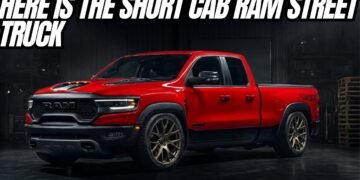
If the Wrangler 392 is sitting at $80,000, a potential 2026 Ram TRX cannot be $100,000. Historically, the TRX was cheaper than the Wrangler 392. In 2021, the TRX was about $5,000 less than the Jeep. Therefore, if the new Wrangler is $80,000, Ram should realistically price a new TRX around $75,000.
The Ram TRX offers way more truck for the money. For example, it has a supercharged Hemi V8 standard. Additionally, it features high-end Blackhawk shocks from Bilstein. It also has significantly better towing and payload capacity. Furthermore, the interior space and quality are superior to the Wrangler. It is a desert runner, whereas the Wrangler is a rock crawler. Ultimately, logic dictates that the TRX should offer better value.
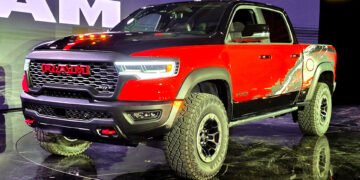
Currently, the Ram RHO is priced around $69,000. A V8 TRX should only command a premium of about $5,000 to $10,000 over that. If Stellantis wants to move units, they must adhere to this pricing structure. The days of $100,000 sticker prices for these trucks are likely over. The market has spoken, and the prices are finally coming back down to earth.