










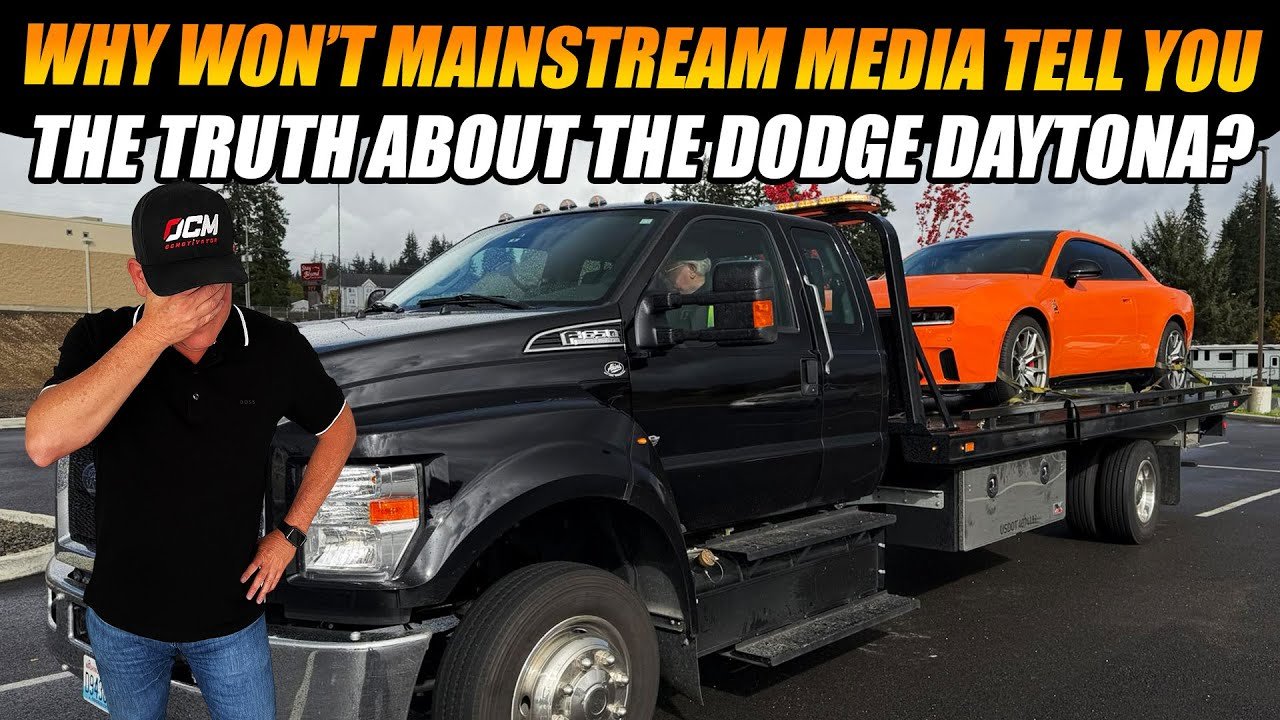
Dodge Charger Daytona EV: Ten Months of Trouble Nobody’s Printing
For nearly a year, owners have been posting the same story in forums and groups: software faults, 12-volt failures, charge hiccups, random shutdowns, flatbeds. Yet the broader auto press has mostly kept quiet or framed the Charger Daytona’s problems as isolated cases. If you’ve only skimmed headlines, you could think everything’s fine. It isn’t—at least not for a visible set of early buyers living without their cars for weeks or months.
This article pulls together what’s been publicly shared by owners and techs, plus the patterns that have emerged since the first cars sat on storage lots for “updates” last winter. It’s written so non-English readers can follow the narrative and decide if now is the right time to buy, lease, or wait.
The pattern owners describe
Start with the symptoms that recur across posts:
Related Post


- Charging/12-volt interlock failures. Cars that won’t wake, won’t take a charge, or show “turtle”/reduced-power warnings after fast charging.
- Brake/drive anomalies. At least one account describes the car surging with the pedal firmly down, followed by a cascade of warnings and a full shutdown before a reluctant restart.
- Software roulette. A dealer update fixes one thing and breaks another; cars bounce between “ready” and “back in service.”
- Time without the car. Weeks to 70+ days in the shop is not rare in owner stories, with loaner coverage capped below real-world rental rates.
None of that proves every Daytona is broken. It does show too many are, and the fixes aren’t yet consistent.
How we got here
Late last year, sharp-eyed spotters photographed yards of Daytonas with hoods up, laptops plugged in, and even bungeed rear hatches—signs of pre-delivery triage. Early adopters took delivery anyway (great lease math will do that), then started chronicling no-start events, DC-fast-charge gremlins, and 12-volt tantrums. A few specialty outlets finally ran owner stories, but for the most part, major sites have stayed near-silent—perhaps waiting for an official, tidy explanation that hasn’t arrived.
Meanwhile, owners comparing notes noticed something else: service variability. One dealer’s EV tech sorts a car with careful update sequencing; another swaps parts in circles. When the car returns home working, confidence is shaken—will the next DCFC session brick it again?
Why the silence elsewhere?
Access matters. Outlets that rely on corporate press access and early test cars tend to write what’s provable in a press window. Forum-forensics and owner DMs don’t fit that mold. It’s also harder—and riskier—to report evolving software defects than to run a first-drive. But consumers don’t live in embargo land. They live with payments, rentals, and uncertainty.
That’s why independent voices have kept receipts for months: screenshots, repair orders, tow photos, and the grim inside joke of the “flatbed gang.” When a mainstream piece finally pops up covering a stuck, furious owner, it feels late to anyone who’s been watching this unfold in real time.
What this means if you’re shopping
If the Charger Daytona is going to be your only vehicle, weigh the risk carefully. The car can be wonderful when it works—quick, striking, discounted on lease—but reliability defines ownership more than spec sheets do. If you still want in, protect yourself on the front end:
- Choose your dealer like you choose the car. Ask how many Daytona EVs they’ve fixed, how many Level-3 EV techs they have, and average cycle time for high-voltage/12-volt issues.
- Get update history in writing. Which software versions are installed? What failed and what was replaced?
- Price the rental gap. If coverage caps at $60/day and the cheapest car near you is $80, that’s your $20/day. Plan for a month, not a weekend.
If this will be a second car, your risk tolerance can be higher—you’re not stranded if it goes down. But keep a paper trail from day one.
What this means if you already own one
You don’t have to “wait for a class action.” Those take years and usually pay coffee money. Owners with persistent defects have had far better luck going the lemon-law route in their state.
- Document everything. Dates, tow slips, repair orders, loaner/rental receipts, screenshots of warnings.
- Don’t leave with vague assurances. Each visit should have a clear complaint, a verified diagnosis, and a repair record.
- Track days out of service. Many state statutes trigger relief at 30 cumulative days or after a set number of repair attempts for the same defect.
- Talk to a specialist attorney early. Most will review your case free and only collect if you prevail or settle.
- Stay polite, stay factual. Emotion doesn’t move cases; timelines and invoices do.
Could software fixes save it?
Absolutely—if updates become predictable, dealers apply them cleanly, and hardware culprits (12-volt management, coolant valves, compressors reported in some cases) are identified and superseded. EVs live and die by software maturity. The Charger Daytona can still write a comeback story—just not without hard, boring reliability work that starts at engineering and ends at your driveway.
A final reality check
The Daytona’s styling and driving feel won fans fast. Aggressive lease deals put real numbers behind the desire. But when a car spends half its life on a lift, love turns to litigation. Until the failure modes above stop showing up in owner timelines—and stop sending cars onto flatbeds—the cautious play is to wait, or buy only with full eyes open and a backup plan.