




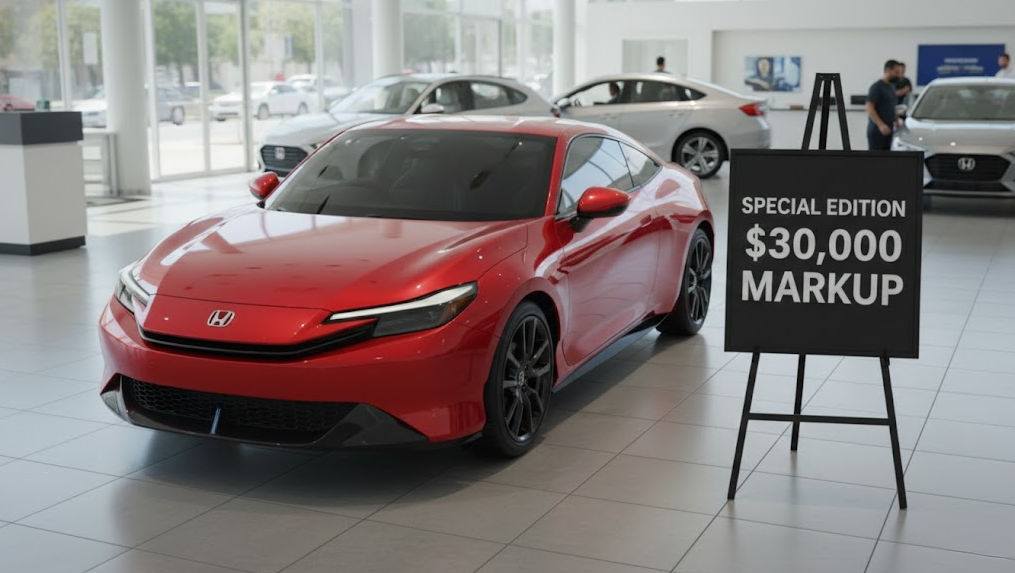
Honda Prelude markups are exploding across dealer lots, and for many fans this should be a celebratory revival turned sour. To be clear, the launch of the new Prelude should excite enthusiasts who remember the model’s legacy, yet dealers are slapping on massive add-ons and fees instead of offering fair prices. As a result, buyers see sticker shock before the cars even arrive in most showrooms. Moreover, this piece explains why you should not pay over MSRP and how to push back. First, we’ll examine the pricing gap from suggested retail to inflated tags. Next, we’ll unpack the common dealer tactics that create fake urgency. Finally, we offer a practical plan you can follow to avoid getting fleeced. Overall, the goal is straightforward: protect buyers and preserve the Prelude’s reputation by refusing to reward abusive pricing.
Honda Prelude markups: The Numbers Don’t Lie
To start, numbers reveal the clearest contrast between fair value and dealer ask prices, and thus they matter a great deal. For example, comparing MSRP to asking prices exposes how far some dealers stray from reasonable pricing. Therefore, understanding those figures is essential before you walk onto a lot. In addition, the gap between what Honda suggests and what dealers demand demonstrates a pattern, not random incidents. Consequently, buyers who know the numbers have leverage in negotiations. Furthermore, spotting inflated “market adjustments” and forced packages early lets you avoid emotional buying decisions. Ultimately, the data gives you the anchor you need to resist pressure and to insist on transparent pricing that reflects the car’s true value.
What the 2026 Prelude Should Cost
Honda published a Manufacturer’s Suggested Retail Price, and that MSRP should guide reasonable offers from dealerships. Specifically, the base 2026 Prelude lists around $43,195, and premium paint pushes a typical example near $44,350. Therefore, a fully equipped model with logical dealer-installed accessories should remain under roughly $45,000 in most cases. Keep that figure in mind as a reference point when you shop. In practice, you do not need to accept add-ons or inflated fees that push the total well above that anchor. Instead, use the MSRP as your baseline, and expect transparent breakdowns for any extra items. By doing so, you preserve negotiating power and avoid paying for packages that deliver minimal real value.



The “Market Adjustment” Reality
In contrast, dealers are increasingly posting window stickers that climb far above MSRP, and those listings often appear online within days of reveal. For instance, one California dealer advertised a Prelude for $63,850 and claimed it was “1 of 60” to justify the jump. Meanwhile, another buyer reported almost $60,000 after a $14,995 “market adjustment” and a protection package were added. Consequently, markups of $10,000 to $15,000 or more are becoming common on popular new models. Moreover, dealers often frame these fees as standard or necessary. However, in many cases they function as pure profit padding rather than a reflection of added value, and that distinction matters to anyone who plans to buy.
Anatomy of a Ridiculous Markup: The $174,600 “Typo”
When a single listing goes viral, it can reveal how brazen some pricing strategies have become. For example, one dealer’s extraordinary listing on Cars.com drew immediate attention and widespread ridicule. Consequently, the enthusiast community and media outlets parsed every line of the ad to understand how that figure appeared. In addition, the dealer’s public response exposed the common evasions used when consumers question inflated pricing. As a result, this episode serves as a clear case study of how markups, excuses, and semi-hidden accessory bundles combine to create an inflated final price that many buyers will not accept.
The Initial Shock and The Walk-Back
A Florida dealership, Delray Honda, listed a new Prelude at $174,600, and the listing spread quickly across social platforms. Immediately, readers reacted with disbelief and scorn, and journalists questioned the logic of such an astronomical price tag. Then, when asked about the ad, the dealer called it a “typo.” That explanation relieved few critics, since the corrected number still remained well above MSRP. Moreover, the walk-back highlighted how dealers sometimes deploy a public relations script rather than take responsibility. In short, the episode underscored that extreme listings can be both a publicity gambit and a negotiating anchor, and so buyers should stay alert rather than accept any one explanation at face value.
The “Real” Price is Still a Joke
After the viral moment, the dealer adjusted the asking price to $58,970, and yet this remained roughly $15,000 over the MSRP baseline. In that breakdown, the dealer openly listed a $10,000 “market adjustment” and nearly $5,000 in dealer-installed extras that inflate the invoice. Specifically, those add-ons often include a nitrogen tire kit, door edge guards, custom pinstripes, a trunk tray, a $999 dealer fee, and a $399 electronic title fee. Therefore, customers end up paying thousands for items whose retail cost is far lower. Additionally, when buyers asked to remove those extras, the dealer reportedly said it would only save about $500, which suggests the accessories are bundled as leverage rather than genuine options. Ultimately, this tactic extracts profit while masking the true overcharge.
Why Is This Happening? The Dealer Playbook Exposed
Put simply, these tactics are not random; dealers learned what the market would tolerate and then institutionalized those techniques. During the pandemic-era shortages, temporary scarcity allowed dealers to demand premium prices, and they have since adapted those lessons into a repeatable playbook. As supply chains stabilize and inventory returns, many dealers nevertheless cling to high-margin strategies because they boost profitability. For buyers, recognizing the playbook is the first step to countering it. Therefore, a clear understanding of artificial scarcity, forced accessory bundles, and strategic pricing will help you avoid paying excessive premiums on a car that should sell near MSRP.
Artificial Scarcity and Hype
One core tactic is the creation of false scarcity, and dealers use it to trigger FOMO among shoppers. They might claim a car is “1 of X” in a state or otherwise imply extreme rarity. However, the 2026 Prelude is a mainstream hybrid coupe intended for broad sale, not a limited-run supercar. Therefore, such scarcity claims often lack substance and serve primarily to pressure buyers into immediate purchases. In addition, dealers amplify hype through curated social posts and selective availability. Consequently, the perceived urgency can distort buyer behavior, and so you should treat scarcity claims with skepticism and verify production or allocation details before paying a premium.
The Post-Pandemic Hangover
In the years after the supply crunch, dealers discovered that the market tolerated markups when cars were scarce. As a result, many have become accustomed to those margins and are reluctant to return to previous pricing norms. Now that supply conditions are improving, inventory is increasing, and consumer options are expanding. Nevertheless, some dealers continue to cling to elevated pricing practices because they want to protect those higher profits. Therefore, buyers who recognize that the market has shifted can exploit improving supply to insist on fair deals. Above all, patience and comparison shopping will often beat rushed acceptance of artificial premiums.
Forced Accessories: The Sneaky Markup
Another frequent approach is bundling mandatory accessory packages into the sale, and dealers use this to mask the true markup. At first, they may advertise a car near MSRP to attract interest. Then, at the point of sale they reveal thousands in “mandatory” extras that inflate the final price. Common items include paint protection film, nitrogen-filled tires, and anti-theft etching. In reality, these services add limited tangible value compared to their cost and often carry hefty dealer margins. Therefore, insist on unbundled pricing, itemized invoices, and the option to decline add-ons. If a dealer refuses to sell a car without the package, consider walking away and finding another seller who will transact transparently.
Honda’s Toothless Response: The Corporate Sidestep
Many buyers wonder why Honda does not intervene more forcefully to curb this behavior. In response to media inquiries, Honda issued a statement discouraging excessive markups, but the automaker stopped short of enforcing consequences for dealers that gouge. As a result, the brand’s words read as a mild rebuke rather than a policy change. Meanwhile, dealers continue to assert their independence in pricing decisions. Consequently, the manufacturer’s limited action permits questionable practices to continue and allows dealers to use brand loyalty as cover. Ultimately, this dynamic erodes trust between buyers and both dealers and manufacturers unless stronger measures appear.
“We Strongly Discourage…”
Honda’s public comment framed markups as undesirable, and yet it fell short of concrete steps to stop them. The phrasing “we strongly discourage such markups” sounds supportive of consumers, but it lacks enforcement mechanisms or penalties for dealers who ignore the advice. Therefore, the statement functions more as PR than policy change. In addition, without allocation or sales consequences for offending dealers, the remark offers little practical protection. Consequently, consumers cannot rely solely on manufacturer statements to curb abusive pricing and should instead prepare to negotiate or to seek alternative dealers that respect MSRP guidelines.
“…But We Won’t Stop Them”
Honda also emphasized that dealers operate as independent businesses and thus set final prices, which effectively transfers responsibility away from the manufacturer. As a result, the automaker avoids imposing direct restrictions on dealers’ retail strategies. Other manufacturers have at least threatened allocation limits or incentives tied to fair pricing, but Honda has not taken that route here. Consequently, the absence of meaningful sanctions allows some dealers to continue exploiting demand. Therefore, the burden of enforcing fair market behavior currently falls to consumers and to public scrutiny rather than to corporate policy.
The Enthusiast Backlash is Your Best Weapon
Fortunately, the enthusiast community and informed buyers already wield significant influence over dealer behavior. When buyers publicly call out egregious markups, dealerships face reputational risk and potential sales losses. Therefore, sharing invoices, window stickers, and dealer names on forums or social media creates pressure that can change behavior. In addition, coordinated refusal to pay inflated fees sends a clear message that the market will not support price gouging. Ultimately, collective action and transparent reporting represent the most effective countermeasure until stronger manufacturer policies appear.
A Community United Against Greed
Across Reddit, enthusiast forums, and social platforms, buyers are exposing the worst offenders and warning others about inflated deals. That grassroots exposure deters some dealerships from maintaining extreme markups, and it helps victims avoid repeating costly mistakes. Moreover, public shaming often triggers faster corrections than private complaints do. Therefore, document any suspect listings and share them with the community; this transparency helps keep the marketplace honest. In short, a united community can reduce the prevalence of ludicrous fees by making reputational costs outweigh short-term profit gains.
Your Power as a Buyer
You hold the strongest leverage: the ability to walk away and to reward transparent sellers. First, refuse to pay any market adjustment that is not justified by verifiable, added value. Next, reject forced accessory bundles and demand itemized pricing with the option to decline extras. Additionally, call multiple dealers and put them in competition for your business while insisting on an MSRP deal. Finally, practice patience; initial hype usually fades and inventory typically grows, which tends to reduce or eliminate excessive markups. If enough buyers take these steps, dealers will have to adjust prices or risk leaving cars unsold on their lots.
The Verdict: Protect the Prelude, Reject the Price Gouging
In conclusion, the Prelude’s return should be a triumph for enthusiasts, but excessive dealer markups threaten to sour the moment. A $45,000 car should not be a $60,000 purchase, and wildly inflated listings cannot become the norm. Therefore, protect the Prelude’s reputation by doing your homework, knowing the MSRP, and refusing to pay abusive fees. Above all, leverage community pressure and your willingness to walk away. If enough buyers hold the line, dealers will have to choose between fair deals and stagnant inventory. Ultimately, the power remains with consumers to preserve the legend rather than reward price gouging.