






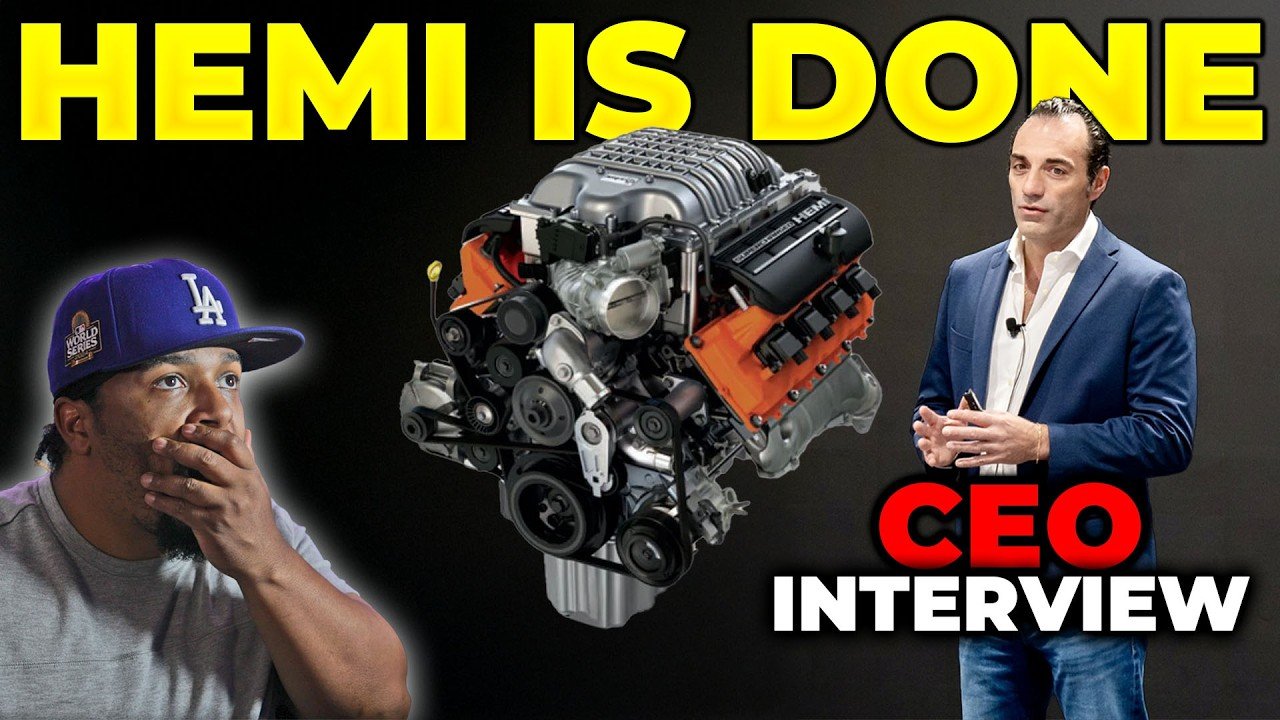
Stellantis’ $13B “U.S. Investment” Sounds Great—Until You Listen For The Hemi
Let’s cut through the confetti.
Antonio Filosa went on CNBC to tout the “largest single investment” in Stellantis’ U.S. history: $13 billion, five all-new products, one all-new engine, 19 product actions, and a 50% bump in U.S. production. If you only catch the sizzle, it sounds like salvation. If you actually listen, especially for Dodge and the Hemi, it’s a whole lot of not said—and that’s the tell.




Here’s what he did say, clearly: Jeep, Ram, Dodge, Chrysler are the focus; the company will add ~5,000 direct jobs and estimates ~20,000 at suppliers; pricing is coming down to competitive (or better) levels; and when Ram announced the Hemi’s return, they booked 10,000 orders on day one. That last line proves what we’ve all known: the V8 is the draw. But after that flex, the interview goes quiet on Hemi—and even quieter on Dodge.
Zoom out and stack yesterday’s press release against the interview. Five all-new vehicles over the next four years. If you track the bread crumbs, four of those five are already spoken for without Dodge getting a real win: two Jeeps (Compass and Cherokee refreshes), Ram’s midsize pickup for Toledo, and a full-size Ram SUV (and yes, the “Ramcharger” name fits like a glove). That leaves one slot—one—for either Dodge or Chrysler across the entire four-year window. Meanwhile 19 product “actions” spread across brands sound busy, but those are tweaks, powertrains, trims, mid-cycle updates—the kind of things Ram alone was already stacking up for the next two years.
Now clock the engine talk. The one “new” engine explicitly highlighted isn’t a V8; it’s the small-displacement program that’s been in the pipeline anyway. No commitment to move Hemi production stateside. No “Gen 4” Hemi nod. No road-map for V8 beyond Ram’s immediate pop. If you’re waiting for Dodge to be publicly blessed with a Hemi future, this interview didn’t do it.
And yeah, the plant politics matter. CNBC pressed on whether production outside the U.S. is getting cut; the answer artfully stayed on “this $13B is about the U.S.” That’s not a promise to shutter or shift anything abroad. If your plan to boost U.S. output by 50% still relies on importing Hemi engines from Mexico, you just accepted the tariff tax in your cost structure—exactly the kind of thing that keeps MSRP and transaction pricing from falling as far as they could if you actually localized the powertrains customers want.
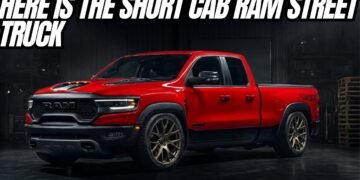
About pricing: Filosa said the quiet part I do like—new launches will be “very competitive,” and many stickers have already been pulled down to match or beat rivals. We’ve seen a real example: the Durango GT with a Hemi landing just over $42K is how you win a family V8 slot. But don’t wave that Durango around while you simultaneously trumpet a coach-built six-figure “street truck” and expect buyers to believe the entire strategy is affordability. The proof has to show up across Ram volume trims, the new mid-sizer, and—most importantly—the gas Charger. Give it the 5.7 Hemi and a truly accessible sales price, and it’ll outsell every Hurricane and EV variant combined. Keep playing sticker games, and it won’t.
Which brings me back to Dodge. In the last month we’ve all heard the same hallway chatter: Cuda sketches, a $30K “Duster-ish” sport coupe target, a Viper-adjacent project, and (the one that actually moves metal) a 5.7-powered Charger that undercuts everything wearing twin turbos or a plug. That’s the ladder that rebuilds the brand: an attainable V8 at the bottom, a rowdy middle, and one halo that makes teenagers redecorate their walls. The CNBC hit should’ve been the perfect moment to plant at least one flag—“Dodge stays ICE with V8 availability across the lineup”—and it didn’t happen.
So here’s the uncomfortable read: this $13B is a bridge, not a blueprint. It keeps factories warm, punches up a few plants, juices Jeep and Ram (again), and buys time. If the winds shift in D.C., don’t be shocked when the same boardroom that once wrote €30–35B EV checks abroad quietly slides back to the old plan: more hybrids, more four-cylinders, fewer V8s, and a lot of “customer-centric” word salad. In that scenario, Dodge gets one new toy in four years and a lot of press-release cameos. Chrysler keeps doing minivan yoga while it whispers about a crossover “soon.” The only thing saving Stellantis from themselves—again—would be the market’s instant feedback loop: announce a Hemi, take 10,000 orders in 24 hours. Announce a turbo six Charger, and you get… crickets.
If I’m wrong, I’ll happily eat crow on camera. Prove it. Move Hemi production to the U.S. Lock a Hemi (or at least a V8) into the Charger program in public. Put the base gas Charger in the low-$40Ks, make the Scat-energy car feel like theft in the upper-$40Ks, and give us one outrageous flagship that starts in the $60ks
Until we hear that, the headline isn’t “largest investment ever.” It’s “largest chance to say the right thing… and didn’t.”