








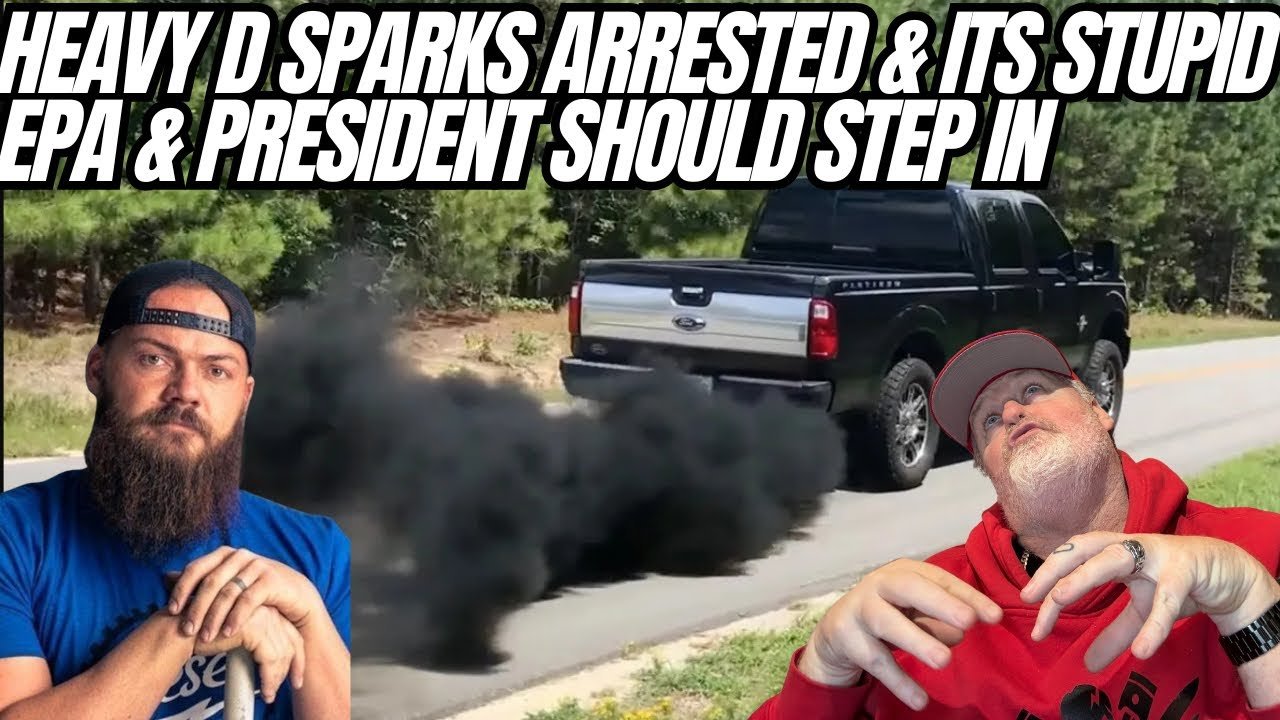
According to multiple reports circulating online, automotive YouTuber and Diesel Brothers co-host Heavy D Sparks has been arrested in Utah. The arrest appears tied to a lingering settlement from a federal emissions-tampering lawsuit, originally filed years ago when the Diesel Brothers TV show featured modified and “deleted” diesel trucks.
The original case, brought under the Clean Air Act, accused the Diesel Brothers crew of building and selling trucks that bypassed emissions controls. A Utah federal court fined them hundreds of thousands of dollars, and Sparks had previously stated that he was working to resolve the dispute. However, new filings suggest the government now alleges non-payment or contempt related to the settlement terms — prompting an arrest warrant.




The news has set off a firestorm across automotive circles. Fans and fellow creators are calling the move “absurd” and “politically motivated,” arguing that tuning or modifying a personal vehicle should not carry the same legal weight as violent crime. As TK from TK’s Garage put it, “You’re depriving somebody of their liberty over mechanical work on a car — that’s insane.”
Sparks, who was recently seen racing his Cummins-powered Ram 3500 at Roadkill Nights and continues to post aviation and automotive content, has built a reputation as a family-oriented creator and businessman. His supporters are urging the public to email the White House and EPA officials, demanding clarity and leniency, especially under the current administration’s stated pro-manufacturing and small-business stance.
While the EPA maintains that emissions laws protect public health, critics argue that enforcement has become punitive — disproportionately targeting small shops and creators. Many in the auto community view this as a test case for how far the government can extend environmental enforcement into the aftermarket scene.
As of this writing, Heavy D Sparks has not publicly commented on the arrest. It remains unclear whether he faces additional charges or if the situation can be resolved through a negotiated settlement.