










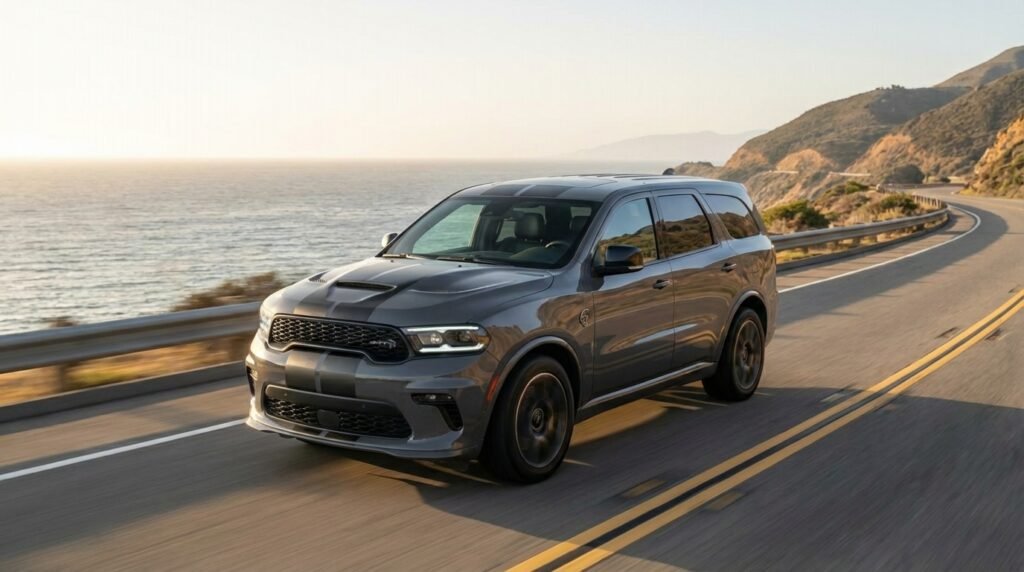
Many enthusiasts have asked which Hemi-powered machines from Dodge will become the most collectible over time. Specifically, the Dodge Durango Hellcat generates a lot of questions regarding its future value. While the simple answer suggests it will take a very long time, these high-performance SUVs can absolutely achieve collector status. However, this only happens under the right circumstances. In addition, you must be willing to wait decades. These Hemi engines, especially this last generation, are spectacular machines.
Consequently, even if they were not perfect, they were worth every penny when they were cheaper. Now, however, Dodge has gotten aggressive with pricing. As a result, they will need to figure out discounts to move new inventory. Nature will take its course in that area. Meanwhile, the focus here remains on the Durango Hellcat. This vehicle has the best chance of becoming a collector item down the road compared to the 392 or RT trims.
Related Post




The Broken Promise of Exclusivity
A critical issue exists with the Durango Hellcat’s history. Dodge announced this vehicle in 2020 as a one-year-only car for 2021. They claimed emissions rules would prevent it from returning. Therefore, buyers rushed to get one, believing it was a rare investment. Dodge explicitly stated that when they turned the order books over to the 2022 model year, the Durango Hellcat would be gone. You essentially had one shot to own this 700-horsepower beast.
However, that promise did not hold up. A few moments later, the Durango SRT Hellcat returned for the 2023 model year. Furthermore, Dodge continued cranking out more units, including the 2026 Durango SRT Hellcat Jailbreak. Everyone who bought the 2021 model as a speculator felt betrayed. Then, they blamed Dodge when production skipped 2022 but resumed heavily in 2023. Dodge is currently pushing hard, adding Hemis, dropping prices, and making more Jailbreaks.
As a result, a lawsuit emerged a couple of years ago. Durango owners were angry that their limited-production SUV was no longer rare. This frustration tripled as production continued into 2024, 2025, and likely 2026. There will simply be a lot of them on the road. Consequently, the fact that production continues limits its immediate investment potential. The clock for collectibility cannot start until production officially ends once and for all.
Why Dodge Kept Building Them
Why did Stellantis continue making this vehicle? Some believe it was a conspiracy and that they never planned for a single year run. However, it is possible the initial plan was genuine. If you look past the surface, the reason for its return becomes obvious. Based on CAFE standards and emissions laws, it is easier to sell a Hellcat Durango than a Charger or Challenger.
This is because regulations classify the Durango as a light truck. Even with strict EV mandates and regulations, selling a truck or SUV with a Hellcat engine remains feasible. Therefore, the return of the Durango Hellcat was a strategic move. It allowed Dodge to keep delivering Hemis to the market while hedging against administrative changes. It is technically a passenger vehicle, but the light truck classification saves it.
Factors Driving Future Collectibility
Despite the production numbers, these vehicles will eventually find their way into the collector realm. The primary driver is cultural significance. We are talking about an SUV with a 700-horsepower Hellcat engine. People will seek these machines out decades from now. In addition, production remains relatively limited compared to standard traffic.
Even though they are available year over year, they are very expensive. A $100,000 price tag limits the number of units on the road. Once you add options, it becomes a high-dollar purchase. Thus, it will still be a lower production vehicle compared to the RT or Pentastar models. Furthermore, the performance and driving characteristics are spectacular. This all-wheel-drive machine is reminiscent of the Trackhawk. It is the closest you can get to a Trackhawk in a vehicle still sold today.
The Timeline: 0 to 5 Years
When will they actually become collectible? First, the timeline only begins once Dodge stops selling them completely. For the first zero to five years after discontinuation, consider it a driver’s car. Unfortunately, it is not yet collectible. Values will remain stable, but it will essentially be a used car.
During this phase, enthusiasts drive ownership. Most people are not buying them unless they love the brand. Consequently, low mileage examples will hold their value well. However, if you put significant miles on them, prices will drop. This is unavoidable for high-performance vehicles. A Hellcat with high mileage is scary for a used buyer. Nevertheless, values should stay fairly stable because new prices have been higher each year.
The Timeline: 5 to 10 Years
The midterm phase occurs five to ten years after production ends. This is when real collector interest begins. Enthusiasts will start hunting for low-mileage examples. These SUVs will start to feel special in the marketplace. Consequently, they will solidify a baseline for value.
Prices will likely settle pretty strong, similar to how Hellcat Chargers are performing now. For example, 2021 and 2022 Chargers with around 11,000 miles still command asking prices in the mid-70s. That is impressive retention for a four-year-old car. The Durango Hellcat should follow a similar trajectory during this period.
The Long Term: 10 to 20+ Years
The market only recognizes true collector status after a decade. Once we get past ten years post-discontinuation, preserved examples may see strong appreciation. In addition, museum pieces and historically significant trim options could command significant values. However, the timeline really picks up around 15 to 20 years.
Realistically, you are looking at 20 years plus before these become serious collectibles. At that point, buyers will consider a Durango with 10,000 or 20,000 miles as low mileage. Consequently, that is when they will appreciate significantly. Those expecting a quick turnaround profit are mistaken. Even if it had remained a one-year production car, values would have likely just held steady rather than spiked immediately.
Final Verdict: Drive It
The big question remains: when will they finally stop making them? If they keep producing them into 2027 or 2030, there will be more inventory on the market. Therefore, the best advice is simple. Do not buy a Dodge Durango Hellcat to collect it. Buy it to drive it.
Enjoy the vehicle for what it is. Instead, put lots of miles on it and live your life. If you want a serious investment, do not choose a modern car. Put your money into real estate, stocks, silver, or gold. Dodge built the Durango to be driven, not parked in a garage for thirty years.