



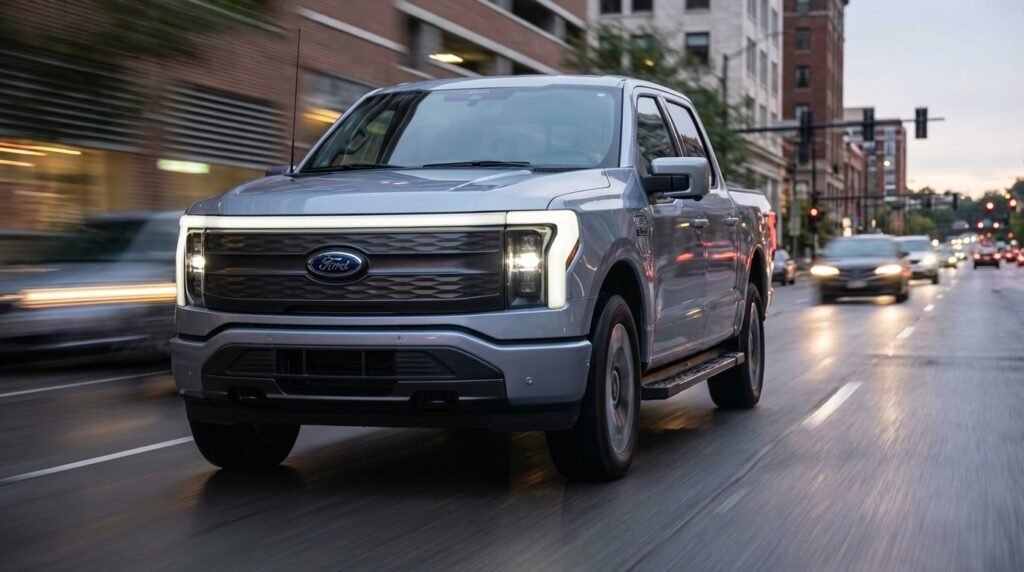
The F-150 Lightning has burst onto the scene as a headline-grabbing electric pickup, and it is changing who buys trucks. For example, Ford’s marketing and wide coverage have convinced many buyers that an electric F-150 can replace their daily vehicle. However, press attention and brisk sales do not settle the deeper question: is this a genuine work truck or mostly a lifestyle EV that looks like a pickup? In addition, the vehicle’s engineering choices create real trade-offs between performance, convenience, and traditional capability. As a result, some drivers praise its instant torque and quiet ride, while others find the Lightning falls short on tasks that define a truck. Ultimately, this article breaks down who is buying the Lightning and why its towing and charging reality matters for people who need a tool, not just a statement.
The Conquest: Who Is Actually Buying the F-150 Lightning?
Coverage suggests the F-150 Lightning has attracted buyers who differ from the classic F-150 crowd, and analysts have noted a notable shift. For instance, reporting on buyer behavior indicates many Lightning owners come from electric cars, luxury sedans, or crossover SUVs rather than construction fleets or rural buyers. Moreover, some outlets describe the Lightning as a “conquest” vehicle that pulls customers from unfamiliar segments. In contrast, traditional F-150 buyers historically prized towing, payload, and simple, rugged utility. Consequently, the Lightning often lands in suburban driveways where buyers value tech features and daily comfort. In addition, this new cohort tends to use the truck for lifestyle activities, not heavy work. Therefore, Ford has expanded the F-150’s audience, but it has also blurred the lines between a utilitarian pickup and a premium EV built around convenience and performance.
A New Demographic for a New Truck
Reports show many Lightning buyers skew younger and more tech-focused, and they increasingly see the truck as a high-tech lifestyle vehicle. For example, these owners often prioritize instant acceleration, in-cabin tech, and environmental credentials over maximum towing and payload. Moreover, buyers in this group commonly use the bed for recreation gear like bikes and camping equipment rather than construction materials. In addition, the electric drivetrain and quiet operation appeal to suburban owners who value comfort and refinement. As a result, the Lightning functions more like a premium crossover or performance EV for many customers. Therefore, while Ford has successfully broadened the F-150’s appeal, this new demographic also highlights the truck’s compromise between tech-forward features and the raw capability expected by traditional users.


The Great Disconnect: Where the Lightning Falls Short for Real Work
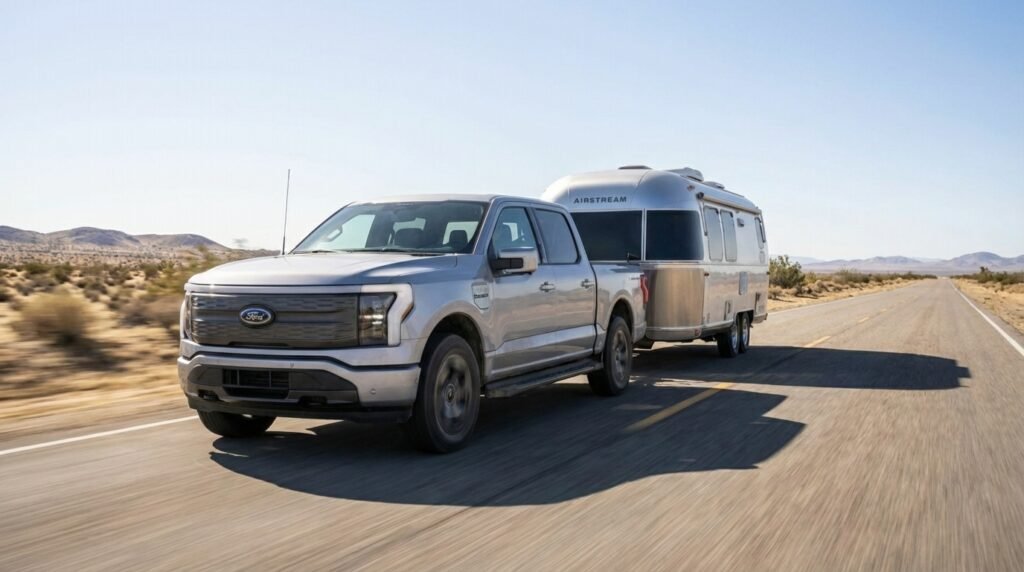
The Lightning’s appeal to tech-focused buyers contrasts sharply with its performance under heavy-duty use, and that gap reveals engineering limits. Specifically, real-world towing exposes shortcomings that marketing glosses over. For example, tests that simulate hauling heavy trailers show that the truck’s range plunges dramatically once you attach a load. Moreover, the Lightning’s identity splits between being a quiet, fast commuter and carrying an F-150 badge built on capability. Consequently, when owners push the vehicle into sustained towing or frequent heavy hauling, the advantages of electric propulsion fade against practical constraints. In addition, planning a workday around charging windows and range can become a daily challenge for someone who depends on long-distance towing. Therefore, the Lightning’s strengths for lifestyle users do not translate cleanly into the tool-like reliability many truck buyers require.
The Towing Nightmare: Real-World Range Under Load
Towing tests have highlighted the Lightning’s sharp range reduction once a trailer is attached, and impartial outlets documented steep drops in practical range. For instance, independent evaluations showed real-world towing ranges that often fell into roughly the 90–120 mile window with heavier trailers, which contrasts with the truck’s EPA system estimates when unladen. Moreover, MotorTrend’s towing work found range losses that exceeded two-thirds in some scenarios, underlining how quickly usable distance evaporates while hauling. Consequently, a day trip with a boat or a long pull with a travel trailer can require frequent stops and detailed charging planning. In addition, this difference makes long-distance towing far more logistically complex than refueling a gasoline truck. Therefore, for users who depend on long, uninterrupted towing range, the Lightning’s behavior on real-world tests is a critical limitation that alters trip planning and utility.
The Charging Infrastructure: Practical Bottlenecks for Towing
Beyond range loss, charging logistics create further friction for drivers who tow, and public infrastructure often does not suit trailers. For example, many fast chargers are arranged like standard parking stalls rather than pull-through bays, which forces drivers to unhitch trailers at many locations. Moreover, unhitching and re-hitching add time and hassle to each stop, and they complicate trips that would otherwise be routine in an internal combustion truck. In addition, some chargers sit in tight lots where maneuvering a truck and trailer together proves difficult or impossible. Consequently, the current charging network design magnifies the Lightning’s towing limitations, especially for those who travel with large or heavy trailers. As a result, until more charging sites offer truck-friendly layouts, towing with an EV pickup will often remain less convenient than towing with a gasoline truck.
The Silver Lining: Utility That Fits a Different Use Case
Despite the towing and charging constraints, the Lightning includes several genuinely useful features that suit its new buyer base, and these innovations offer capabilities no traditional F-150 matches. For example, the truck’s electrical architecture enables vehicle-to-home and exportable power features that turn the vehicle into a mobile energy source. Moreover, this functionality proves valuable for job sites, tailgates, and power outages where portable, quiet electricity matters. In addition, the Lightning provides a sizable lockable front cargo area, which many owners find practical for daily errands and secure storage. Consequently, while the truck may struggle under heavy towing duty, it excels at delivering household-level utility in specific scenarios. Therefore, for customers who prize on-board power, convenience, and daily comfort, the Lightning presents meaningful and novel value.
Pro Power Onboard and On-Demand Electricity
Ford equips the Lightning with an exportable power system that lets owners run tools, appliances, and electronics from the vehicle, and this concept changes how people use a truck. For example, contractors can power saws and compressors at a job site without a gas generator, and homeowners can maintain essential loads during outages. Moreover, recreational users benefit when camping or tailgating, because the truck supplies household-style electricity quietly and cleanly. In addition, several media reports and Ford materials describe higher-output configurations intended for substantial loads, which underscores the system’s flexibility. Consequently, Pro Power Onboard positions the Lightning as a multi-purpose energy resource rather than just transport. Therefore, while it does not erase towing limitations, the feature adds practical, real-world utility that resonates with the truck’s new owner profile.
Daily Driving and Performance: A Different Kind of Strength
As a daily driver, the Lightning often impresses with instant torque, quiet operation, and a smooth ride, and many owners praise its car-like manners. For instance, the truck accelerates briskly from a stop and delivers seamless passing power on highways. Moreover, the lack of engine vibration and refined interior packaging make it feel more premium than some traditional pickups. In addition, the front trunk provides secure, weatherproof volume for groceries or luggage, which some buyers prefer over an open bed for certain errands. Consequently, for suburban and urban owners who mostly drive locally and occasionally haul light loads, the Lightning can replace a family SUV or performance EV. Therefore, its daily strengths make it a compelling option for buyers who favor refinement and technology over raw hauling capability.
The Verdict: A Tale of Two Trucks
In the end, the F-150 Lightning splits the F-150’s identity and serves two very different roles, and understanding that split is key for prospective buyers. On one hand, Ford engineered a compelling conquest vehicle that brings electric performance, advanced tech, and new utility to customers who never considered a traditional pickup. Moreover, for lifestyle users and daily drivers, the Lightning often represents a home run—offering comfort, instant power, and on-board electricity. On the other hand, for anyone who needs a reliable, long-range towing tool, the Lightning currently falls short. Consequently, its real-world towing range and current charging infrastructure make it a poor substitute for a conventional work truck in many applications. Therefore, whether buyers call it a truck depends entirely on how they plan to use it.
Ultimately, Ford did not simply electrify an F-150 and leave everything else unchanged; rather, the company built a new vehicle that borrows the F-150 name and some of its form. For those who want a premium EV with a bed for weekend gear, the Lightning delivers. However, for people who require the endurance and quick refueling of an internal combustion pickup during long hauls or heavy-duty work, the Lightning is not yet a complete replacement. In addition, buyers should weigh towing needs, charging access, and how they plan to use on-board power before deciding whether the Lightning truly fits their truck definition.
Sources:
- MotorTrend: The Electric Ford F-150 Lightning Struggled in Our Towing Test
- Edmunds: Electric Tow Test — Ford F-150 Lightning vs. Rivian R1T
- Out Motorsports: Towing With the Ford F-150 Lightning
- Teslarati: Ford F-150 Lightning has found a unique niche of consumers