










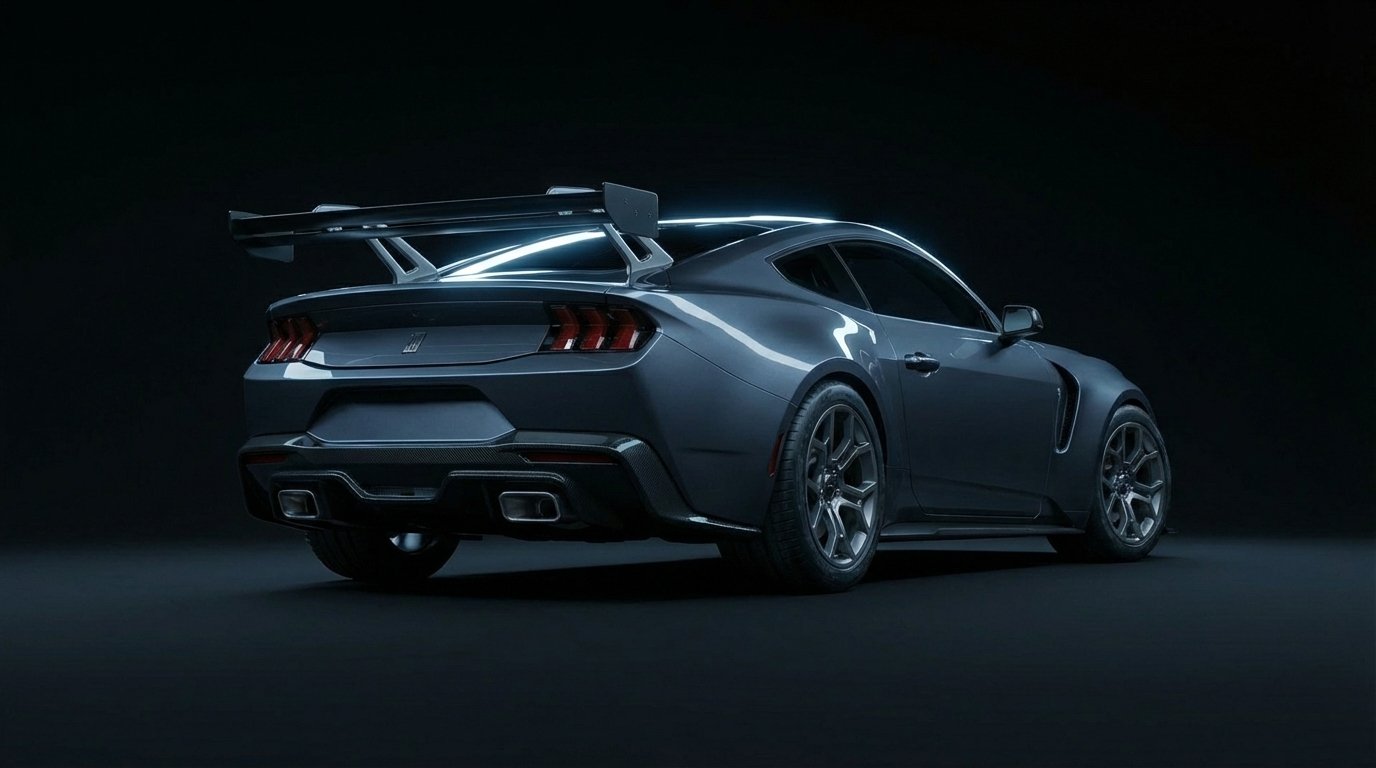

Ford Mustang GTD arrives as a clear, unapologetic attempt to challenge the supercar hierarchy, and it does so with intent. Moreover, Ford built this car as a street-legal GT3-style racer, not as a typical weekend cruiser, and the company engineered nearly every component to perform on the track. Consequently, engineers focused the project specifically on Nürburgring lap times, with a stated target below seven minutes. In addition, Ford assembled a package that pairs extreme power with advanced chassis hardware and aerodynamics. For example, the GTD carries an SAE-certified supercharged 5.2-liter V8 that produces 815 horsepower and 664 pound-feet of torque. Meanwhile, the car combines that engine with a rear-mounted transaxle, Multimatic suspension, active aero, and a carbon-fiber body to deliver a very different Mustang experience. Finally, Ford expects the GTD to compete directly with established track-focused cars such as the Porsche 911 GT3 RS and Chevrolet’s Corvette ZR1.
Ford Mustang GTD Powertrain: An 815-HP Predator V8
Under the vented carbon-fiber hood sits a supercharged 5.2-liter V8 derived from Ford’s Predator family, and it receives substantial rework for track duty. The company certifies the motor at 815 horsepower and 664 lb-ft of torque, with peak power and torque occurring within a high-revving band. In addition, Ford focused the engine on repeatable performance under extended use, so engineers optimized cooling, airflow, and internal components for endurance. As a result, the GTD’s powertrain delivers explosive acceleration and strong midrange thrust while remaining controllable for road use. Moreover, the unit pairs with an eight-speed dual-clutch transaxle mounted at the rear, which relieves the front end and changes the car’s weight bias. In short, the drivetrain represents a complete rethink of the Mustang formula, and it forms the foundation for the GTD’s supercar-level ambitions.
More Than Just Raw Power
Big horsepower alone does not guarantee lap times, and Ford knows this, so the GTD combines engine output with robust supporting systems. For instance, reviews and Ford materials note an ultralight titanium exhaust option that trims weight and enhances the car’s acoustic presence. Furthermore, engineers equipped the braking and cooling systems to withstand repeated high-speed laps, and the package includes carbon ceramic brakes to resist fade during extended track work. In addition, the drivetrain’s layout and gearing work with the Michelin tires and optimized aerodynamics to translate power into usable lap time. Consequently, the GTD aims to deliver consistent performance over multiple hot laps. Ultimately, this holistic approach separates a fast road car from a true track weapon, and Ford purposely built the GTD to behave like the latter.


A Titanium Screamer
Ford highlights an ultralight exhaust system that contributes to the GTD’s character without compromising track endurance. The exhaust uses lightweight materials to reduce mass and improve throttle response, and reports also indicate valve control for a more engaging sound and tailored backpressure. In addition, the system accentuates the V8’s tone so the car communicates intent to the driver and to onlookers alike. Importantly, this hardware ties into the GTD’s broader engineering: when the car demands low weight and high durability, every system must pull its weight. Therefore, the exhaust serves a dual role by trimming mass and shaping the driving experience. Finally, the audible presence complements the car’s aggressive aerodynamics and visual cues, and it helps signal that the GTD aims to be both visceral and purposeful.
The Perfect Balance: Ford’s Transaxle Gambit
Mustang packaging traditionally favored a front-mounted transmission, but the GTD flips that convention by placing the eight-speed dual-clutch transaxle at the rear, and this move drastically alters dynamics. Consequently, engineers located the gearbox between the rear wheels and linked it to the engine with a lightweight carbon-fiber driveshaft. As a result, the car achieves a near 50/50 front-to-rear weight distribution, which transforms handling and balance compared with conventional Mustangs. In addition, moving heavy components rearward improves traction under acceleration while also stabilizing braking behavior. Moreover, the transaxle allows the front end to be lighter and more responsive to steering inputs, which enhances turn-in and midcorner neutrality. Therefore, the drivetrain layout represents a fundamental shift: Ford took a muscle-car platform and re-architected it to behave more like a mid-engined sports car in terms of balance and agility.
Why 50/50 Weight Distribution Matters
Achieving near-equal weight distribution delivers several practical benefits on a technical circuit. First, balance helps the tires share load more evenly, which improves traction when exiting corners and lowers the risk of understeer. Next, braking becomes more stable because the mass does not overload the nose, so the car resists excessive pitch under deceleration. In addition, drivers experience a more neutral and predictable chassis, which aids confidence at high speeds. As a result, lap times improve because the driver can push harder without unexpected behavior. Finally, this setup pairs with the GTD’s other systems—suspension, tires, and aero—to create a cohesive platform that rewards precise inputs and sustained aggression during long stints.
Glued to the Tarmac: Suspension and Aero Wizardry
Grip defines what the GTD can do, so Ford worked closely with Multimatic to deliver a race-oriented suspension package that maximizes tire performance and aerodynamic stability. Specifically, the car uses Multimatic’s Adaptive Spool Valve (ASV) dampers, which offer continuously variable damping characteristics to suit both road and track use. In addition, the chassis features inboard or pushrod-actuated elements and visual cues that reference prototype race cars, and observers note visible suspension components that underline the GTD’s motorsport pedigree. Moreover, Track Mode alters spring rates and ride height significantly, enabling low-drag setups for straights and high-downforce setups for corners. Therefore, the suspension serves two masters: street manners during transit and uncompromising control when the driver asks for it on circuit.
Multimatic’s Magic Dampers
Multimatic’s ASV dampers provide precise control over compression and rebound, and they change behavior seamlessly between modes. On public roads, the system keeps the ride composed while filtering imperfections and maintaining stability. However, switching to Track Mode dramatically stiffens the setup and drops ride height by nearly 40 millimeters, which lowers the center of gravity and improves aerodynamic interaction. Furthermore, the dampers adjust continuously to maintain tire contact and dissipate energy during high-frequency inputs. Consequently, the GTD feels planted and predictable at speed, and the system helps preserve tire life during aggressive use. Finally, the combination of ASV dampers and optimized spring rates gives drivers the confidence to exploit the car’s power and downforce without surprising transitions.
Downforce is King: Active Aero and DRS
Aerodynamics play a decisive role at the Nürburgring, and the GTD uses active aero with a Drag Reduction System (DRS) to balance top speed and cornering grip. For example, the rear wing mounts on swan-neck pylons to reduce disturbed airflow, and the system varies the wing angle plus front underbody flaps to cut drag on long straights. In addition, the aero package produces roughly 1,900 pounds of downforce at 180 mph in its high-downforce configuration, which presses the car onto the track and boosts mechanical grip. Consequently, the GTD can run high speeds down straights while maintaining enormous cornering loads when the aero snaps back to full attack. Moreover, this flexibility helps shave seconds on mixed circuits, and it underscores why active aero has become essential for modern track-focused road cars.
The Nürburgring Gauntlet: GTD vs. The World
Ford set a clear benchmark for the GTD: a sub-seven-minute lap of the Nordschleife, and that target places the car among the fastest production cars on the planet. In comparison, rivals such as the Porsche 911 GT3 RS and Chevrolet’s Corvette ZR1 sit in the same conversation, which means the GTD must combine outright speed with cornering precision. Furthermore, Ford built the GTD to demonstrate world-class engineering across powertrain, chassis, aero, tires, and brakes, and the company insists that each component works in concert to reduce lap times. As a result, the GTD functions as a comprehensive test of Ford’s capability to translate race-bred technology into a road-legal package. Ultimately, the lap time will confirm whether that engineering delivers the intended domination.
By the Numbers: GTD Spec Breakdown
The following list summarizes the core confirmed specifications that define the GTD and its track-focused intent:
- Engine: Supercharged 5.2L Predator-derived V8
- Horsepower: 815 hp (SAE-certified)
- Torque: 664 lb-ft
- Drivetrain: Rear-mounted eight-speed dual-clutch transaxle
- Weight Distribution: Near 50/50 front-to-rear
- Suspension: Multimatic Adaptive Spool Valve (ASV) dampers
- Body: Extensive carbon-fiber panels
- Wheels: Optional forged magnesium
- Tires: Front 325/30ZR-20, Rear 345/30ZR-20 Michelin Pilot Sport Cup 2
- Brakes: Carbon ceramic units
The Sub-Seven-Minute Promise
Every element on the GTD serves one overarching purpose: extracting time on demanding circuits. Accordingly, the car uses oversized Michelin Cup 2 rubber and high-performance carbon ceramic brakes to maintain grip and resist fade during repeated hot laps. In addition, the transaxle layout, adaptive dampers, and active aero work together to produce consistent handling and repeatable lap times. Therefore, the GTD addresses the usual weak points of high-horsepower cars by ensuring the tires, brakes, suspension, and aero can sustain the assault. Moreover, engineers optimized gearing and cooling to hold performance lap after lap. As a result, Ford expects the package to meet its sub-seven-minute objective by balancing raw acceleration with sustained cornering capability and aerodynamic stability.
Carbon Fiber Diet and a Hefty Price Tag
To reach its performance goals, Ford built the GTD from lightweight materials where they matter most, and that includes carbon-fiber fenders, hood, trunk, door sills, splitter, and diffuser. In addition, optional forged magnesium wheels cut unsprung mass, improving suspension response and rotational inertia. Consequently, these choices lower the center of gravity and help the car change direction more quickly. Furthermore, buyers should expect extensive use of motorsport-grade materials throughout the cabin and chassis, which contributes to the GTD’s exclusivity. Finally, all this technology carries a premium: the GTD’s estimated starting price sits near $325,000, which places it above many established supercars but reflects its limited production and advanced engineering.
The Verdict: Is the Mustang GTD Worthy?
The Ford Mustang GTD represents a dramatic redefinition of what a Mustang can be, and it challenges preconceived limits by applying race-derived solutions to a road-legal car. For years, other manufacturers claimed the top spots for circuit performance, yet Ford now offers a purpose-built challenger with world-class components. In addition, the GTD signals Ford Performance’s intent to compete directly with the fastest track-focused road cars, and the company backs that claim with a coherent engineering package. Ultimately, the Nürburgring timing will supply the objective measure of success, and until then the GTD stands as a persuasive demonstration of what happens when muscle-car ethos meets modern motorsport technology. In short, Ford aims to win, and the GTD appears engineered to do exactly that.
Sources:
- Ford Official Mustang GTD Page
- Car and Driver: 2025 Ford Mustang GTD Test
- MotorTrend: 2025 Ford Mustang GTD First Drive Review
- Edmunds: 2025 Ford Mustang GTD First Drive Review