






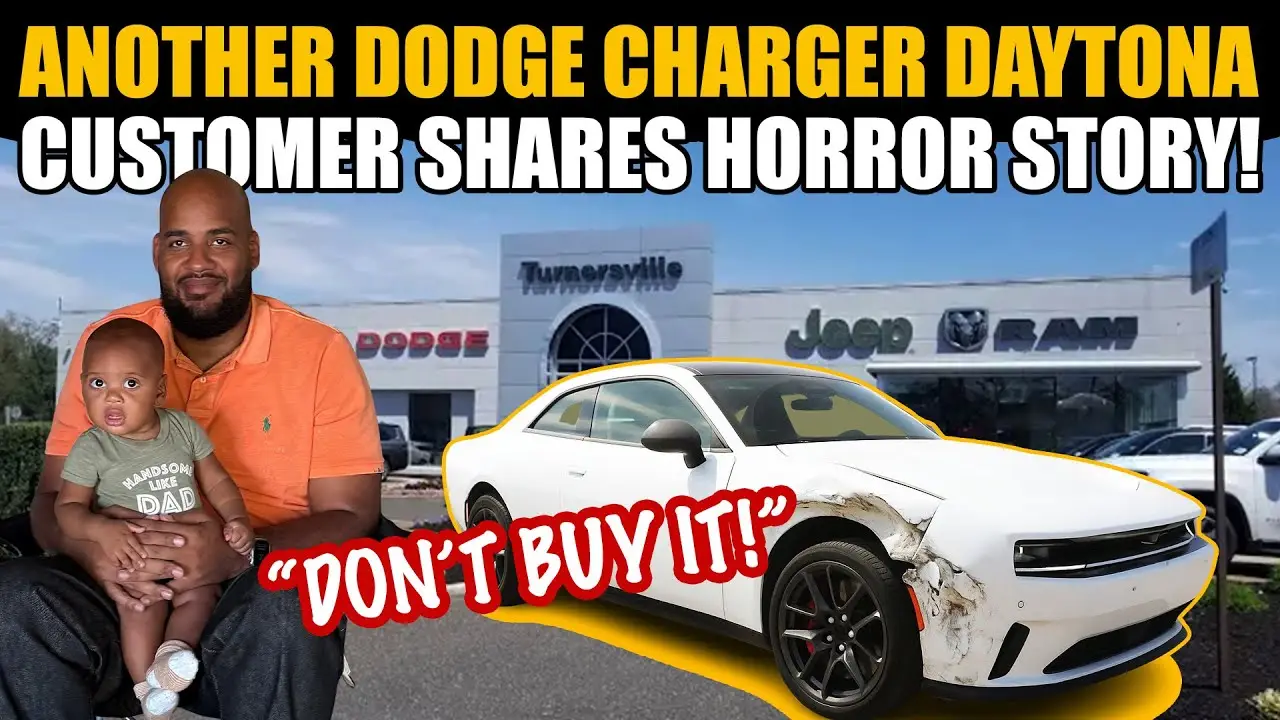
“I Wouldn’t Lease It for a Dollar”: One Charger Daytona Owner’s EV Ordeal
When “Mike” (a forum acquaintance turned friend) took delivery of his 2024 Dodge Charger Daytona EV (Scatta Stage 2) in March, he was ready to be an early adopter. He’d daily-driven EVs before, liked the instant torque, and didn’t miss the exhaust note. Within weeks, that optimism dissolved into a months-long saga of breakdowns, back-orders, and bureaucratic dead ends that he now describes bluntly: “Nobody should buy this car.”
The first red flags
The first failure came on a hospital run. With his wife about to be induced, the Daytona refused to start in the parking garage—every warning light on, no drive. An hour later it inexplicably rebooted and ran. Mike did the responsible thing: dropped the car at the dealer, documented the issue, and picked it up after technicians couldn’t reproduce the fault.
Related Post


A minor crash, a major brick
On May 1, a driver sideswiped the Daytona. The body shop initially quoted two weeks. Instead, front-end parts were back-ordered for weeks, then months. When the bumper finally arrived, calibration and alignment roadblocks piled up. The shop eventually admitted they couldn’t get the car to start and asked a Dodge dealer to step in.
The first Dodge store declined after speaking with the shop—“things weren’t adding up,” Mike was told. A second dealer accepted the car but warned of delays: they already had another Daytona EV waiting with similar 12-volt and no-start issues.
The no-start loop
Communication wobbled, timelines slipped, and status updates contradicted each other. One week, Mike was told a 12-volt battery had failed and needed replacement; the next, the technician said that work hadn’t happened. Today, the official status is stark: new 12-volt installed, car still won’t start. The dealer is now working with Stellantis engineering to triage the vehicle remotely.
Lemon law? Not so fast
Because the car was in a collision—even a minor, non-structural front-end hit—two lemon-law attorneys passed on the case. Their read: once a crash enters the file, most state statutes require the defect to be unrelated to the accident and to re-occur after a full repair. That leaves Mike in limbo: paying for a vehicle he drove roughly six weeks before it became a 6,000-pound paperweight.
The pattern owners fear
Between the hospital no-start, an on-ramp “turtle mode” episode that self-cleared after a reboot, and weeks of immobilization after body repairs, Mike’s trust is gone. He also watches the owner forums: celebratory delivery posts often morph into flatbed photos weeks later. Some posts advise carrying a 10mm socket to pull the 12-volt lead and “reset” the car roadside—advice that would be farcical if it weren’t so common.
Adding to the frustration, owners report over-the-air updates that add games and UI tweaks while others claim certain updates brick cars—fuel for the perception that the product team is polishing distractions while foundational reliability lags. One service advisor even hinted a “large recall” could be coming; that’s unconfirmed, but the rumor speaks to the mood.
What prospective buyers should know (and do)
- Early-adopter taxes are real. First-year vehicles can be fine—or very not fine. With the Daytona, parts availability, calibration procedures, and field know-how are still maturing.
- Insurance + body shop selection matters. If you buy/lease one, make sure your insurer and repair network have EV-certified shops with OEM scan tools and documented calibration capabilities.
- Document everything. Save texts, repair orders, and tow receipts. If your state allows, file NHTSA complaints for no-start/drive-system faults—patterns get attention.
- Know your state’s lemon law. Some require a set number of repair attempts or days out of service and treat accident vehicles differently. Arbitration clauses can change the path.
- Consider payment relief. If immobilized, ask the captive finance arm about deferments or hardship assistance; some will help while a warranty claim drags on.
- Escalate early. Get a case number with Stellantis, request a case manager, and keep communication in writing.
The bottom line
Mike’s story isn’t every owner’s story—but it’s not rare enough to ignore. The Charger Daytona EV can drive great when it drives at all; the problem is confidence. Until parts pipelines, calibration procedures, and field diagnostics are bulletproof, the risk of being stranded—mechanically or procedurally—remains elevated.
Mike’s verdict, six payments in and months without a car: “I wouldn’t lease it for a dollar.” If you’re tempted by a screaming deal, weigh that sentence against the savings.
Loading collections…