



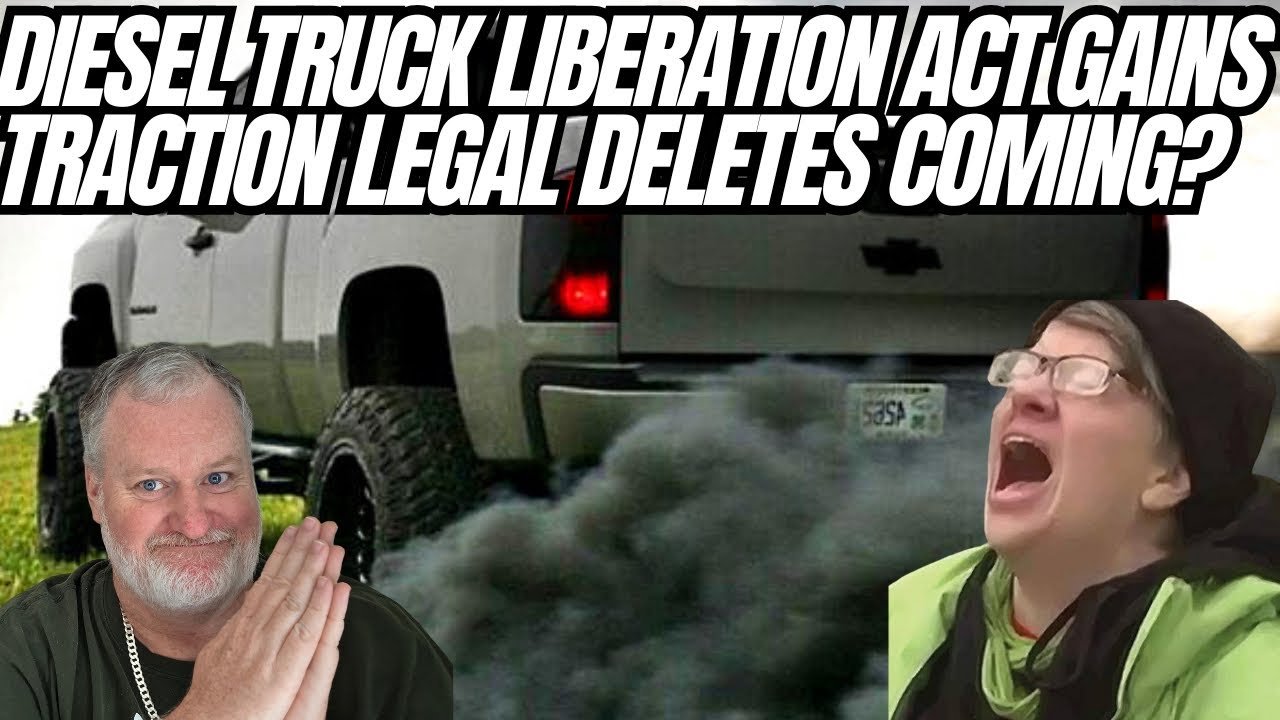
The Diesel Truck Liberation Act Is Real—And It’s A Big Swing
Rainy Oxford day or not, I’ve been knee-deep verifying this story because it touches everything we care about here: safety, freedom to wrench, and whether regulators have any common sense left.
Quick lay of the land:
Related Post



- The bill: Senator Cynthia Lummis (WY) introduced the Diesel Truck Liberation Act. It’s aimed at stopping EPA/CAA enforcement around emissions devices on heavy-duty trucks and vacating/expunging prior federal penalties for related conduct. Multiple industry outlets have covered it, and the senator is using the case of Wyoming diesel mechanic Troy Lake—who served time over “delete” work—as Exhibit A for reform. She’s also pressed the White House to pardon Lake. Trucks, Parts, Service
- The crash that lit a fuse: In California, a horrific I-10 multi-vehicle crash in Ontario killed three people. Local reporting identified the arrested truck driver and pinned the timeline at just after 1 p.m., with westbound lanes closed for hours. YouTube
- The federal hammer: After a nationwide audit, U.S. DOT told every state to stop issuing non-domiciled CDLs to ineligible foreign nationals and comply with federal eligibility rules. DOT says California claimed compliance—then upgraded a license days before the crash, violating the directive. DOT has already withheld $40 million and warned California it’s at risk of another $160 million loss if it doesn’t get in line. ABC7 Los Angeles
- The language rule that keeps getting ignored: Federal regs already require CDL drivers to read and speak English sufficiently to converse with the public, understand highway traffic signs, respond to officials, and make entries on reports. That’s not new; it’s baked into 49 CFR 391.11(b)(2). Facebook
So yeah—this isn’t just internet chatter. There are two live fronts: Congress taking a swing at emissions enforcement, and DOT yanking levers on state licensing after a deadly crash.
What The Diesel Truck Liberation Act Would Change
Here’s what’s on the table, in plain English:
- Stops new federal enforcement for installing, removing, certifying, or maintaining emissions-control devices/OBD systems under the Clean Air Act on motor vehicles and engines. That would cut off the EPA’s current pathway for civil cases against shops and tuners. (Industry summaries emphasize this as the bill’s core.) Trucks, Parts, Service
- Vacates/expunges past penalties stemming from that conduct. This is the “clean slate” piece that has mechanics cheering and environmental groups fuming. Reporting around Lummis’s push links this directly to the Troy Lake case. Trucks, Parts, Service
- No private liability for selling/using vehicles or parts without those devices—again, that’s how coverage describes the draft. Translation: customers, resellers, and shops wouldn’t face federal civil or criminal exposure for “delete” work that’s been hammered the last few years. Trucks, Parts, Service
A couple of realities:
- This is federal. States could still try to play their own games (California will), but the giant hammer—the Clean Air Act enforcement pipeline—would be shut off if this passes as described.
- Off-road/first responders are the moral wedge. Proponents keep spotlighting fire trucks, ambulances, and school buses sidelined by DEF/EGR faults in harsh climates. That’s deliberate framing—and politically effective. Trucks, Parts, Service
Why DOT vs. California Matters Right Now
Separate track, different branch of government—but it feeds the same national argument about safety and standards.
- DOT’s order & money: The department audited states on non-domiciled CDL issuance and English-proficiency compliance. It says California violated the new federal directive almost immediately before the Ontario crash. As a result, DOT withheld $40M and publicly warned about $160M more at risk. That’s not symbolic; it hits programs and enforcement budgets. ABC7 Los Angeles
- The crash is the catalyst: Local news captured the scale and aftermath on the I-10—four semis, multiple passenger vehicles, three dead, long closure. Regardless of the suspect’s immigration or employment status, the takeaway for D.C. is licensing compliance failed where it must not fail. YouTube
- The rule that already exists: Again, federal regs require CDL drivers to read/speak English and understand signs. That’s black-letter law via 49 CFR 391.11(b)(2). If a driver can’t meet it, they shouldn’t be licensed—period. Facebook
The Troy Lake Case: Why It’s Center Stage
- Who he is: A Wyoming diesel mechanic who disabled emissions systems to keep rigs and municipal vehicles running; he was charged and served time for Clean Air Act violations. Coverage says he’s since been on home confinement. This is the face lawmakers chose to sell the bill. Trucks, Parts, Service
- Why it resonates: When a shop helps a fire truck or ambulance keep moving during a DEF fault, the public sees safety first, not emissions compliance. Lummis is leaning into that reality—and she’s formally sought a pardon. Trucks, Parts, Service
What This Means If You Drive, Wrench, Or Manage A Fleet
If you’re a driver (CMV or civilian):
- Expect more high-profile enforcement in the near term as DOT pushes states to prove English-proficiency and eligibility compliance. California is the headline, but the audit was nationwide. ABC7 Los Angeles
- After tragedies like the Ontario I-10 crash, agencies tend to tighten inspections and scrutinize CDL issuances—especially at scales and during post-crash reviews. YouTube
If you’re a shop or tuner:
- The risk math today hasn’t changed yet; until a bill is signed, Clean Air Act enforcement still exists. But if the Lummis bill advances with vacatur/expungement intact, the federal exposure for past delete work could be wiped, and future exposure curtailed. Watch this closely. Trucks, Parts, Service
If you run municipal equipment (fire/EMS/school fleets):
- You’re smack in the political crosshairs. Expect lawmakers to ask for breakdowns, response delays, and cost data tied to DEF/EGR failures to bolster the case for the bill. That testimony will matter. Trucks, Parts, Service
Where I Land
I want clean air and safe roads. Both. But I also live in the real world:
- If English-proficiency is the law—and it is—enforce it. Don’t hand 80,000-lb rigs to anyone who can’t read the signs or converse with officers. That’s not xenophobia; that’s physics and public safety. DOT pulling funds to force compliance is the kind of pressure states notice. ABC7 Los Angeles
- If EPA enforcement is sidelining critical vehicles and punishing mechanics who keep emergency fleets alive in winter, then Congress should draw clearer lines. The Diesel Truck Liberation Act goes further than I expected—especially with vacatur/expungement—but it’s a predictable reaction to years of one-size-fits-all rules failing in the field. Trucks, Parts, Service
Bottom line: Two trains are moving. One is a regulatory correction (DOT vs. California) aimed at safety and standards. The other is a legislative counterpunch (Lummis bill) aimed at overreach and practicality. If both land, we could see safer roads and saner wrenching. If neither lands, we’re stuck with the worst combo: paper compliance, real-world carnage, and shops afraid to fix what’s broken.
I’ll keep digging and testing parts of this story as it evolves. In the meantime, if you’ve got first-hand experiences—DEF faults on municipal trucks, CDL testing gaps you’ve witnessed, emissions fixes that saved a response—drop them. The people writing these rules are suddenly listening.
Sources & Docs I Checked
- DOT’s public notice on funding actions and compliance related to CDL eligibility (non-domiciled CDLs, English requirements) and California sanctions. ABC7 Los Angeles
- 49 CFR 391.11(b)(2) — FMCSA’s English-language requirement for CMV drivers. Facebook
- Coverage of the Diesel Truck Liberation Act and the Troy Lake case (industry outlets and regional reporting). Trucks, Parts, Service
- Local reporting on the Ontario, CA I-10 crash (timeline, casualties, traffic impact). YouTube