



Demon 170 Reality Check: If You Paid Over Sticker, Your Insurance Plan Might Be the Real Time Bomb
Picture this: you saved for decades, finally pull the trigger on a Demon 170 the moment they hit, and you swallow a dealer markup (or a flipper’s tax) because everyone swore this was the sunset of gas—last call for big-power Mopar history. You tuck it in the garage, barely drive it, and tell yourself the “investment” will pay you back later.
Fast-forward. Gas isn’t dead. Hemi’s are back in headlines. EV demand isn’t what the hype machine promised. And some Demon 170s are popping up with serious engine headaches and parts delays—the kind of stuff that strands a six-figure toy for months. I’ve talked to owners. One finally got a buyback after waiting half a year for an engine. Others are still in limbo.
Related Post


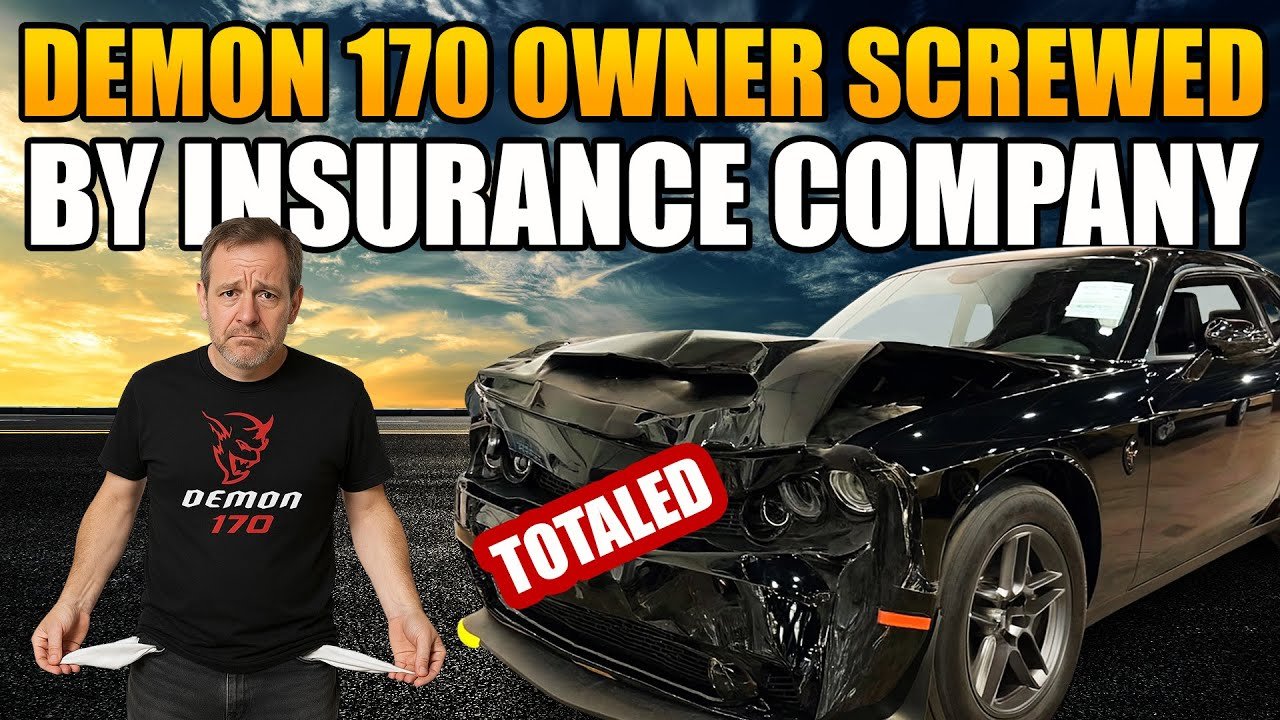
Now layer on a problem almost nobody sees coming until it’s too late: insurance. A guy in the forums hit road debris that punched through his floor pan. His insurer totaled the car and valued it at $106,000—on a vehicle he believes is worth far more. That’s a nightmare if you paid $150k… $180k… $250k. And yes, it’s absolutely possible depending on how you insured the car.
Let’s talk about why this happens, how to protect yourself, and what to do if you’re already in a fight.
Why your Demon 170 may only be “worth” $106k to your insurer
When you call your everyday carrier (Progressive, State Farm, Geico, etc.) and add the VIN, the system often reads the car as a Hellcat Redeye or another close configuration. The rep is quoting you for a powerful Challenger, sure—but not for the market mania you paid to secure a Demon 170. Traditional policies pay actual cash value (ACV): what the insurer believes the car is worth based on their data at the time of loss. They don’t care that you paid a king’s ransom in ADM. They don’t care that a local auction had one bring stupid money last summer. If their valuation model says $106k, that’s your check.
You can already see the gap: you insured a car that you treated like a collectible… with a policy that treats it like a used production Dodge.
The policy you should have (and still can get) if you insist on “collector” pricing
If you’re going to pay collector money, you need collector insurance—not just a big monthly premium with your regular carrier. The keywords to ask for are “agreed value” (or “stated value,” with the right terms). This is what Hagerty, Grundy, American Collectors, and some mainstream carriers’ specialty divisions offer.
- Agreed value: you and the insurer agree in writing on the payout number before anything happens. If the car is totaled, that number is the check (minus your deductible). No arguing comps when your heart rate is 180 bpm.
- You’ll likely need an appraisal, photos, proof of purchase, and sometimes mileage/storage restrictions. It’s extra work and usually more money—but it’s the only way to lock in the value you think you’re buying.
If you refuse agreed value, at least make sure your policy has a documented value rider or newer-car add-ons (some carriers allow +20% over ACV when you pay for it). It’s not perfect, but it can be a lifesaver.
Also: if you track the car, standard insurance almost never covers incidents at speed. You’ll need single-event track insurance for those days. Don’t assume. Ask.
“My car’s totaled and the offer is insulting—now what?”
I’ve fought this fight. It is beatable, but you can’t do it on vibes and outrage. You win with paperwork and a specific demand.
Here’s the blueprint that works:
- Do not accept the first offer. Politely decline and request the full valuation report they used.
- Build your proof file.
- Every receipt for options, wheels/tires, protective film, performance parts (OEM and aftermarket).
- Photos of the car’s condition (interior, exterior, underhood) and odometer.
- Comparable sales: listings and closed sales for cars as close to your spec as possible (model, mileage, condition, build sheet). Call sellers if needed and document final prices.
- MSRP and window sticker (if you have it). Markups don’t move insurers, but a loaded MSRP does help anchor value.
- Make a precise dollar demand. Not “more.” Not “fair value.” Put a number on paper. “Based on attached comps and documentation, I demand $,.”
- Offer an appraisal/arbitration path. Most policies allow an independent appraisal process if you disagree. State you’re willing. It shows you’re serious and reasonable.
- Know your escalation routes. Mediation/arbitration clauses, state insurance department complaints, and—if needed—an attorney who handles diminished value/total loss disputes. (If you go legal, ask about fee-shifting in your state; sometimes a bad-faith fight can boomerang on the carrier.)
The key: make it easy for the adjuster to say yes. When you present clean comps and a clear number, you turn an open-ended haggle into a simple approve/counter decision. That’s how I got a lowball total turned into a full payout years ago on a BMW—no lawsuit required.
Hard truth: the market changed, and “investment” logic didn’t age well
A bunch of Demon 170s (and Z06s, and soon ZR1s) were bought by people planning to sit on them. When lots of cars get mothballed, the “rare survivor” advantage fades. Meanwhile, the narrative that gas V8s were gone for good… yeah, that’s not how it’s playing out. Prices for a lot of “instant collectible” stuff are softening, and insurers aren’t going to underwrite your speculative premium unless you pay for an agreed value and back it up with documentation.
If you bought at or under sticker, you have way more breathing room. If you paid $60–$100k over, you need to make insurance the first thing you get right, not the last.
What I’d do if I owned a Demon 170 today
- Switch to an agreed-value policy or add a documented value rider immediately. Lock an appraisal today—values aren’t trending up.
- Keep immaculate records: build sheet, photos, maintenance, any OEM part upgrades, everything.
- If you drive it, plan your exposure: no track without track insurance; think hard about where and how you use the car.
- If you’re already in a dispute, follow the blueprint above and set a number you can justify. Don’t scream “market is 250!” and expect magic—show clean comps that an adjuster can put in a file.
Bottom line
I love the Demon 170. It’s absurd in the best way. But if you paid collector money, you need collector protections. The guy offered $106k for a totaled Demon isn’t just unlucky—he’s the case study for what happens when we buy like investors and insure like daily drivers. Don’t repeat it.
Got experience fighting a total loss? Locked in an agreed value on your Mopar? Drop your outcomes, carrier names, appraisal tips, and payout ranges below so others can learn. If you’re in the middle of a battle and need a sanity check on your demand package, post what you’ve compiled and I’ll tell you what’s missing.