








Billions In, SRT Up: What Stellantis’ $10B Could Mean for Hemis, SRT HQ, and Real American Muscle
The headlines say Stellantis is ready to pour roughly $10 billion into U.S. operations. On its face, that’s big. But if you care about Dodge, Chrysler, Jeep, Ram—and especially SRT—this isn’t just “big.” It’s the lever that can move the whole muscle-car universe back toward where it should’ve been all along.
In this video I connect three things: the reported cash, the ongoing Hemi revival, and what Tim Kuniskis told us directly about SRT getting a proper place to work. Put those together and you can see the outline of a plan: consolidate the go-fast people, bring engine production home, and build hero cars (and affordable ones) in a way that’s financially sane and brand-authentic.




The money: why $10B is more than a headline
Stellantis needs wins in North America, fast. Jeep has to be refocused, Dodge needs its soul back, Chrysler needs a pulse, and Ram needs to stop trying to be a rolling iPad and just be the best truck value with power. Ten billion dollars lets them do practical things that actually move the needle:
- Localize powertrains: If you want Hemis back at scale without tariff drag and parts-chain roulette, you invest in U.S. plants and tooling. That’s how you make “Hemi in America” more than a press line.
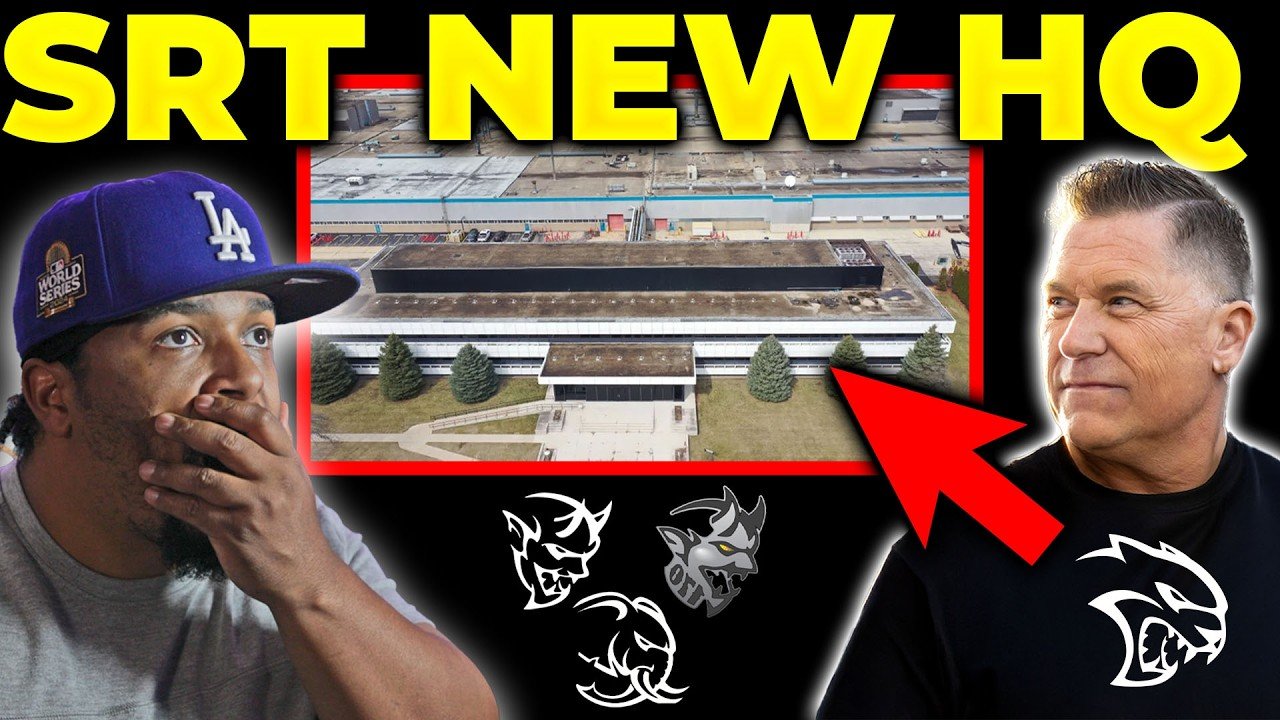
- Re-center performance brands: The cash creates room to build an SRT home that does more than lobby posters and hallway trophies. R&D, calibration, low-volume builds—under one roof.
- Fund two tracks at once: Keep business-solid sellers moving (trucks/SUVs) while green-lighting halo projects that reignite the fanbase and draw people into showrooms.
The market already told everyone EV-only dreams aren’t it. The next step is making the stuff people actually want—and doing it profitably.
The conversation that matters: SRT needs a home
On camera, Tim Kuniskis didn’t mince words: SRT needs a place to work—together. Not a scatter of teams split across buildings and time zones. One shop, one heartbeat. That sounds simple, but it changes everything:
- Faster iteration: Aerodynamics, chassis, calibration, durability—all in the same loop. You stop shipping parts and start shipping finished cars.
- Special builds that pencil: Think old Conner Ave Viper model—focused line, hand-build options, repeatable quality. That’s how you create margin on low-volume performance without handing dealers an excuse for $30–$50K markups.
- A real SRT culture again: Owners’ events, technical deep dives, engine build experiences with a name on the plaque—things Chevy leveraged with the Z06 hand-build program and Dodge can absolutely one-up.
If you want Hellcat-level magic without Hellcat-era chaos, you build a house for it. That’s the point.
Hemi’s here: why repatriating the V8 is the unlock
We’ve all heard the chatter about Hemi production moving stateside. Here’s why that’s pivotal:
- Cost and control: Domestic production kills tariff leakage and stabilizes supply. You can run shorter change cycles, launch update kits, and scale direct-connection parts without third-party tax.
- Certification flexibility: When the engine team sits next to the calibration and emissions team, you engineer power that meets the letter of the law without strapping a parts-store aisle under the truck.
- Customer trust: “Assembled here” matters to the core buyer. So does the ability to service it here, fast, with parts on the shelf.
I’m not just talking nostalgia. I’m talking uptime, parts availability, and a performance roadmap that isn’t built on wishful thinking.
What gets built: from hero cars to $30K fun
A proper SRT HQ plus U.S.-based V8 production opens lanes. Real ones:
- The Viper-spirit car: Call it a Viper replacement or something new; the point is a front-mid or mid-engine, brutally focused, low-volume flagship that SRT can hand-finish. Sell fewer, make them legendary.
- A $30K sporty Dodge: The brand’s been teasing a small, affordable performance model—call it Duster, call it whatever. Give it attitude, keep the weight down, make it tunable, price it to move. That car makes new fans for life.
- Hemi street trucks and TRX returns—done in-house: The Ram “street truck” proved the demand; the problem was price creep from outsourcing and boutique assembly. Build it yourself, bundle the parts in Direct Connection, and stop handing Fox or anyone else spare margin.
- Charger/Challenger performance trims that make sense: A supercharged 5.7? A modern naturally aspirated 6.4 with lightweighting? The sweet spot is attainable price with real bite, not $90–$100K window stickers because the options list went feral.
When SRT controls the hardware and the building, you can run limited runs and special packages without letting dealers “find” $20K on the addendum.
Direct Connection is the bridge—use it right
Direct Connection should be the public storefront for whatever the SRT skunkworks cooks up. That means:
- Factory-validated power packages (warranty-friendly when installed by certified shops).
- Chassis/suspension kits tuned by the same team that set the cars’ baseline.
- Clear, legal upgrade paths that don’t strand owners at inspection time.
Done right, DC isn’t a catalog—it’s a strategy to keep cars in the ecosystem, make revenue after the sale, and build community around official upgrades instead of forcing owners into the gray market.
Don’t repeat the mistakes: pricing and partners
The Ram street truck is a perfect warning. Great idea, wrong execution:
- Too many third-party hands: Every outside logo adds cost and complexity.
- Too little value clarity: A lightly optioned base truck with expensive bolt-ons isn’t a $85–$90K experience to most buyers.
Learn from it. Centralize builds, cut the middle layers, and make the MSRP match the grin per mile.
What I’m watching next
If this $10B lands the way it should, here’s what you’ll see, fast:
- A public announcement of an SRT facility—location, scope, hiring.
- Engine/tooling investment stateside tied to Hemi and performance variants.
- A real product cadence: one halo reveal, one attainable performance model, and a truck play that isn’t just stickers and a finance manager’s fantasy.
That’s the loop that brings people back into showrooms for more than a test-sit.
The bigger picture: this is how you rebuild a brand
SRT isn’t nostalgia. It’s a promise: if you love the feel of a car that wants to rumble out of its skin, we build it for you—and we stand behind it. That requires engineers in the same room, engines in the same country, and leadership that understands value isn’t just horsepower—it’s the price at which the faithful can actually buy.
We talked to the guy steering that ship. He’s excited—not about a press release, but about a place. Give SRT a home, feed it parts and budget, and let it run. The rest—V8s, special builds, $30K fun, clubs and track days—falls into place.
Tell me what you want to see first: a hand-built flagship, a street-priced Hemi sedan, a lighter, louder TRX redux, or that $30K daily you can modify without calling your bank. I’m listening—and so is SRT.