









CARB’s “Inbox Enforcement” Is Here—and It’s a Problem
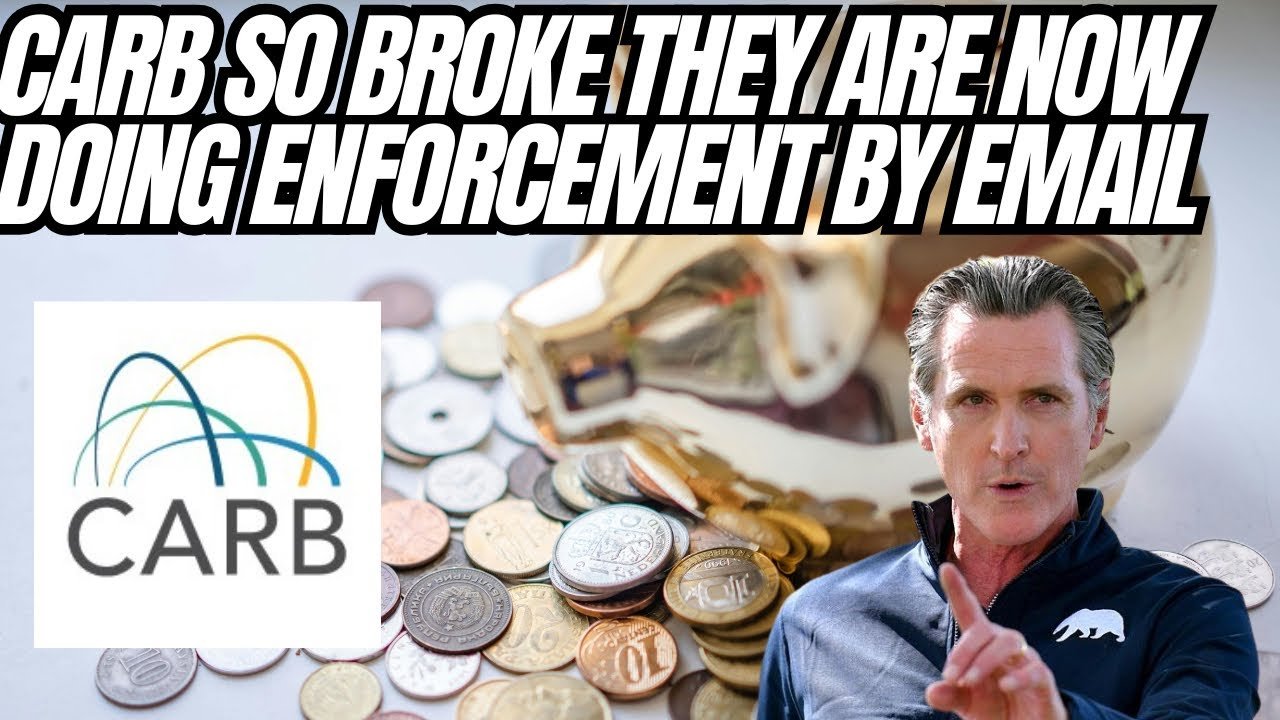
What is up, guys—welcome back to TK’s Garage. California’s Air Resources Board (CARB) made its name with boots-on-the-ground enforcement: roadside checkpoints, shop inspections, CHP coordination—the whole nine. But when the money dries up, the playbook changes. Sources are telling me grants haven’t been paid in months, enforcement staff were laid off or bailed to private gigs, and the roadside show has gone dark. The replacement? Email notices that say you’re in violation and should pay… right now.
If that sounds like a phishing scam, it’s because it reads exactly like one. The twist is the sender may have your DMV-linked email from your online registration profile. That makes it look official, but “official-looking” and legally valid are two separate lanes.
Related Post



From Checkpoints to Clicks
CARB’s legacy model was expensive: personnel, equipment, officers, paperwork, evidence. Email is cheap. I’m hearing that’s the interim fix as budgets get squeezed long before that widely rumored January 2026 insolvency date. Instead of a stop, an inspection, and a signed citation, drivers and fleets are reportedly getting inbox accusations with dollar figures like $1,500—no cop, no roadside form, just a link.
The Due Process Wall
Even in California, you don’t skip notice, verification, and service just because it’s convenient. Email is not service of process. If the state wants to escalate—penalties, liens, registration holds—it still has to prove a violation happened, when and how, and that the notice reached the right person. That takes real evidence and proper delivery. Anything less invites challenges—and scammers. CARB just handed phishers a blueprint for “legit” fake tickets.
What These Emails Look Like (and Why People Ignore Them)
The pattern I’m seeing and hearing about is a form-style message: a regulation cited, a generic violation description, and a payment link with a countdown to penalties. No photos. No inspection officer. No roadside chain-of-custody. Most people will assume it’s junk and delete it—which means, to make violations stick, the state must eventually do the expensive part anyway: verify, serve, and litigate. If they could afford that already, we wouldn’t be here.
If One Lands in Your Inbox, Do This
(Not legal advice—just how I’d handle it.)
- Don’t click anything. Hover over links and check the full sender headers.
- Verify independently. Contact CARB via their official website or phone—not through the email’s links.
- Demand evidence. Ask for date/time/location, plate match, photos, and the specific inspection basis.
- Insist on proper notice. If they want to escalate, they must follow the law on service and appeals.
- Loop in counsel if they attempt registration holds or stacked penalties without due process.
Why It Matters Outside California
California policy migrates. Carriers cross state lines. If “inbox enforcement” becomes normalized, other agencies will test it—and fleet renewals could get tangled in unpaid, questionable notices. Also, the optics here are brutal: when you can’t fund real enforcement, collections-by-email looks less like environmental policy and more like a revenue Hail Mary.
What I’m Hearing—Condensed
Multiple sources report months of unpaid grants, enforcement staff reductions, and a pivot to email-first notices using DMV contact data. Initial fine amounts around $1,500 have been mentioned, with threats of added penalties for nonpayment. That’s the landscape right now.
The Bigger Picture
If 90% of recipients ignore these emails as scams, CARB either backs down or spends money to do it right—paper, process, and proof. Either way, email was never going to be the endgame. It’s a stall, not a solution. And if the agency wants compliance, it needs transparency, evidence, and lawful service.
Final Word
If one of these “You’re in violation—pay now” messages hits your inbox, slow down. Verify. Make them prove it. If the state wants to enforce, they should show up with the facts—not hope you misclick your way into a fine.
Stay petty, my friends.