








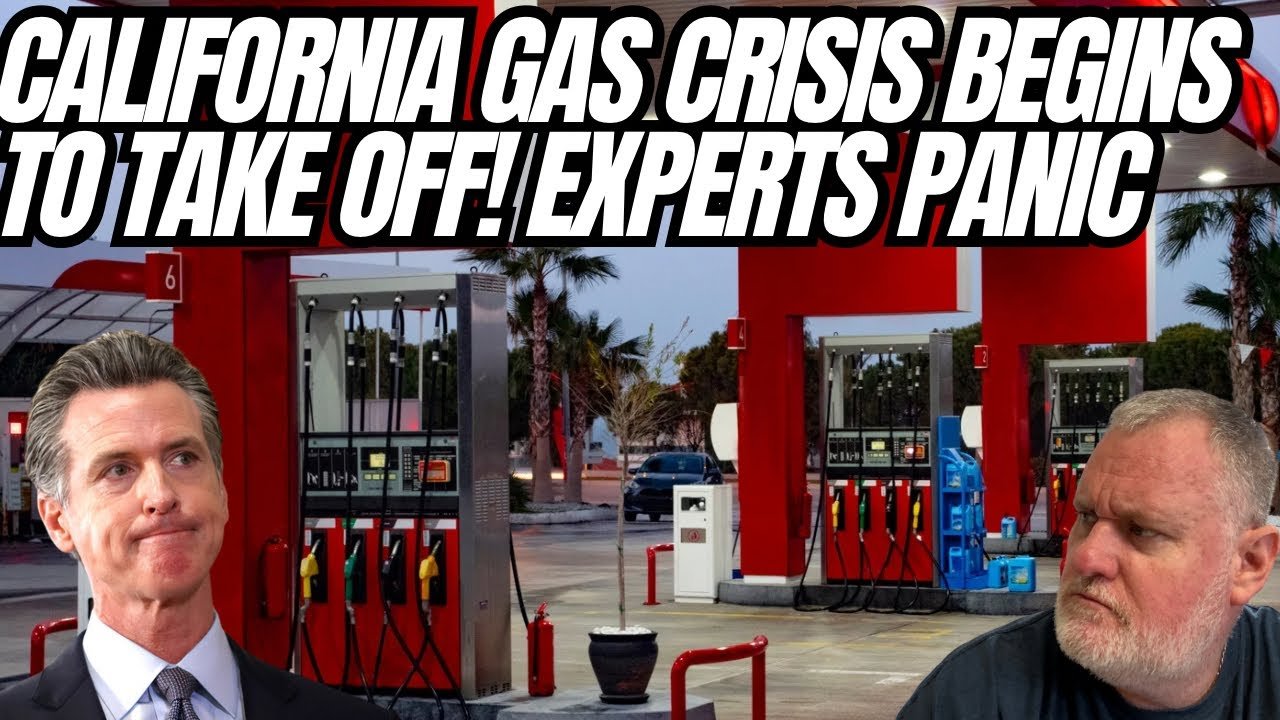
The gasoline crisis is officially beginning to take off across the Golden State. Currently, experts, lawmakers, and even Democrats are sounding the alarm regarding skyrocketing fuel costs. Specifically, predictions circulate that prices could surge to between $10 and $12 per gallon. Now, the media is finally starting to pick up on this madness. However, Governor Gavin Newsom appears to have no concrete response to the unfolding disaster. Consequently, many wonder if he will shut down the California Air Resources Board to stop refinery over-regulation. Ultimately, this situation looks like a proverbial show that is rapidly getting worse.
Refinery Shutdowns Cripple Supply
Major energy players are exiting the state, which drives this panic. For instance, Valero is shutting down operations. Additionally, Phillips 66 is closing its facility. The Los Angeles refinery is also shutting down, which creates a massive production void. To compound the issue, reports suggest the Northern to Southern California pipeline may also face closure. As a result, the governor seems to be freaking out over the potential economic fallout. These closures represent a significant chunk of the state’s infrastructure vanishing.
According to recent reports, Phillips 66 shut down its refinery in October. When it operated, it accounted for over 8% of the state’s refining capacity. Furthermore, Valero’s Benicia refinery will close in April 2026. This specific facility accounts for just under 9% of the state’s refining capacity. Therefore, within a short window, California loses nearly 17% of its ability to refine fuel. Republican lawmakers argue that industry over-regulation caused this exodus.
Related Post



The Impact on Neighboring States
This crisis extends beyond California’s borders. In fact, Arizona and Nevada also rely on California for their gasoline supply. Consequently, the governors of those states expressed bipartisan concerns over the crippled energy infrastructure. The ripple effect of these closures will likely send shockwaves through the entire Western region. Meanwhile, developers plan a different future for the decommissioned Phillips 66 plant in Wilmington. They intend to turn the site into mixed-use development with shopping and warehouse space. Ironically, residents might window shop there, but they likely won’t afford the gas to drive to the new mall.
Import Reliance and Geopolitical Risks
California’s dependence on foreign oil is becoming a dangerous liability. In 1982, the state imported only 6% of its petroleum needs. However, that number has skyrocketed to 64% today. Currently, California receives a significant amount of oil from India, reportedly up to 40%. This presents a serious problem due to global instability involving Russia. If India cannot send that oil, the state could face a catastrophic supply shortage. In addition, other reports indicate that Iraq is now the biggest exporter of oil to California. Bringing oil halfway around the world creates greater pollution than producing it locally. Yet, policy continues to stifle local production.
Taxes and Regulatory Burdens
Drivers in California already pay the most expensive gas prices in the country. Part of this price disparity comes from the state’s unique fuel requirements. Specifically, strict air quality standards require a special cleaner-burning gas blend. Moreover, taxes play a massive role in the cost at the pump. The gas tax specifically for roads is currently 61 cents per gallon. Overall, roughly 26% of the per-gallon cost goes directly to the government when combining taxes.
Interestingly, a glaring inequity exists in how the state applies these road taxes. While gas car drivers pay 61 cents per gallon to maintain the roads, electric vehicle (EV) drivers do not. Therefore, EV owners drive on the roads but do not contribute to their maintenance in the same way. This regressive tax structure hurts the working poor more than anyone else. Ultimately, the state’s focus on “equity” does not seem to extend to the fuel pump.
Newsom’s Conflict with Big Oil
The relationship between the governor and the energy industry remains hostile. A telling example involves Mike Worth, the CEO of Chevron. When Chevron prepared to move its headquarters from San Ramon to Houston, Worth attempted to contact Governor Newsom. He texted the governor to give him a heads-up before the public announcement. Reportedly, Newsom replied essentially saying, “I don’t need to talk about it. I’m good.” This dismissal highlights the friction driving businesses out of the state.
Recently, however, Newsom appears to be changing his tune. Some observers believe he is trying to warm up to big oil because he wants to run for president. Consequently, energy regulators have stopped some efforts to penalize oil companies. Nevertheless, previous interactions suggest a deep divide. For example, when Donald Trump suggested increasing oil drilling off the California coast, Newsom called the plan “idiotic.”
Giveaway Updates and Deadlines
Amidst the news, we have major updates regarding the channel’s current giveaways. The Ram 1500 giveaway is coming to a close sooner than expected. Originally scheduled to run until Christmas Eve, the giveaway will now end on December 22nd. Consequently, we will announce the winner on December 23rd, giving someone a massive Christmas surprise.
Additionally, Goodies Popcorn stock has fluctuated wildly. After selling out, they managed to secure 50 more boxes to ship out. These limited items come with 1500X entries for the Ram 1500 Laramie. Once those 50 boxes vanish, the stock is gone for good. For those interested in heavy-duty power, the Ram 2500 giveaway is also live with scan tools available for entries. Furthermore, we also have a BMW M5 Competition up for grabs. You can find all opportunities at the TK’s Garage store, but the clock ticks on the Ram 1500.
Political Suicide at the Pump
If gas prices jump to predicted levels, the political consequences will be severe. Should prices hit $10 or $12 per gallon within the next 90 to 120 days, Newsom faces a nightmare scenario. Even a jump to $8 would be devastating. Under those conditions, running for president would be impossible. In fact, running for any office, even dog catcher, would likely result in defeat.
The governor knows he is in trouble. He may attempt a backroom deal to solve the issue. However, if he fails to come up with a solution, his political career is likely screwed. The media is watching, the experts are predicting the worst, and the refineries are closing their doors. Thus, California is bracing for a fuel crisis of historic proportions.