








Automakers Say “Ease the Rules”—But Keep the EV Money?
Why the industry’s latest EPA filing isn’t the clean break from mandates it looks like
For the last decade-plus, U.S. automakers have lived under a thicket of emissions mandates, CAFE targets, and fleet penalties. Now, with the regulatory ground shifting—EPA standards under review, greenhouse-gas policy potentially being reworked—this should be the moment to reset: build what customers actually want, simplify compliance, and lower costs.
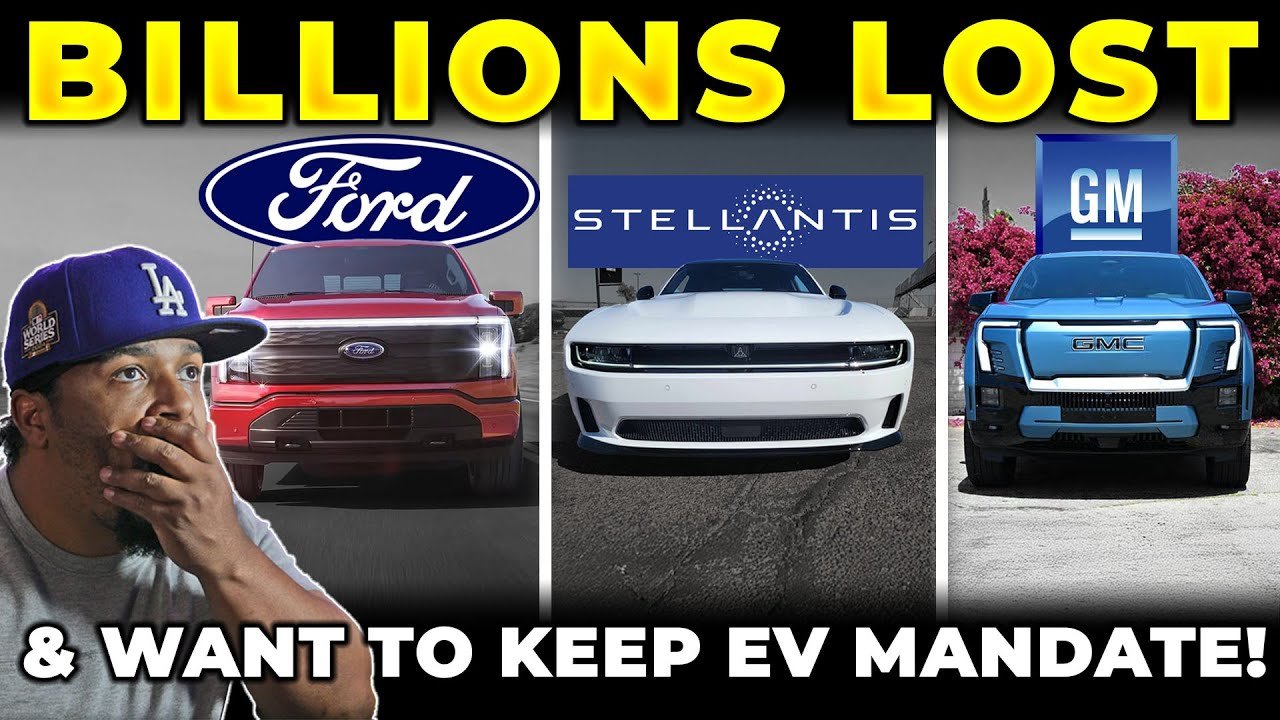
On paper, that’s what a powerful industry group says it wants. The Alliance for Automotive Innovation (representing GM, Toyota, VW, Hyundai, and others) filed comments asking EPA to “ease” the latest tailpipe rules. Sounds great… until you read the rest. Alongside loosening the mandate, they’re warning about the expiration of EV tax credits and the potential loss of battery production credits—the very back-end money that’s been propping up EV economics.
In plain English: some automakers want fewer penalties, but they’re not eager to give up the subsidies.
The EV math they don’t want to show you
Automakers have leaned on a three-legged stool:
- Point-of-sale subsidies/tax credits that lower sticker shock for buyers or juice lease deals.
- Manufacturer-side subsidies, like battery production credits that funnel thousands per unit back to the builder.
- Regulatory pressure (fleet targets, ZEV quotas, credit trading) that forced companies to build EVs regardless of demand—and penalized ICE fleets into subsidizing the gap.
Remove any leg, and the stool wobbles. Remove all three, and we finally see what an EV really costs to build and sell without government scaffolding. Multiple executives have acknowledged EVs run 30–40% more expensive to produce than their comparable ICE models; the industry responded by jacking up ICE prices during the last few years, narrowing the visible gap while hiding the real delta with credits and incentives.
That is not a free market. That’s price theater.
Customers are voting with their wallets
The EV story isn’t universal rejection—some buyers love them—but a sizable chunk of owners are switching back or planning to. That dovetails with what you see on dealer lots: EVs hanging around longer, ICE still closing, hybrids emerging as the “have-your-cake” compromise. If we’re serious about “letting the market work,” then we should be serious about ending asymmetric subsidies that tilt the playing field toward one drivetrain.
Want to reward efficiency? Fine—but do it technology-neutrally. If a compact ICE or a hybrid clears a high mpg bar, why doesn’t that buyer get the same break an EV buyer does? If the policy goal is lower fuel use and lower emissions, pay for the outcome, not the badge.
What the automakers really asked for
The alliance’s filing argues the 2027+ standards are “not achievable” given infrastructure limits, supply-chain volatility, and affordability. Hard to disagree. Charging networks are patchwork outside a few metros, raw materials are spiky, and EVs still carry a cost premium. But in the same breath, the group warns that credit expirations (the $7,500 consumer credit and ~$3,000/year battery-production credit) will raise EV prices and drop market share.
Translation: “Relax the mandate, but don’t take away the money.”
No. If the administration loosens or rescinds the core legal foundation that drove EV quotas, the subsidies tied to that regime should sunset too. Otherwise, we’re right back to the same market distortion—paying automakers to build a product consumers aren’t demanding at the scale regulators wanted.
The ICE sticker shock no one mentions
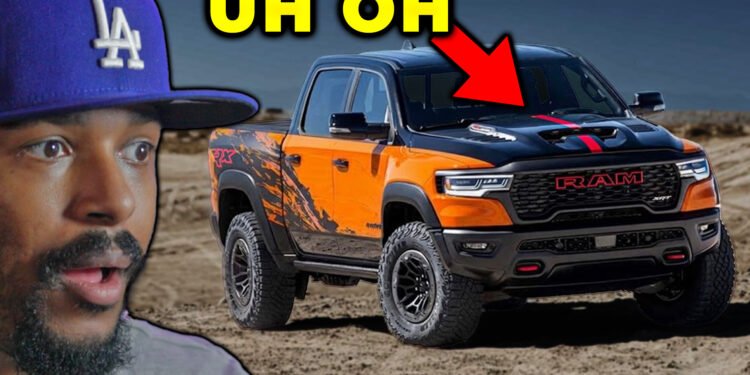
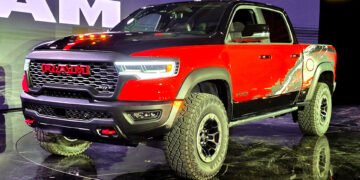
Take a look at halo examples. A Ram TRX launched around the $70K mark and soared toward $90K+ within a few model years—without fundamental hardware changes to justify the jump. The “magic trick” happened across lineups: push ICE pricing up, launch EVs that look “comparable,” and let leased EVs quietly benefit from federal money at the finance desk. Meanwhile, the middle of the market got squeezed until buyers balked—exactly what we’re seeing now in used values and days-on-lot metrics.
If we unwind the rulebook, unwind the price theater too. Let ICE, hybrids, and EVs compete head-to-head on what matters: purchase price, operating cost, convenience, performance, and resale.
A clean policy reset that makes sense
Here’s a straightforward blueprint:
- One standard, tech-neutral: Reward real-world efficiency and life-cycle impact—no powertrain favoritism.
- Sunset targeted EV subsidies: If mandates are rolled back, so are EV-specific checks. If any incentive remains, it should be fuel/energy-use based and available to any vehicle that meets the bar.
- Stabilize, don’t micromanage: Stop yo-yoing targets every few years; give industry a durable lane to plan factories and product cycles.
- Transparency on total cost: Label vehicles with standardized 5-year total-cost-of-ownership (fuel/energy, insurance, maintenance, depreciation) so buyers see apples-to-apples.
Do that, and we’ll find out quickly what Americans actually want. Maybe it’s a plug-in hybrid that crushes commute miles on electrons and road trips on gas. Maybe it’s a small turbo ICE that hits 40+ mpg. Maybe it’s an EV with honest pricing and nationwide fast charging. Let the customer decide.
Bottom line
Automakers asking to relax tailpipe rules while clinging to EV subsidies isn’t reform—it’s regulatory arbitrage. If Washington is serious about resetting emissions policy, then reset the incentives with it. No more three-legged stool. No more price theater. Build compelling cars, price them straight, and compete.
When every powertrain stands on its own two feet, we’ll finally see what wins in the open market.