










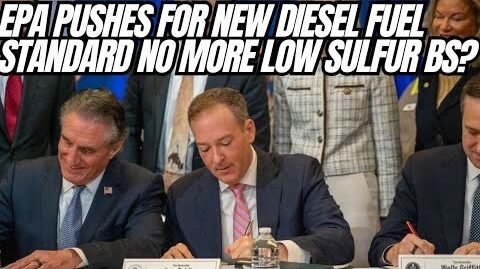
EPA Proposal Could Bring Back High-Sulfur Diesel and End State-Controlled Fuel Standards
The Environmental Protection Agency is reportedly weighing a dramatic shift in U.S. diesel regulation that could reintroduce higher-sulfur diesel fuel and end state-level control of fuel standards — a move that could lower costs for truckers and consumers while simplifying nationwide distribution.




EPA Administrator Lee Zeldin is said to be proposing a rollback of ultra-low-sulfur diesel mandates, arguing that the current fuel formula has caused widespread mechanical issues and unnecessary costs. In particular, the reduced lubricity of low-sulfur diesel has led to fuel-pump and engine failures across brands like Nissan’s Titan Cummins diesel and GM’s Duramax line, with some failures resulting in total engine loss and $30,000-plus repair bills.
“This change could save consumers thousands in repair costs and cut operating costs for the trucking industry overnight,” said Auto Intel Daily’s TK.
Under the proposal, the EPA would also federalize fuel standards, stripping states like California of the ability to mandate unique fuel blends or additives. Such state policies have long been blamed for higher prices and complex supply chains that fragment the U.S. fuel market.
If approved, the new rules could result in:
- Lower diesel and gasoline prices nationwide due to unified refining standards.
- Improved reliability for diesel engines thanks to restored lubricity.
- Reduced regional fuel shortages caused by state-specific formulations.
The EPA has already opened a public comment period for the proposed changes, signaling that implementation could begin as early as 2026. If finalized, it would mark one of the largest overhauls of U.S. fuel policy since the introduction of ultra-low-sulfur diesel in 2006.
“When every gas station sells the same fuel nationwide, prices drop and engines last longer,” TK added. “It’s common sense — and long overdue.”