










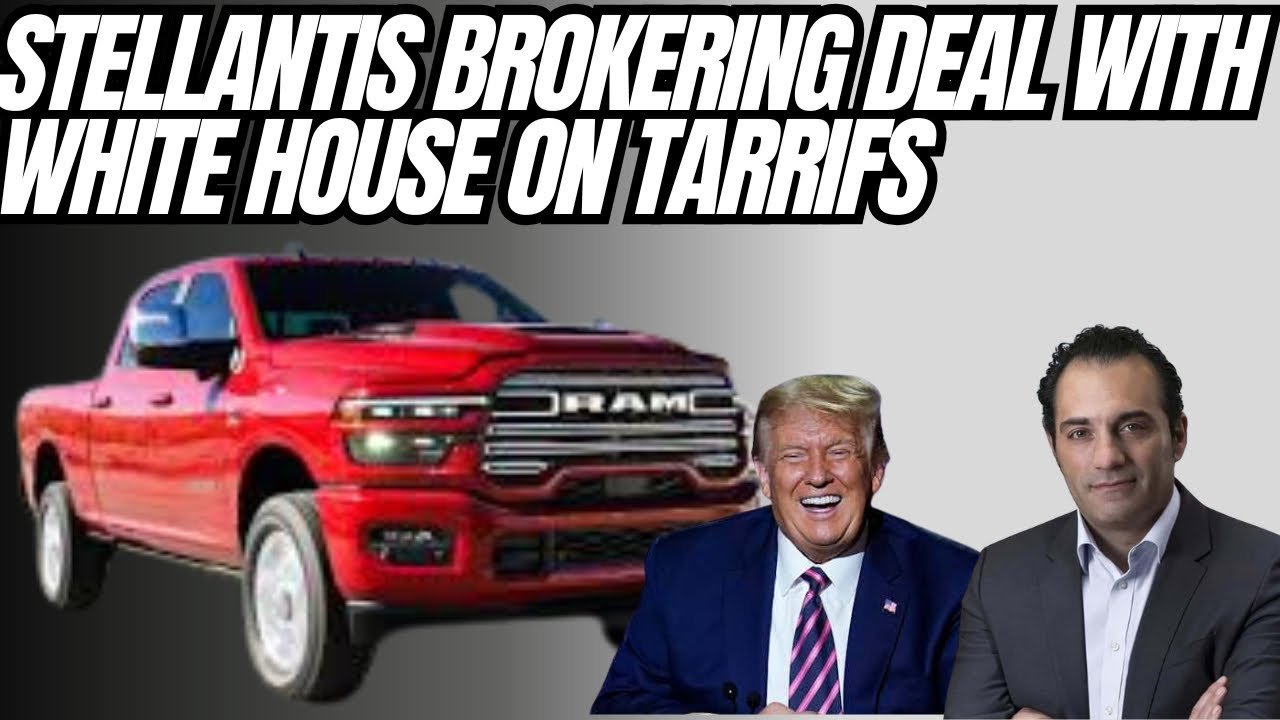
Detroit’s Big Three automakers—Stellantis, Ford, and General Motors—have reached a breakthrough tariff deal with the Trump administration that will reshape how and where American vehicles are built. The agreement, led by Stellantis CEO Antonio Filosa in coordination with the White House, gives automakers a pass on certain capacity-related production limits abroad while incentivizing a major return of manufacturing to U.S. soil.
The deal follows months of tension over President Trump’s push to curb vehicle imports from Mexico and Canada under his revised USMCA enforcement strategy. Trump has repeatedly called for “American cars built by American workers,” and the new agreement appears to strike that balance—preserving trade flexibility while mandating a gradual reshoring of production from overseas facilities like Egypt and Brazil.




Key Points of the Tariff Deal:
- Partial U.S. exemption: Automakers can continue limited assembly in Mexico and Canada when domestic plants are at full capacity.
- Reshoring requirement: Production of select Jeep and Ram models formerly planned for Egypt and South America will move back to U.S. plants.
- Domestic job restoration: The deal is expected to return up to 1,500 manufacturing jobs to Michigan facilities, including the Warren Truck Assembly Plant (WTAP) and Sterling Heights Assembly (SHAP).
- Focus on heavy-duty trucks: Ram HD 2500 and 3500 models—previously built in Saltillo, Mexico—are among the top priorities for repatriation.
Filosa, who took over Stellantis earlier this year, is earning early praise for steering the company back toward its American roots. Observers credit his collaboration with Ram and SRT CEO Tim Kuniskis for stabilizing the brand’s U.S. operations after years of corporate turbulence under former CEO Carlos Tavares.
“This is a major win for the president and for American workers,” one insider told TK’s Garage. “People can debate politics all they want, but when jobs come home and workers get called back, that’s what matters.”
For Stellantis, the move could mark a turning point. The company has faced criticism for outsourcing production and relying heavily on imported parts under Tavares’ cost-cutting regime. With U.S. facilities now running at near-maximum capacity, the tariff agreement gives the automaker more flexibility while satisfying the administration’s “Made in America” objectives.
Industry analysts note that the deal could boost public approval for Trump’s economic agenda heading into 2026. By securing visible job gains in key Midwestern states, the administration is expected to tout the agreement as proof that the U.S. can remain competitive in global manufacturing without sacrificing domestic labor.
“People don’t care if they’re Democrats or Republicans,” TK observed. “If somebody saves your job or gives you work stability, that’s who you’re going to vote for.”
As Stellantis ramps up domestic truck and SUV production, it’s also rumored that new products—possibly a Ram-branded full-size SUV—could join the lineup at the Warren plant. Whether that happens or not, one thing is clear: the tide of auto manufacturing is finally shifting back home.