










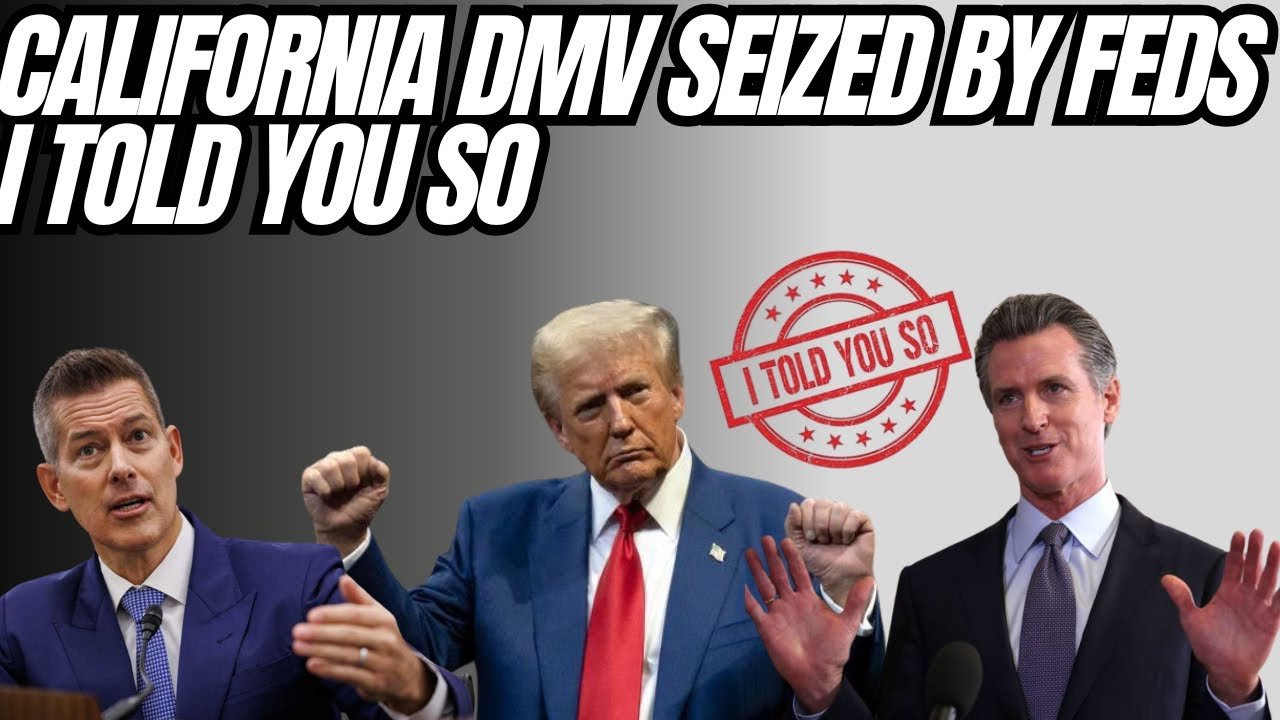
California DMV in the Crosshairs: DOT Threatens Funding Over Non-Compliant CDLs
Shawn Duffy, the U.S. Secretary of Transportation, used a press conference to accuse multiple states—led by California—of issuing commercial driver’s licenses (CDLs) to non-citizens in ways that violate federal rules and endanger public safety. Calling it a “national emergency,” Duffy said investigators from the Federal Motor Carrier Safety Administration (FMCSA) audited non-domiciled CDLs and found systemic problems: licenses issued past visa expirations, inadequate verification of lawful presence, and eligibility standards so loose that unqualified drivers were legally operating 80,000-pound rigs.
California took center stage. After a two-week on-site review, FMCSA reported that more than one in four non-domiciled CDLs it sampled were issued in direct violation of federal standards. Duffy cited examples: a Brazilian driver licensed to operate school buses months after his work authorization expired; two Mexican citizens issued U.S. CDLs despite being ineligible; and a Honduran applicant granted a CDL even though California had not validated lawful presence. The message to Sacramento was blunt: fix it within 30 days or lose federal highway money—$160 million in the first year, doubling the next—along with the possibility of CDL program decertification.
Related Post



The crackdown isn’t limited to California. Colorado, Pennsylvania, South Dakota, Texas, and Washington were named as states where improper issuances were also found, with enforcement actions “forthcoming.” At the same time, FMCSA announced an interim final rule effective immediately: states must pause issuing non-domiciled CDLs until they meet stricter federal criteria. Going forward, eligibility will be limited to specific employment-based visas (H-2A, H-2B, E-2), lawful status must be verified through the federal SAVE database at every issuance and renewal, licenses will expire no later than one year or the visa’s end date (whichever comes first), and renewals must be done in person.
Duffy framed the move as safety first, citing recent fatal crashes involving non-domiciled CDL holders with prior violations or inadequate English proficiency. He dismissed concerns that tougher rules would hobble the supply chain, insisting there are enough U.S. drivers to cover loads and that lawful compliance won’t stop goods from moving.
For critics who doubted earlier reports that federal investigators had seized DMV records in California, the press conference landed like a gavel. The administration now has a timetable, a penalty structure, and a nationwide mandate: audit every non-domiciled CDL, revoke those improperly issued, and bring state systems into full compliance—or face the fiscal consequences.