





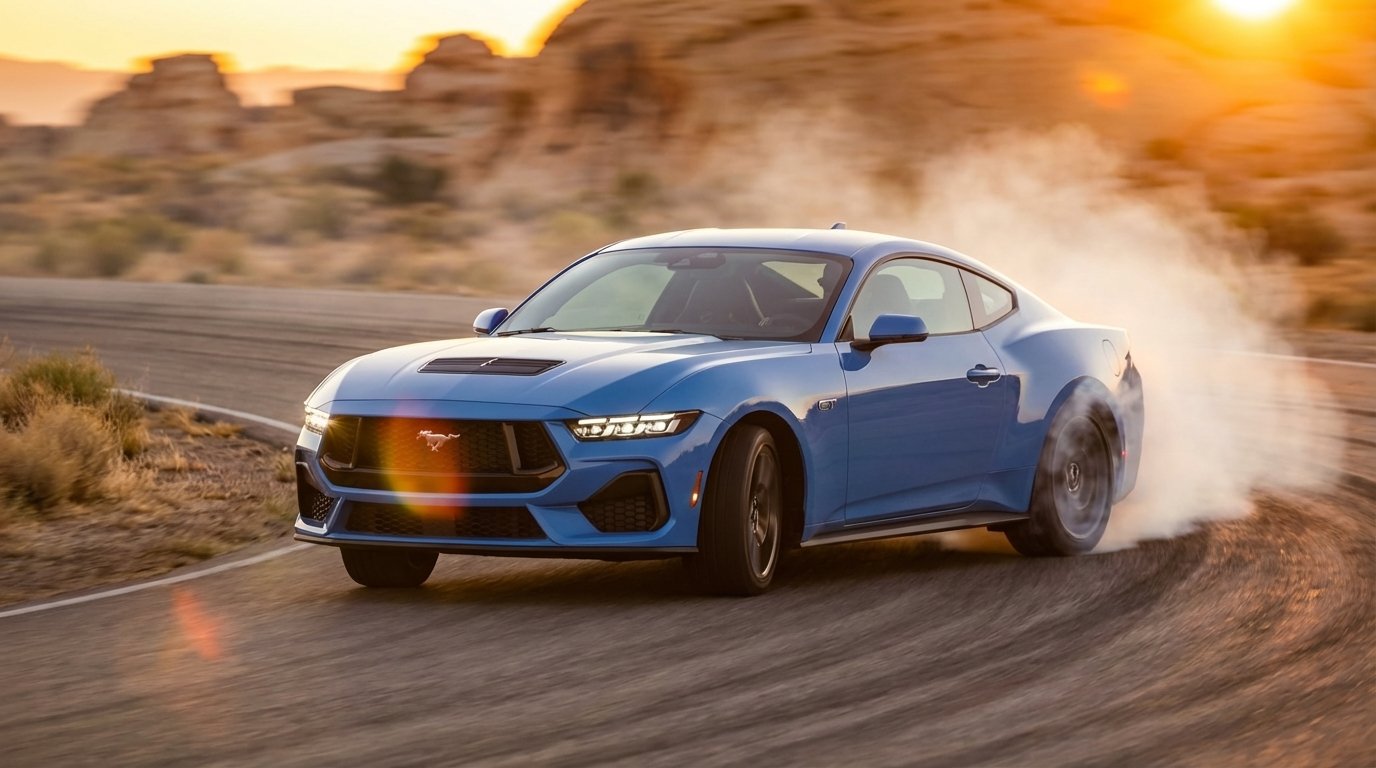
The Mustang V8 dominance is no marketing line; it reflects a clear market reality in 2025. Ford sold 44,003 gas-powered Mustangs in 2024, and that figure represents a 9.5% decline from 2023, yet it still leaves Ford as the only automaker offering a new, factory-built V8 pony car. Moreover, the drop in shipments came as rivals ran down leftover inventory after ending their own muscle-car runs. Consequently, buyers seeking a new American V8 pony today find a single, consistent option. Ford’s decision to keep investing in an internal-combustion halo car mattered. In fact, the S650 program and its Gen‑4 Coyote V8 have become central to that strategy. Therefore, this article focuses on how strategy, timing, and product choices combined to create an unmatched position for the Mustang.
Mustang V8 dominance: A kingdom by default
Numbers tell the story in plain terms, and they explain why Ford looks like the last brand standing in traditional muscle. First, while Mustang sales slipped, other brands concluded production of their key V8 models in late 2023, and dealers spent 2024 clearing those inventories. As a result, competition from Chevy and Dodge for new V8 buyers effectively disappeared. Next, even with promotional pricing on leftover rivals, the new S650 Mustang maintained buyer interest. Additionally, Ford supported the lineup with multiple trims to reach varied buyers, which broadened the model’s appeal. Meanwhile, enthusiasts continued to value the visceral qualities of a naturally aspirated V8. Finally, because no new rival V8 pony car was launched to replace those discontinued models, Mustang’s market share consolidated by default and by design.
A Ghost Town of Rivals
Rival brands that once battled in the pony-car arena have stepped back in important ways. Chevrolet ended Camaro production in December 2023, and 2024 sales largely came from remaining dealer stock. Similarly, Dodge wound down Challenger production and signaled a pivot toward electrified models for the future. Consequently, 2024 became a year of final sales for old-generation inventory rather than fresh V8 designs. In addition, this transition left many buyers with a stark choice: accept a different powertrain direction or seek a new V8 from the remaining maker. Therefore, Ford’s ongoing commitment to a modern, combustion-powered Mustang left it as the primary new-car refuge for traditional muscle enthusiasts.
Related Post



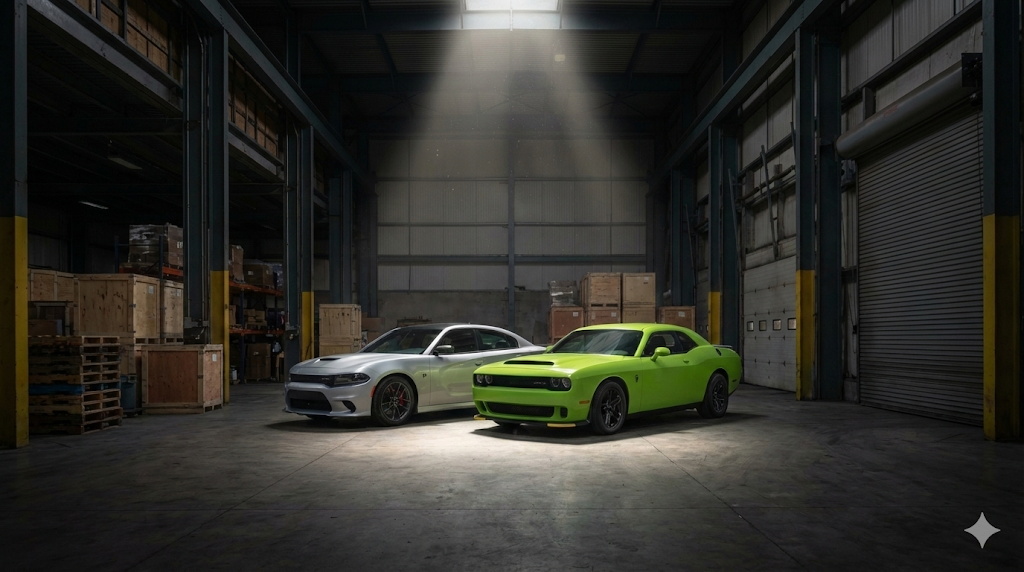
The Fall of the Titans: Why Chevy and Dodge Tapped Out
The shift away from traditional V8 pony cars did not happen overnight; instead, manufacturers diverged in long-term strategy. For example, Chevrolet chose to retire the Camaro after the sixth generation, and it did not announce a direct V8 successor. Consequently, the Camaro’s loyal owners faced no clear path to a new Chevy V8 pony. Meanwhile, Dodge pursued a markedly different route by planning new electrified performance models rather than continuing the V8 Challenger line. As a result, both brands reduced their presence among buyers who specifically desire a new V8 pony car. In contrast, Ford doubled down on the S650 and the Coyote V8, which meant the company kept serving a defined niche that the others left behind.
Chevrolet’s Quiet Bow-Out
Chevrolet’s withdrawal from the V8 pony market felt measured and final at once. They ceased Camaro production and shifted corporate resources to other segments. Consequently, many Camaro devotees found their loyalty tested; they had to choose between staying with Chevrolet and accepting a different type of car or switching brands to preserve the V8 experience. Ford positioned itself to capture those customers, and dealers responded by highlighting Mustang performance and heritage. Moreover, the absence of a replacement Camaro removed a high-profile alternative from the showroom floor. Therefore, Chevrolet’s strategy effectively reduced direct competition for Ford in the traditional pony-car segment, while opening opportunities for Mustang to absorb displaced buyers.
Dodge’s Electrifying Pivot
Dodge chose a bolder transformation and publicly embraced electrification for its performance future. Consequently, the brand announced plans for new, electrified performance models that move away from the classic V8 Challenger formula. As a result, many long-time Mopar fans reacted to the change with mixed feelings, since the Hemi V8 had defined the brand for decades. In addition, the shift created a perceptible vacuum in the new-V8 market that Ford was ready to fill. Therefore, while Dodge preserves performance branding, its strategic pivot has reduced the availability of factory-new V8 muscle for traditional buyers seeking the classic combustion experience.
Ford’s Masterstroke: Investing in the S650 Generation
Ford’s advantage rests on deliberate product decisions and visible investment in the S650 Mustang. First, the company introduced a modern platform that keeps a traditional V8 at its core. Next, Ford offered a range of trims to serve both budget-conscious buyers and hardcore enthusiasts. Furthermore, the lineup includes both the Gen‑4 5.0L Coyote V8 and the 2.3L EcoBoost four-cylinder, which together broaden market reach. In addition, Ford kept performance-focused variants to reinforce the Mustang’s sporting credentials. As a result, the S650 functions not only as a product but also as a statement that Ford values the internal-combustion muscle-car tradition. Ultimately, that clarity of purpose translated into a strategic advantage as rivals exited or retooled.
The Heart of the Beast: The 5.0L Coyote V8
The Gen‑4 Coyote 5.0L V8 anchors the Mustang’s performance identity, and it explains much of the car’s emotional pull. In GT tune, the engine delivers 486 horsepower and the natural-throttle response that many enthusiasts prize. Moreover, the powerplant revs freely and produces the sound and character associated with classic muscle. Consequently, showroom visitors often cite the engine’s feel and exhaust note as deciding factors. In addition, Ford refined the Coyote for the S650 rather than replacing it with a conceptually different powertrain. Therefore, the presence of a modern, high-output V8 helped preserve the Mustang’s status as the go-to new V8 pony car for buyers who wanted an authentic combustion experience.
More Than a V8: The Strategic EcoBoost
Ford’s lineup also includes a practical entry point: the 2.3L EcoBoost four-cylinder. This turbocharged engine gives buyers Mustang styling and a lighter footprint, and it provides better fuel economy for everyday driving. As a result, EcoBoost broadens the Mustang’s appeal to those who want the look and handling without a V8’s higher operating costs. Moreover, this trim serves as a gateway into the Mustang family; some owners eventually trade up to V8 variants. In addition, EcoBoost models help dealers move volume while the V8 variants deliver emotional and aspirational value. Therefore, the combined strategy creates a wider customer funnel and strengthens overall brand resilience.
The Dark Horse: A Track-Ready Declaration of War
The Dark Horse trim raises the Mustang’s performance profile with focused upgrades for track use and spirited street driving. It pairs a higher-output version of the Coyote with enhanced aerodynamics, cooling, and suspension hardware. Consequently, the Dark Horse creates a halo that benefits the entire lineup, and it signals Ford’s commitment to pushing performance boundaries. Moreover, buyers who prefer the EcoBoost still benefit from the performance credibility that the Dark Horse generates. In addition, the existence of such a sharp, track-capable Mustang clarifies that Ford views the model as more than a nostalgia play. Ultimately, the Dark Horse reinforces the Mustang’s image as a serious, modern performance car.
Why Ford’s Gamble is Paying Off So Handsomely
Ford’s approach combined product focus with clear market timing, and the payoff is visible today. They listened to a core customer segment and kept delivering the qualities those buyers value most. Consequently, with other manufacturers stepping away from factory-new V8 pony cars, Ford became the primary provider of that experience. Moreover, the company paired an emotional V8 offering with practical EcoBoost choices to attract a wide range of customers. As a result, Ford captured displaced buyers and retained enthusiasts who wanted the sound and feel of a modern V8. Finally, the outcome looks like more than chance; it reflects a coordinated strategy that aligned product planning with customer preferences.
Sources:
Road & Track – Ford Mustang Wins 2024 Muscle Car Sales Crown Against Nobody