










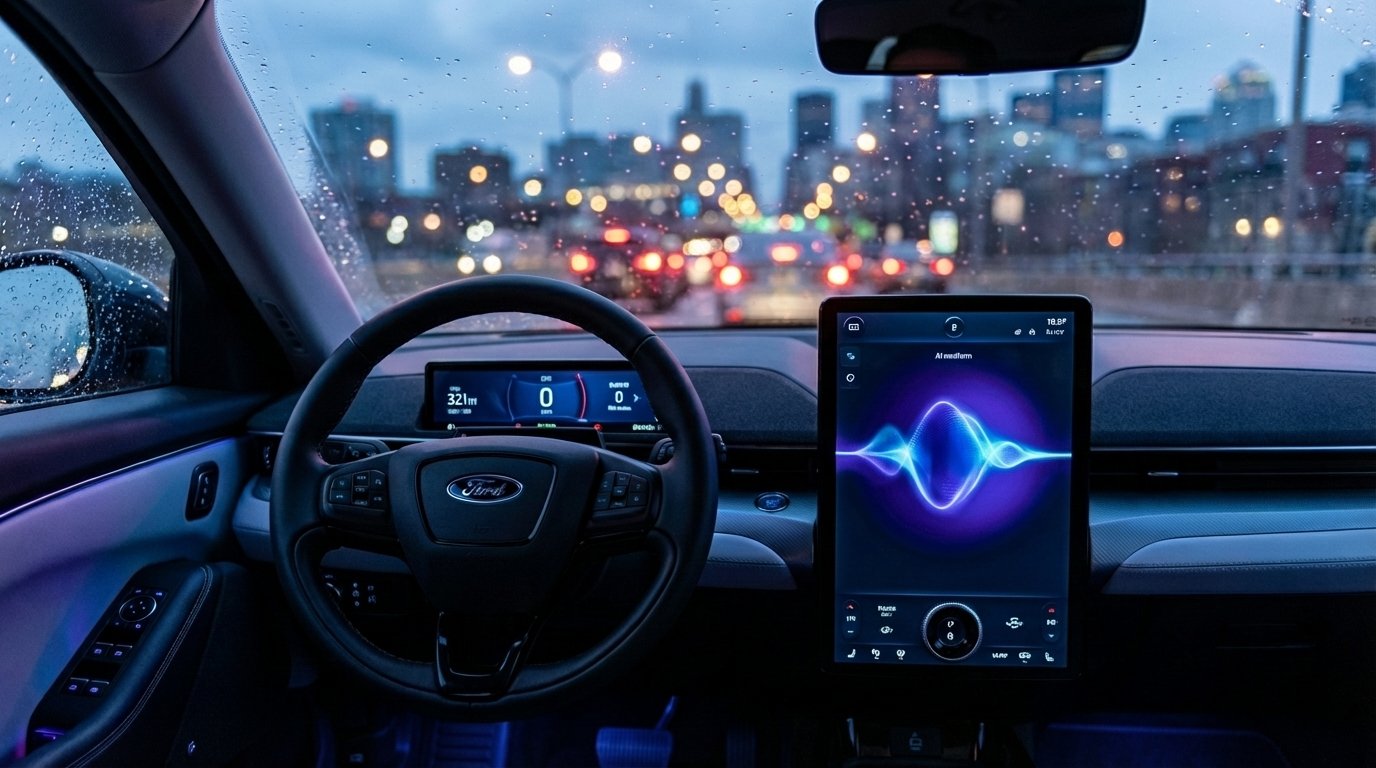
Listen up: the race for raw horsepower feels over, and now the arms race is about in-car intelligence. Ford announced a major partnership with Google, and as a result the Ford Gemini integration will begin appearing in select vehicles starting in 2026. Crucially, this move embeds Google’s Gemini AI into the car’s native systems rather than shipping yet another minor SYNC refresh. In addition, Ford has publicly said it will continue to offer Apple CarPlay as a driver choice while deploying Gemini, which means customers can keep familiar phone apps if they prefer. Therefore, this transition represents a large shift in how we measure automotive progress. Moreover, the company frames the upgrade as more than a better voice assistant; ultimately, Ford positions Gemini as a core part of the driving experience and daily life in the vehicle.
Ford Gemini integration: Ditching Dumb Assistants — What Gemini Really Is
For years, in-car voice assistants often misunderstood simple requests and offered only limited commands, so drivers defaulted to phones and CarPlay or Android Auto. However, Google’s Gemini is different in kind because it is a large language model designed to understand context and follow multi-step conversations. For example, older systems typically reacted to single-keyword triggers and then executed one isolated task. In contrast, Gemini can hold a back-and-forth dialogue, remember prior prompts, and reason about next steps. As a result, drivers can ask layered questions or make compound plans without repeating context. Additionally, that difference makes the car feel less like a command-line tool and more like a conversational co-pilot. Consequently, everyday tasks such as trip planning and vehicle troubleshooting could become more natural and less interruptive to the driver’s focus.
Beyond Simple Commands: Conversation That Remembers
Current infotainment systems often treat each request as a single, stateless command, which creates repeated friction for multi-part tasks. For instance, you might first set a destination, then separately locate fuel, and finally search for a restaurant, each time launching a new, unrelated search. By contrast, Gemini’s contextual memory can link these steps into a single coherent workflow. Therefore, you could ask the car to plan a route to the beach, include a halfway charging stop, and find a highly rated taco place near that charger, and the system would process all parts together. Moreover, that kind of handling reduces distraction because the assistant anticipates and chains actions, instead of forcing repeated manual inputs. As a result, the car behaves more like an attentive co-pilot and less like a basic calculator for directions.



Ford’s Smart Bet: Integration Without Alienation
The technology matters, but strategy matters just as much; Ford’s plan balances innovation with choice. Importantly, reports and company comments indicate Ford will add Gemini while continuing to support Apple CarPlay, so drivers do not lose familiar phone integrations. Meanwhile, General Motors has signaled a different approach, moving over time toward its own Ultifi-based platform and reducing reliance on third-party phone interfaces in future vehicles. Consequently, Ford’s approach aims to avoid alienating customers who rely on their phone ecosystems, and instead offers an added native AI option. In addition, this hybrid strategy keeps the door open for drivers who prefer to use their phone apps for music or navigation while letting others adopt the new Gemini-powered features. Ultimately, that flexibility seeks to maximize customer satisfaction across diverse preferences.
The Choice Argument: Why Flexibility Wins
Our phones carry decades of personalization—apps, playlists, maps, and contacts—so forcing a single native ecosystem can frustrate many drivers. Therefore, Ford’s dual-support plan preserves that personal continuity while introducing a powerful in-car AI for complex tasks. For example, drivers who like Apple Maps and Spotify can keep using them through CarPlay, whereas drivers wanting deeper, contextual assistance can use the native Gemini features. Moreover, by avoiding an all-or-nothing switch, Ford reduces churn risk and eases customer transition. Consequently, this strategy appears consumer-first: it provides advanced capability without taking away established choices. In short, Ford aims to add value rather than replace what customers already rely on.
So, What Can This AI Co-Pilot Actually Do?
In practical terms, embedding Gemini into vehicle systems promises several tangible improvements for daily drives, from navigation to diagnostics to productivity. First, the AI can personalize navigation by learning routines and suggesting stops you typically make, such as morning coffee, while factoring traffic and calendar events. Next, the assistant can interpret dashboard warnings in plain language, telling you specifically what’s happening and recommending nearby service points when appropriate. Additionally, Gemini can summarize messages and draft replies, and it can sequence actions like “summarize my last emails and then start my focus playlist,” which reduces manual interaction. Finally, woven throughout the vehicle’s operating system, the assistant could offer context-aware prompts that help keep drivers safe and informed. However, the system’s effectiveness will depend on real-world tuning, data connectivity, and clear privacy choices for users.
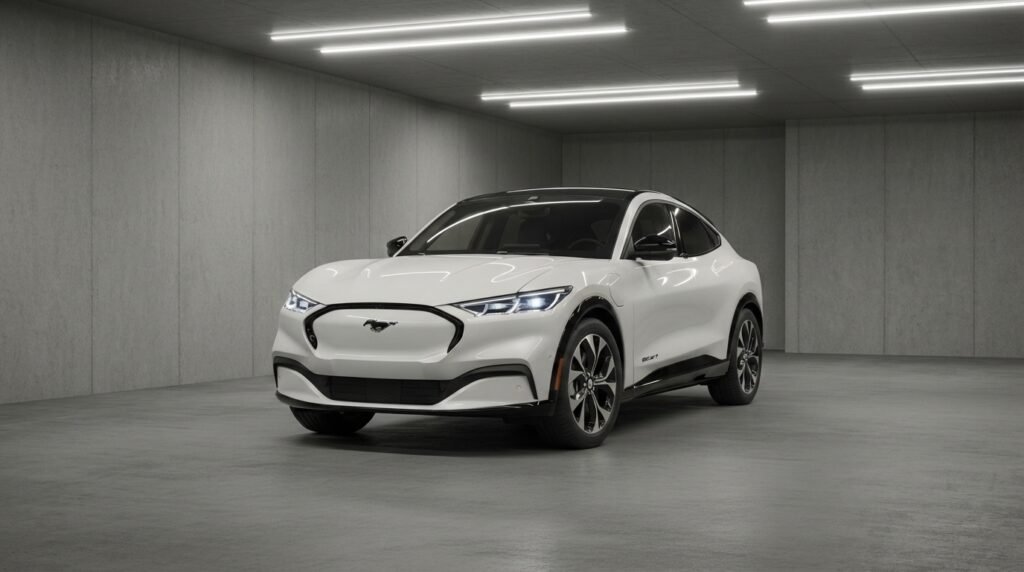
Navigation, Maintenance, and Productivity Examples
Imagine asking the car why a warning light appeared and getting a clear, actionable reply that includes nearby service options, estimated impact, and a suggested route. In another case, your vehicle could proactively offer alternate routes when your calendar shows an important meeting and traffic worsens. Additionally, the assistant can reduce cognitive load by summarizing unread messages or preparing short replies you can approve by voice. For these reasons, Gemini’s contextual handling could make the vehicle safer and more efficient, while also turning it into a more useful mobile workspace. Consequently, drivers may spend less time fumbling with screens and more time focused on driving.
The New Battlefield: How Rivals Are Responding
Ford’s move does not happen in isolation; automakers worldwide are racing to improve in-car intelligence and user experience. For instance, General Motors is shifting toward its Ultifi platform and has signaled a phased reduction of Apple CarPlay and Android Auto in future vehicles as it centralizes software services. On the other hand, European manufacturers are also investing heavily in smarter voice assistants and adaptive infotainment; however, the precise integrations and timelines vary by company and market. Therefore, the competitive landscape is diverse: some companies prioritize tight platform control and subscription services, while others emphasize consumer choice and hybrid approaches. In addition, this divergence raises questions about long-term customer satisfaction versus monetization of in-car services.
What This Means for Consumers and Competition
Competition among automakers will likely accelerate innovation, but it may also create fragmentation in user experience. Consequently, drivers could face different trade-offs depending on brand: control and integrated services with one maker, or continued phone-based familiarity with another. In addition, the business models differ; some manufacturers may push subscriptions for advanced features, while others rely on partnerships and optional add-ons. Therefore, buyers should weigh not just spec sheets and performance but also software policies and long-term compatibility. Ultimately, the winner may be the company that delivers powerful, privacy-conscious AI without forcing customers into a single ecosystem.
The Bottom Line: More Than Just Hype
Is this mere hype? Not entirely, because embedding a sophisticated LLM into vehicle systems changes how we interact with cars and what we expect from them. Ford’s decision to integrate Gemini, and to do so while preserving customer choice such as CarPlay, marks a significant inflection point for the industry. That said, practical challenges remain, including data privacy, connectivity in rural areas, and reliable offline behavior. Nevertheless, the upside is clear: a vehicle that anticipates needs, helps manage errands, and explains technical issues simply could improve safety and convenience. In short, starting in 2026, many Ford buyers may find their cars feel less like tools and more like helpful partners on the road.
Sources:
- AI Base News on Ford’s Gemini Integration
- iPrice News on CarPlay and Gemini Support
- The Mac Observer on Ford’s Commitment to CarPlay