



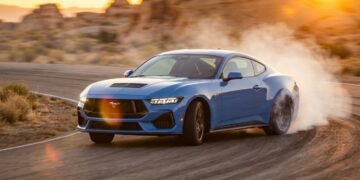

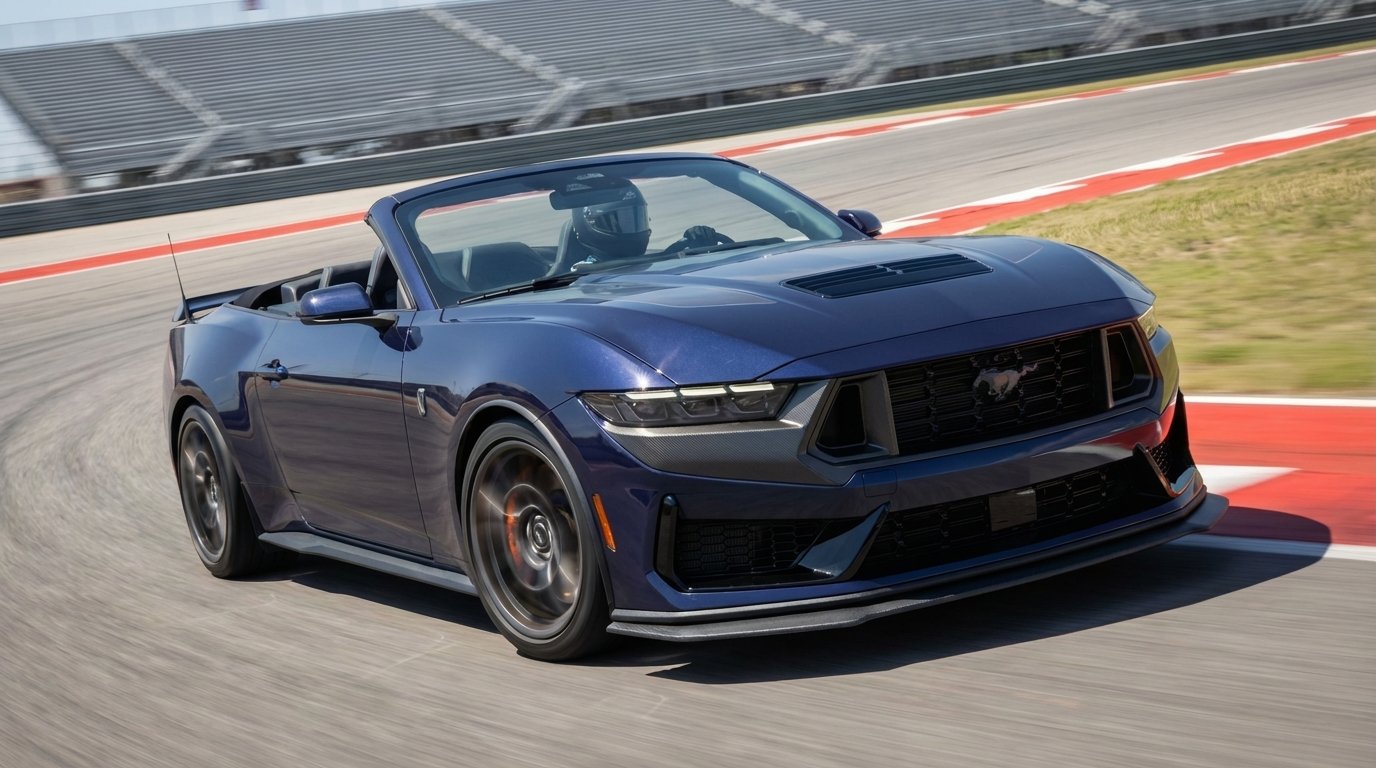
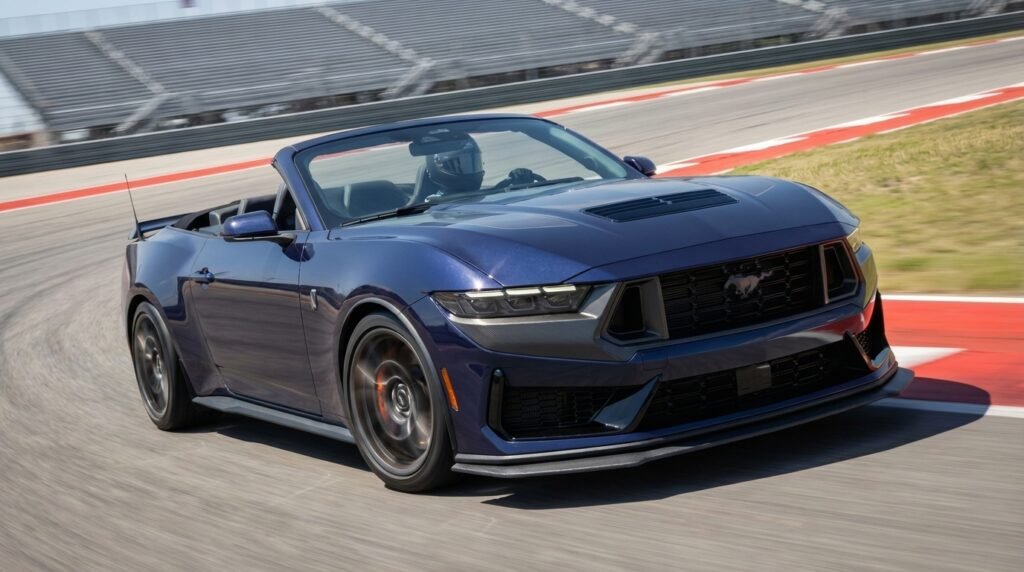
Listen up, gearheads: the GT500 convertible is real, and the proof is in fresh spy photos that surfaced recently. For years the rule was simple—want the top Mustang, and you accepted a fixed roof—but that rule looks set to change dramatically with Ford building a drop-top successor that clearly aims for the top of the performance ladder. These images show a heavily engineered S650 prototype wearing race-ready bodywork, and consequently they end the rumor phase. Moreover, the photos reveal aggressive aerodynamics, wide-track proportions, and hardware that points to extreme power and track intent. Therefore, enthusiasts who prized open-air driving might soon get a factory-built, high-horsepower Mustang that keeps serious performance. In addition, this development signals Ford Performance’s willingness to push packaging, cooling, and stiffness solutions to let a convertible handle supercar-level output without surrendering cornering discipline.
GT500 convertible Returns: They Said It Couldn’t Be Done
Let’s set the record straight: the last GT500 convertible appeared in 2014, and thereafter Ford avoided a drop-top variant for the following generation due to chassis rigidity concerns. In fact, engineers argued that the S550 architecture needed a fixed roof to contain 760 horsepower without losing composure on track. However, these new spy shots imply that Ford never gave up and that the S650 program includes solutions to that engineering puzzle. Meanwhile, the prototype’s heavy camouflage still exposes reinforced sections and aggressive aero, which suggests purposeful structural upgrades. Consequently, Ford Performance appears to have added targeted bracing and tuned suspension hardware to preserve handling despite the open roof. Ultimately, this means the upcoming convertible will aim to offer both open-air enjoyment and a performance envelope that keeps pace with coupe rivals, rather than trading speed and precision for style alone.
Decoding the Disguise: What the Spy Shots Reveal
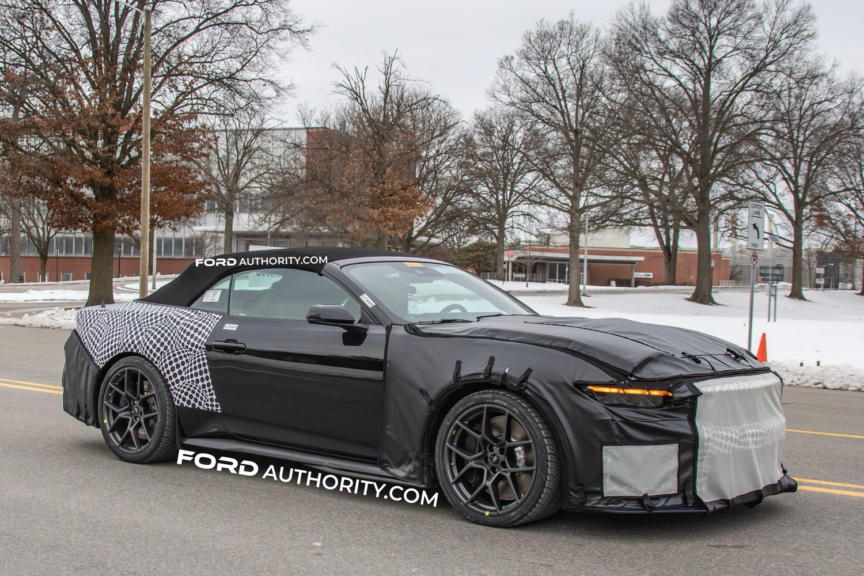
The camouflage hides fine details, but it can’t hide intent; the prototype reads as a track-capable Mustang by design rather than by add-on styling. To begin with, the overall silhouette looks lower and wider than standard S650 examples, and consequently every visible panel seems aimed at managing airflow and generating downforce. Moreover, the fenders flare out to make room for massive rubber, while the front fascia integrates a splitter that appears sized for heavy front-end bite at high speeds. In addition, the hood shows a pronounced bulge with extractors to control under-hood heat, which aligns with expectations for a highly boosted V8. Therefore, even beneath layers of tape and material, the package communicates a single message: this car prioritizes aerodynamic balance, cooling, and tire contact above cosmetic tweaks.



Aggression on Full Display
First, study the stance: massive fender flares and a wide track tell you this prototype expects oversized tires and hard cornering. Up front, the splitter sits low and broad to force air under the car and increase pressure on the nose for stability at speed. Meanwhile, hood vents and heat extractors appear optimized to expel thermal energy from a supercharged engine bay, which reduces heat soak and sustains performance. In addition, vents by the wheel arches hint at brake cooling channels and flow management that aim to limit lift. Consequently, each visible outlet and duct seems functional rather than decorative, and the combined effect points to a car designed to sustain repeat high-speed laps without compromise or surprise handling traits for drivers who push it hard.
That Wing on a Drop-Top?
Perhaps the most surprising spy detail is the massive rear wing installed on a convertible mule, which suggests Ford refuses to trade aerodynamic capability for open-air appeal. On a coupe, such a wing is logical because the roof helps provide torsional stiffness, yet the prototype shows Ford is applying similar aero philosophy to the drop-top. Moreover, a wing of that size is meant to generate significant rear downforce to balance the heavy front bite from the splitter and hood flows. As a result, drivers should expect aerodynamic loads that force consistent grip through high-speed corners, and therefore the convertible intends to remain a track-capable machine rather than a boulevard cruiser with cosmetic extras. Ultimately, this wing hints that the company plans minimal performance compromises for the open-top variant.
Rubber and Rotors: The Contact Patch of a Supercar
You can’t harness extreme power without the right tires and brakes, and the spy shots highlight that fact clearly through oversized wheels and large-diameter rotors. The prototype rolls on very wide rubber that appears capable of matching supercar traction levels, and while specific sizes remain unconfirmed, reports suggest staggered, high-grip sections to manage lateral force. Additionally, brake hardware peeks behind the wheels, showing cross-drilled discs and multi-piston calipers sized to resist fade under intense duty. Therefore, stopping performance should align with the car’s acceleration and cornering potential. In fact, observers reading these cues would expect Michelin or equivalent high-performance tires matched to a braking system engineered for repeated high-speed deceleration without compromise.
Under the Hood: The 800+ Horsepower Predator V8
All signs point to an evolution of the 5.2-liter Predator V8 as the powerplant for this project, and that choice explains many packaging cues visible in the test mules. Previously supercharged variants delivered roughly 760 horsepower, and consequently Ford appears intent on pushing that figure north of 800 for the next generation. Moreover, some insiders hint at numbers nearer 820 horsepower, which would require a larger blower, stronger fueling, and improved cooling architecture. Therefore, expect an upgraded supercharger, beefed-up internals where needed, and a recalibrated engine management strategy to safely produce the increased output. In addition, packaging and thermal solutions visible under the hood align with a forced-induction V8 that will demand improved airflow and radiator capacity to maintain consistent performance across consecutive high-load runs.
Transmission and Drive: Wrangling Massive Torque
Given the Predator’s torque potential, Ford is unlikely to pair it with a traditional manual, and insiders suggest an updated seven-speed dual-clutch transmission will handle power delivery instead. A DCT can shift faster and more consistently than a human, which matters when milliseconds affect lap times and traction control systems need predictable inputs. Moreover, modern dual-clutch units simplify power management during aggressive launches and gear changes, reducing drivetrain stress and preserving tire grip. Therefore, a high-performance automatic transmission seems the logical choice to exploit the engine’s capability while improving repeatability on both road and track. In addition, software calibration will likely offer customizable shift modes to suit street comfort and circuit aggression alike.
Chassis and Engineering: Taming a Roofless Rocket
Transforming an S650 into a convertible capable of handling 800-plus horsepower required structural investments that go beyond simple reinforcement panels, and the spy mules show clues to that work. Engineers likely added significant bracing in critical areas, including reinforced A-pillars, strengthened rocker sections, and a stout cross-member behind the rear seats to resist torsional forces that increase when the roof is removed. In addition, expect thicker or differently shaped structural elements where loads concentrate during cornering. Consequently, the convertible will carry extra weight compared with the coupe, but those gains are necessary to preserve steering precision and chassis balance at the limit. Finally, Ford appears to pair this structure with adjustable, high-performance suspension to mitigate the weight penalty while keeping handling sharp.
Suspension Tech: MagneRide and Tuning
The suspension will play a crucial role in delivering both composure and agility, and the latest-generation MagneRide dampers are the likely backbone for ride control. These computer-controlled shock absorbers adjust damping thousands of times per second to reconcile the conflicting demands of road comfort and track responsiveness. Moreover, engineers will tune damping characteristics separately for the coupe and the heavier convertible to account for different mass and stiffness profiles. Therefore, a convertible with this level of horsepower can still feel planted and responsive if suspension algorithms and spring rates match the chassis work. In addition, anti-roll components, bushings, and steering calibration will receive bespoke settings to maintain the sharp behavior expected from a top-tier Mustang.
What Will They Call It? GT500 or Something New?
Naming remains a question mark, and terminology will shape how fans perceive the car historically and commercially. Shelby GT500 is the obvious badge given its legacy and recognition, yet Ford could decide to emphasize the engine by using a “Predator” label to highlight the V8’s role. Moreover, choosing a new name might signal a deliberate branch in Mustang lineage rather than a direct continuation of previous Shelby nomenclature. Therefore, the final branding will matter for collectors and buyers who weigh tradition against fresh positioning. Ultimately, whatever name Ford picks will reflect the company’s intent for the car’s place in the performance hierarchy and how strongly it wants to connect to past Shelby heritage.
The Bottom Line: Get Ready for a New King
Make no mistake: this convertible project is a clear statement that Ford continues to invest in high-horsepower, supercharged V8 performance even as the industry shifts toward electrification. In addition, offering such capability in an open-top format broadens appeal to drivers who want both raw speed and wind-in-your-hair enjoyment. Moreover, the spy shots suggest a car with over 800 horsepower, aggressive aero, track-grade brakes, and tires, and chassis upgrades designed to preserve handling despite the heavier convertible structure. Therefore, expect Ford to position this model as a direct challenge to expensive European exotics by delivering dramatic performance for a comparatively lower price. Finally, while timing can change, reports point to a late-2025 reveal for the 2026 model year, and interested buyers should start planning accordingly; source: https://www.caranddriver.com/news/a69750381/ford-mustang-shelby-gt500-successor-convertible-spy-photos/