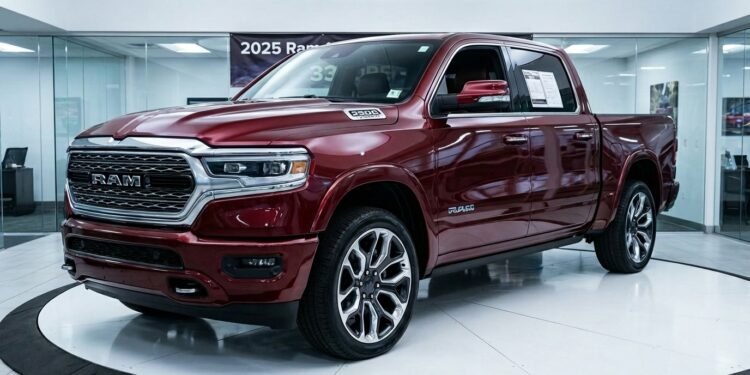










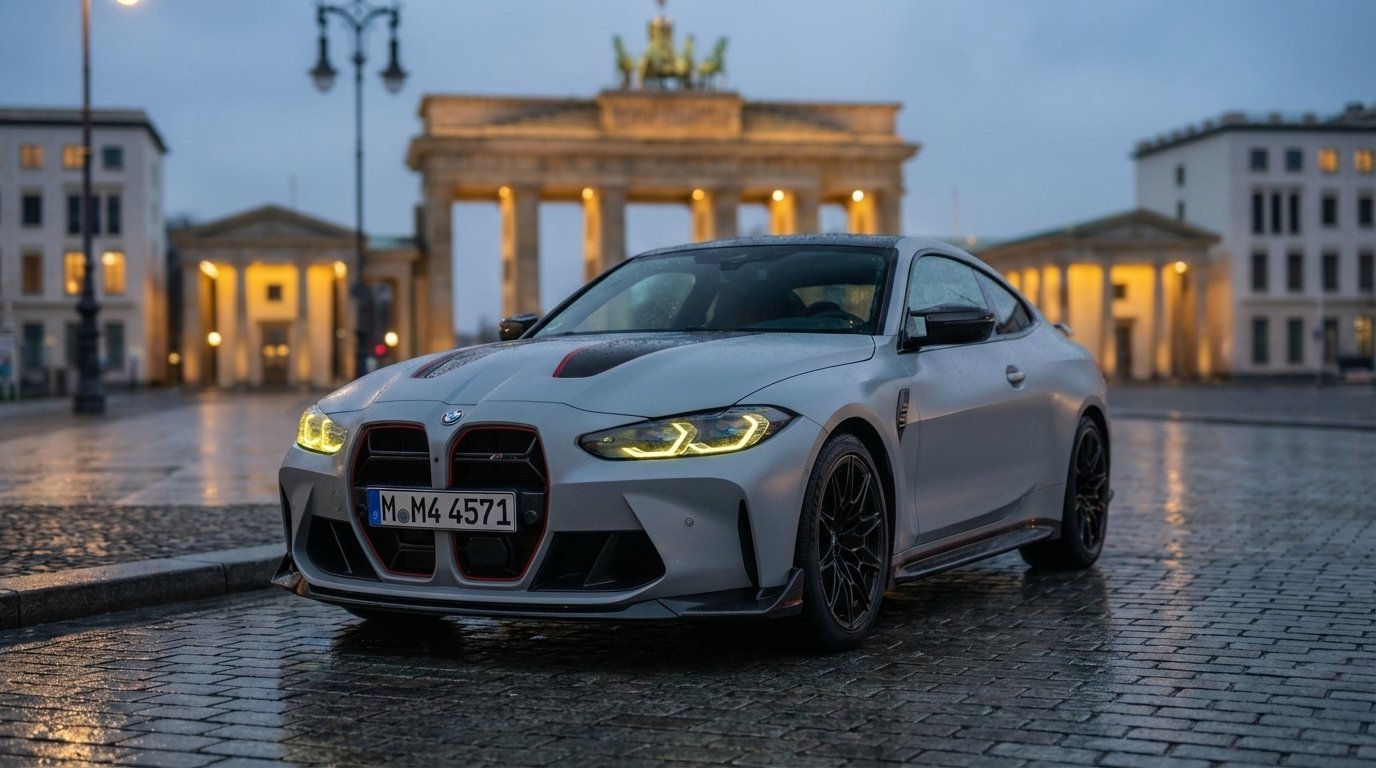
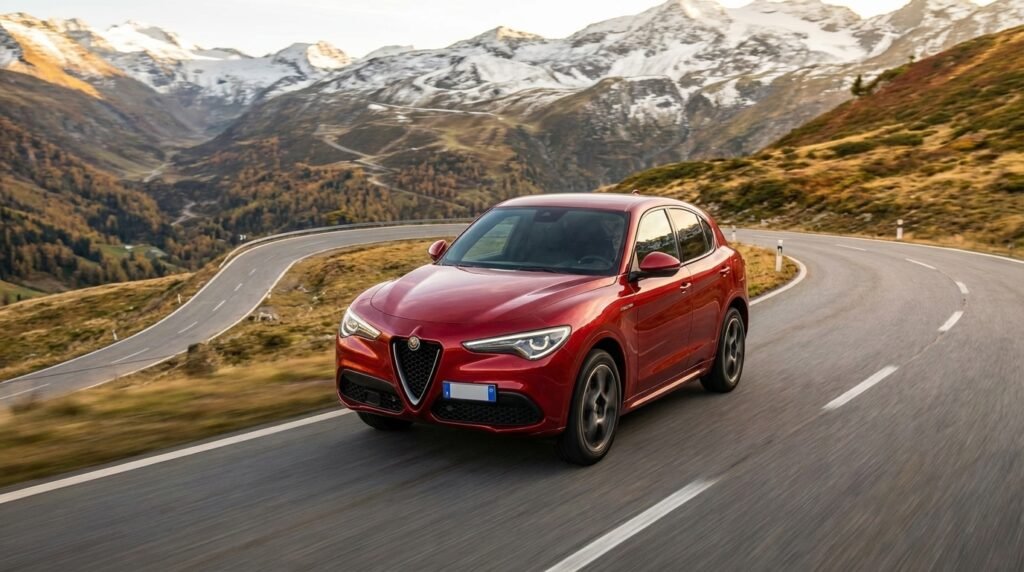
Let’s cut to the chase: e-fuels for cars just rewrote the EU’s endgame for combustion engines, and the mandate to ban new gas-powered cars by 2035 has collapsed. Brussels blinked, and consequently the top-down plan that would have forced only zero-emission vehicles is dead for now. For years, many politicians and officials treated the internal combustion engine as a relic, but a last-minute political fight changed that expectation. Germany led the push, and as a result the EU agreed to a legal route for combustion vehicles—provided they run on carbon-neutral synthetic fuels. Moreover, this shift wasn’t driven by a single lawmaker; instead, it grew from industrial pressure, coalition politics, and the emergence of a credible alternative fuel technology. Finally, this outcome hands the engine we love a lifeline while putting e-fuels for cars at the center of the debate.
The Great Reversal: What Just Happened?
Originally, the EU’s “Fit for 55” package aimed for a 100% reduction in new-car CO2 emissions by 2035, which effectively meant only battery electric vehicles could be sold. Industry and regulators were moving quickly toward that deadline, and many manufacturers had already shifted product plans. Then Germany intervened, and its transport minister refused to approve the final vote unless combustion engines could continue under strict conditions. Consequently, Rome, Warsaw, and Prague joined Germany in arguing for technological neutrality rather than an outright ban on engine types. The Commission faced a standoff that risked public defeat, so negotiators pursued a compromise text that preserves the 2035 timeline while adding a carve-out. In short, the new language creates a legal pathway for registering new combustion-engine cars after 2035, provided those vehicles use only carbon-neutral e-fuels for cars, and enforcement mechanisms are agreed upon by regulators.
What Are E-Fuels for Cars? The Silver Bullet Tech Explained
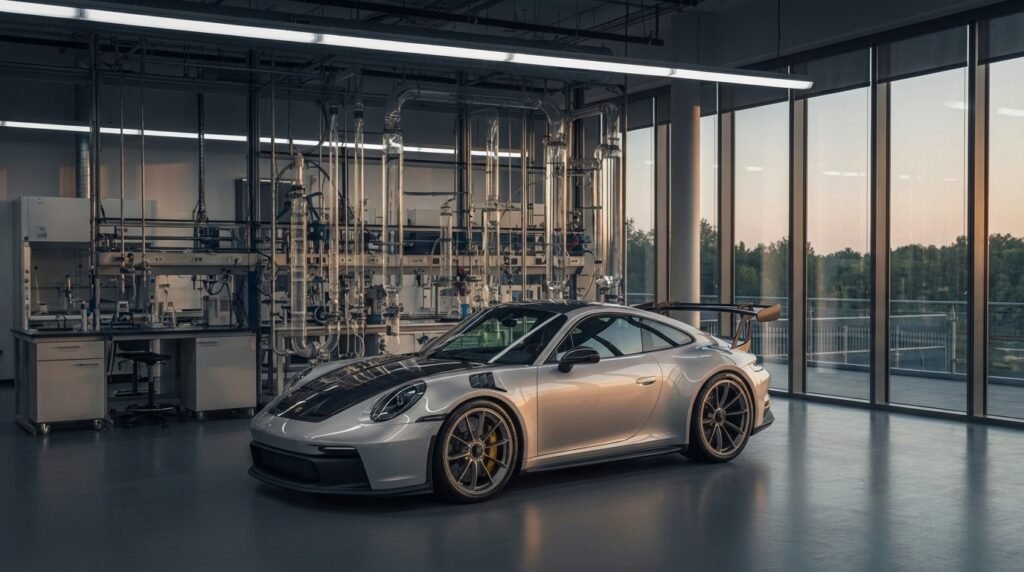
So what exactly are e-fuels for cars, and why do they matter? Put simply, e-fuels are synthetic liquid hydrocarbons made from green hydrogen and captured carbon dioxide, and they can power conventional engines without fossil feedstocks. First, producers split water into hydrogen and oxygen using electrolysis, and importantly they must use renewable electricity for that step. Next, they capture CO2 from the air or industrial sources and combine it chemically with hydrogen to synthesize liquid fuels that resemble gasoline or diesel. As a result, these fuels are compatible with existing engines, transmissions, and fuel infrastructure in many cases. Moreover, because they recycle atmospheric CO2, they can form a closed carbon loop if production and combustion use only renewable energy. Finally, e-fuels for cars aim to preserve mobility choices while addressing lifecycle emissions in a new way.
Related Post




Not Your Granddaddy’s Gasoline
Think of e-fuels as recycled air turned into energy-dense liquid fuel that runs in standard internal combustion engines. First, producers use renewable electricity to power electrolysis and produce green hydrogen, and this step is essential to keep the lifecycle low-carbon. Next, they capture CO2 from the atmosphere or point sources and react it with hydrogen to form hydrocarbons that chemically resemble gasoline or diesel. Consequently, drivers can use these fuels in many existing vehicles without extensive engine modifications, and fuel delivery systems often remain compatible. In contrast to fossil fuels, e-fuels do not extract buried carbon; instead, they reuse CO2 that was already in the air. Moreover, this approach allows automakers and consumers to retain familiar fuel infrastructure while transitioning the fuel source to synthetic, renewable inputs.
The Carbon-Neutral Promise
Here lies the key claim: e-fuels can deliver a closed carbon loop when every step uses renewable energy and captured CO2, and thus they can offset the fuel’s combustion emissions. Specifically, producers capture CO2 to make the fuel, and later the car emits roughly the same CO2 when burning that fuel. Therefore, if the capture and synthesis use only green electricity, the net atmospheric effect can be near zero. In addition, this lifecycle view changes how we evaluate emissions: instead of banning certain drivetrains, policymakers could require carbon-neutral fuels to meet climate goals. Of course, this outcome depends on strict standards and reliable accounting, and regulators must ensure that production actually uses renewable power and high-integrity CO2 capture to achieve the promised climate benefits.
Porsche’s Big Bet: The Haru Oni Plant
This concept has already moved from lab to pilot plants, and Porsche’s Haru Oni project in Chile stands as a high-profile example. The facility, developed with industrial partners, uses strong, consistent winds in southern Chile to generate renewable electricity for electrolysis and synthesis. As a result, the site produces synthetic fuel that Porsche has tested in motorsport and intends to use in road cars later. Moreover, the project shows that e-fuel production is technically possible at commercial scale, and it offers a blueprint for future plants in regions with abundant renewables. In addition, automakers investing in these projects signal industrial confidence in fuels that can extend the life of combustion engines while aiming for carbon-neutral operation when properly operated and regulated.
The Political Showdown: How Germany Forced the EU’s Hand
This reversal was the product of deliberate political strategy and industry leverage rather than chance, and Germany played a central role in shaping the outcome. Internally, the government faced tensions between environmental priorities and the economic interests tied to its massive auto sector. The Free Democratic Party and ministers focused on protecting manufacturing and technological neutrality, while other parties pushed for stricter bans. Consequently, German leaders framed e-fuels as a way to reconcile industrial policy with climate commitments. Meanwhile, Germany rallied like-minded member states by arguing that decarbonization should target emissions, not technologies. This approach found allies in Italy, Poland, and the Czech Republic, and together they created a blocking coalition that forced Brussels to renegotiate the package rather than lose face in a formal vote.
A Battle Inside Germany
Within Germany, the debate pitted environmental priorities against industrial strategy, and the divide almost toppled domestic consensus. On one side, green politicians pushed for the full 2035 ban and rapid electrification, arguing that only EVs could meet climate targets efficiently. On the other side, pro-business leaders emphasized the scale of Germany’s automotive supply chain and the risk of job and export losses. Consequently, ministers who supported e-fuels framed the issue as preserving technological choice while meeting emissions goals. In addition, industry groups and unions warned that a strict ban would force painful transitions in factories and supplier networks. Therefore, political leaders chose to defend domestic engineering strengths, betting that e-fuels could offer a pragmatic path to reconcile climate and industrial objectives.
Building a Powerful Alliance
Germany did not act alone, and it quickly found partners across the bloc who shared economic concerns and doubts about an EV-only mandate. Italy highlighted the need to avoid de-industrialization and urged policymakers to focus on emissions performance. Similarly, Central European countries worried about the affordability and infrastructure consequences of forcing a single technology across diverse markets. Consequently, these countries argued for technological neutrality and for rules that allow carbon-neutral fuels to meet climate targets. As a result, the EU negotiating balance shifted, and the Commission faced mounting pressure to find compromise language that preserved its headline climate goals while keeping member states on board politically and economically.
The 11th-Hour Deal
Faced with a united bloc of objecting states, EU negotiators sought a compromise that would avoid an embarrassing defeat while retaining the core ambition of Fit for 55. Accordingly, the Commission and dissenting governments drafted a legally binding declaration to clarify that new registrations of combustion-engine cars could continue after 2035 if they used only e-fuels for cars meeting strict conditions. In addition, the declaration calls for future regulations and monitoring to ensure that any such vehicles achieve lifecycle carbon neutrality. Therefore, Germany and its allies secured a pathway to preserve combustion options, and the Commission preserved the political feasibility of its climate package by agreeing to defined safeguards and further technical rules to be drawn up.
The Fine Print: What Are the Catches?
Now for the reality check: this victory comes with major caveats, and turning the legal pathway into real-world emission reductions will be hard. First, production costs for e-fuels remain high, and scale-up requires massive renewable energy and capital investment. Second, regulators must design credible enforcement to ensure cars approved under the carve-out actually run only on certified carbon-neutral fuels. Third, environmental groups warn that diverting green electricity to fuel production could slow direct electrification of transport. Consequently, policymakers and industry must address cost, scale, and environmental integrity if the e-fuels option is to deliver genuine climate benefits rather than a loophole that delays decarbonization.
The “E-Fuels Only” Problem
The most immediate technical and regulatory hurdle concerns how to guarantee a car uses exclusively e-fuels, and this challenge will require new solutions. For example, automakers may need to install sensors that detect fuel composition or adapt engine management systems to reject fossil gasoline. In addition, fuel stations and nozzles might require authentication protocols to prevent unauthorized refueling, and regulators could mandate onboard logging for audits. Consequently, enforcement will depend on technical standards, digital systems, and legal penalties for noncompliance. Moreover, industry must develop reliable, affordable solutions that work across millions of vehicles, and governments must create the compliance framework that makes the carve-out credible rather than easily bypassed.
The Cost and Scale Hurdle
At present, producing e-fuels costs far more than refining fossil fuels, and initial prices reflect small-scale demonstration projects. However, supporters point out that many technologies started expensive and fell with scale and innovation, and the same dynamic could apply to e-fuels. Therefore, achieving cost reductions will require large investments in renewable electricity, industrial synthesis plants, and supply-chain infrastructure. In addition, site selection matters: regions with abundant, cheap renewables will produce more competitive e-fuels. Consequently, widespread deployment hinges on coordinated policy signals, private capital, and industrial planning to build the thousands of gigawatts of wind and solar capacity that would power large-scale production economically.
The Green Opposition
Unsurprisingly, many environmental groups decry the compromise as a loophole, arguing that producing e-fuels wastes renewable electricity that would be better used to charge EVs directly. They also point to inefficiencies in converting electricity to liquid fuels and back to energy in combustion engines. Consequently, NGOs demand strict limits, transparent lifecycle accounting, and priorities that favor direct electrification where feasible. Nevertheless, proponents counter that e-fuels address legacy fleets and sectors where batteries are impractical, and they claim the solution preserves mobility choice while aiming to decarbonize via synthetic fuels for cars. Ultimately, the debate now centers on standards, allocation of renewables, and the relative roles of fuels versus electrification in the energy transition.
What This REALLY Means for Car Enthusiasts
For drivers who love sound, feel, and mechanical character, the decision changes the horizon significantly, and it preserves options that many enthusiasts cherish. First, the ruling means manufacturers can continue to develop high-performance internal combustion engines optimized for synthetic fuels, and engineers can explore new designs without the threat of a total ban. Next, automakers will likely prioritize e-fuel use initially in premium and limited-production models where margins justify higher fuel costs. In addition, enthusiasts may see boutique offerings and retrofitted classics certified to run on carbon-neutral fuels, and this could keep vintage and performance car cultures alive in a carbon-constrained world. Finally, the outcome keeps the choice of drivetrain open for consumers and allows the driving experience to remain diverse.
Practically speaking, the near-term effect will be limited while production scales and prices fall, and early availability of e-fuels will likely focus on motorsport and luxury segments. However, over time, increased production could push prices down and broaden access, and mainstream performance cars may then adopt these fuels as part of compliance strategies. Moreover, manufacturers committed to brand identity will likely lead adoption to preserve engine acoustics and dynamics that define their models. As a result, enthusiasts can expect a phased rollout that starts exclusive and eventually becomes more mainstream if costs and supply grow as proponents predict.
Ultimately, the cultural impact matters as much as the technical one, and this decision reinforces the idea that cars can remain emotional artifacts while evolving to meet climate constraints. Engineers will have incentives to refine combustion efficiency, lower tailpipe pollutants, and better integrate fuel standards into vehicle design. Therefore, the future of driving could combine classic mechanical pleasures with modern environmental discipline, and for many drivers the sound of a well-tuned engine may continue to be part of the automotive experience.

The Bottom Line: Combustion Lives On
Mark this day: the EU’s 2035 ban in its original form has been halted, and the new compromise opens a path for carbon-neutral combustion under strict conditions. This outcome represents a victory for technological diversity, industrial interests, and automotive enthusiasts while also demanding rigorous rules and significant green energy investment. Consequently, the fight now shifts from politics to engineering, finance, and regulation: can e-fuels be produced at scale, cheaply, and with verified lifecycle emissions close to zero? The road ahead is long, and many technical and policy obstacles remain, but the legal pathway now exists for combustion engines to continue in a climate-conscious manner if stakeholders deliver on the tough promises made in the negotiations.
Ultimately, the debate reframes the enemy as the fuel rather than the engine, and by changing what we burn we may preserve what we love. The future of driving will likely include multiple approaches—batteries, synthetic fuels, and efficiency gains—each used where they make the most sense. In the end, e-fuels for cars have moved from theory to political reality, and their success will depend on rigorous standards, investment in renewables, and transparent lifecycle accounting to ensure the environmental claims hold up.
Sources:
Yahoo Autos: Official: EU Scraps 2035 Ban on Combustion Engines, Adopts E-Fuel Compromise
The Electric Car Scheme: EU 2035 Petrol Diesel Ban Under Pressure