












Stellantis Layoff Chaos: The Toledo U-Turn Exposing a Scrambling Giant
Introduction: A Whiplash Moment in Toledo
The Toledo layoff U-turn exposed a company that looked unsteady and reactive, and the first paragraph must name that exact phrase. Stellantis first announced cuts at the Toledo Jeep Gladiator plant, then abruptly reversed course, creating confusion and anger among workers and observers. For workers who saw WARN notices, the swing felt like a betrayal, and many families scrambled to adjust plans. Moreover, the reversal highlighted deep problems in planning and communication at the executive level. The episode also tied back to a management style associated with former CEO Carlos Tavares, which emphasized aggressive cost moves and rapid, crisis-driven decisions. Consequently, employees and union leaders questioned leadership credibility and strategic competence. Ultimately, this U-turn left a lasting dent in trust, and it raised urgent questions about how the company manages production, forecasting, and worker stability in a turbulent market.
The Timeline: The Toledo layoff U-turn
The sequence of events in Toledo read like a corporate thriller, and it revealed an unsettling pattern of whiplash for UAW Local 12. First came the layoff notice, which hit employees and the community hard. Next, the company rescinded those notices, creating a new wave of confusion and disbelief. As a result, the back-and-forth suggested either faulty forecasting or an inability to stick to a coherent plan. Additionally, the public and union reactions amplified pressure on Stellantis, and they forced a rapid reassessment of the announced cuts. For example, local leaders immediately criticized the approach and demanded clearer communications. Meanwhile, the workers faced emotional and financial stress throughout the ordeal. Overall, the timeline showed not only a management error but also the real human cost of treating labor decisions as flexible levers instead of serious commitments that affect families and communities.
November 6, 2024: The Axe Falls
On November 6, the company announced it would cut one of two shifts at the Toledo Assembly Complex South Plant, and that action meant indefinite layoffs for roughly 1,140 employees. Stellantis explained the move as a response to weak demand for the Jeep Gladiator and to reduce high inventory levels. Moreover, the company cited a sharp sales decline, noting a 21% year-over-year drop through the third quarter. For the workers who received WARN notices, the warning felt immediate and brutal, since the layoff had an effective date tied to January 5, 2025. In addition to the emotional shock, families began reworking budgets and plans. At the same time, union leaders scrambled to get more information from management. Consequently, the initial announcement set off a chain of questions about forecasting accuracy, product strategy, and how the plant would weather the downturn without long-term support or a clear recovery plan.




December 22, 2024: The Unbelievable U-Turn
Then, just before the holidays, Stellantis reversed course and rescinded the layoff notices, asking employees to report to work in January as scheduled. The company stated, “No employees will be placed on indefinite layoff on Jan. 5, 2025,” and the reversal stunned workers and the public alike. However, this sudden change did not feel like a holiday miracle; instead, it looked like a public admission of a serious misjudgment. Either demand projections were badly off, or the union and community backlash forced a rethink. Meanwhile, the reversal further damaged trust, because it exposed inconsistent planning and reactive decision-making. For workers, the emotional whiplash compounded the financial uncertainty from weeks earlier. Ultimately, the U-turn did not resolve deeper issues about forecasting, product demand, or long-term support for the Toledo facility.
Under the Hood: Why the Gladiator is Stalling
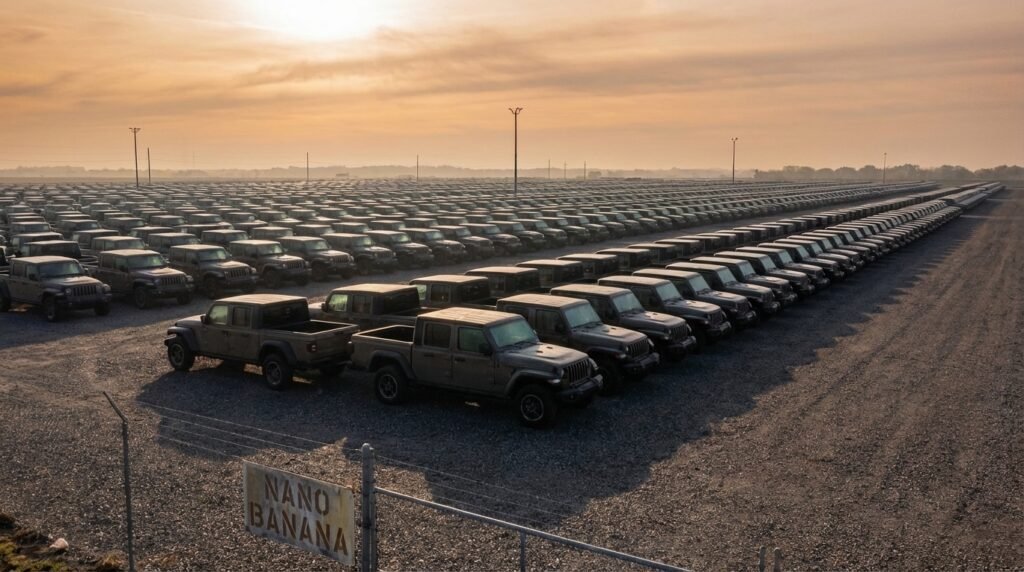
The struggles at Toledo reflect wider problems with the Jeep Gladiator, and the vehicle has failed to carve a stable market position. For many consumers, the Gladiator occupies an awkward middle ground between an off-road Wrangler and a practical midsize pickup. As a result, mainstream truck buyers often pick competitors like the Ford Ranger or Chevy Colorado, while purist off-road buyers stick with the Wrangler. Moreover, the Gladiator carries a mainstream price tag that many feel does not match its niche appeal. Consequently, sales have dipped, signaling that the product lacks broad market resonance. Additionally, pricing and incentive strategies have tried to mask the issue, but they cannot fundamentally change buyer preferences. In short, product positioning and pricing missteps have left the Gladiator vulnerable in a crowded segment, and that weakness directly contributed to the plant’s recent turmoil.
A Niche Product in a Crowded Market
The Gladiator answers a narrow question that few buyers ask, and this reality shows up clearly in sales data and buying patterns. For instance, sales dropped from roughly 60,000 units in 2022 to just over 40,000 in 2023 for the comparable period, and that decline underlines the vehicle’s shrinking appeal. Additionally, truck buyers focused on utility prefer competitors with stronger hauling credentials, while off-road enthusiasts choose the Wrangler for pure capability. As a result, the Gladiator struggles to attract either group consistently. Furthermore, the model’s premium pricing signals a value proposition that many buyers reject. Meanwhile, dealers have accumulated inventory, and that surplus led to aggressive discounting. Ultimately, the market verdict has been harsh: a niche offering with mainstream pricing rarely sustains robust, long-term sales without clear differentiation or a compelling value story.
Desperate Measures: Slashing Prices to Move Metal
Stellantis responded to slowing Gladiator demand with steep incentives, and those discounts included double-digit percentage reductions and large cash allowances. For example, promotions reportedly offered 10% off MSRP, then up to 20% off, and in some cases roughly $7,000 in cash allowances. However, heavy incentives provide only a short-term sales bump, and they also erode resale values. Moreover, deep discounts signal to buyers that a vehicle lacks intrinsic desirability, which damages the brand’s premium and rugged image over time. Dealers might move inventory quicker with these tactics, yet the strategy risks long-term brand health. In addition, repeated discounting trains customers to wait for deals rather than buy at full price. Consequently, while the incentives eased short-term inventory pressure, they also magnified the Gladiator’s positioning and value problems in the marketplace.
The Tavares Legacy: Management by Crisis
Much of this approach traces back to a management philosophy associated with Carlos Tavares, and his style emphasized tight cost control and rapid reaction to market signals. First, leadership pushed suppliers and operations to squeeze costs and trim inventory. Next, the company allowed little slack in production buffers, which created sensitivity to demand swings. As a result, any downturn quickly translated into visible operational moves, like shift cuts and layoffs. Moreover, treating labor as a flexible cost rather than a strategic investment fosters instability. Workers therefore face unpredictable schedules and constant anxiety about job security. In contrast, a steadier operational plan would balance costs with workforce stability. Ultimately, the Toledo episode demonstrated the downside of a constant emergency mindset: it yields quick fixes, not sustainable, well-planned solutions for production or employee well-being.
Tavares’s playbook rests on three primary tactics that shape daily operations and strategic choices, and each tactic has downstream consequences for plants like Toledo. First, the company negotiates hard with suppliers to extract savings and reduce unit costs. Second, inventory management remains lean, which improves margins in stable times but increases risk when demand shifts. Third, management treats labor as a variable expense it can reduce quickly when sales disappoint. Consequently, these tactics improve short-run margins but sacrifice long-run resilience. Additionally, such an approach pressures workers and suppliers and makes recovery from shocks more difficult. For communities that rely on large plants, the result is chronic uncertainty. Finally, reversing a major layoff decision weeks after announcing it underscores how reactive tactics can spiral into broader reputational and operational damage.
The UAW and the Workers: Pawns in the Game
For UAW members at Toledo, the announcement and subsequent reversal felt like being moved without consent, and the emotional toll was real. UAW Local 12 President Bruce Baumhower described the cuts as “disheartening” and “not surprising,” adding bluntly, “It’s not selling.” His comments reflected both frustration and resignation among local leaders who have navigated plant volatility before. Additionally, families scrambled to plan around a potential income loss, and community services faced added stress from the uncertainty. Meanwhile, trust between workers and management eroded further after the reversal. For employees, the episode showed that strategic corporate decisions can ripple into household budgets, schooling plans, and longer-term financial stability. Ultimately, even though layoffs were rescinded for now, the damage to relationships and morale likely persists and will require serious rebuilding efforts.
Beyond immediate morale problems, workers also face a stalled product roadmap that promised hope but has yet to deliver, and the promised Gladiator 4xe plug-in hybrid has reportedly been delayed. While that model had suggested a potential sales boost and a way to align with shifting consumer preferences, delays undermine those hopes. Moreover, each missed rollout or delayed upgrade extends plant vulnerability and limits management’s options for stabilizing production. In addition, union negotiators must now weigh short-term wins against long-term job security, and that balancing act complicates bargaining strategies. Consequently, workers remain exposed to the next set of corporate calculations. Meanwhile, community stakeholders worry that repeated missteps will erode the region’s manufacturing base over time.
Conclusion: More Than a U-Turn, It’s a Red Flag
Call the Toledo episode what it is: a public display of strategic confusion, not competence. The chaotic U-turn on 1,100 layoffs did not reveal nimble management; instead, it showed inconsistent planning and reactive decision-making. For employees, families, and union leaders, the reversal deepened distrust and underscored the human cost of corporate experiments in cost control. Moreover, the Gladiator’s market challenges and the company’s incentive-driven responses did not offer a coherent path back to stability. As a result, the plant remains vulnerable to future swings in demand or another round of aggressive cost moves. In short, the incident signals broader risks for Stellantis’s North American operations unless leadership commits to clearer forecasting, steadier production plans, and better communication with workers and communities.
Ultimately, the Toledo layoff U-turn should serve as a warning that quick fixes conceal deeper structural problems. Stellantis must reconcile product positioning, inventory strategy, and labor relations to restore trust and long-term viability. Meanwhile, the automaker navigates an auto industry that requires careful EV planning and consistent execution. For UAW workers and analysts alike, the message is clear: rescinding notices does not erase the underlying issues. Consequently, stakeholders will watch future moves closely to see whether leadership can shift from crisis reactions to durable, strategic planning that supports both competitiveness and worker stability.
Sources:
- The Detroit News: “Stellantis will cut 1,100 jobs at Toledo’s Jeep Gladiator plant”
- Detroit Free Press: “Stellantis wants Jeep plant employees to report to work next month”
- World Socialist Web Site: “Despite reprieve for Stellantis workers in Toledo, threats to jobs remain”
- CBT News: “Stellantis paused Jeep Gladiator production amid parts shortages and tariff concerns”