





GM’s V8 Blackout: Why a 30-Day Shutdown Signals the Gen 6 Small Block is Coming
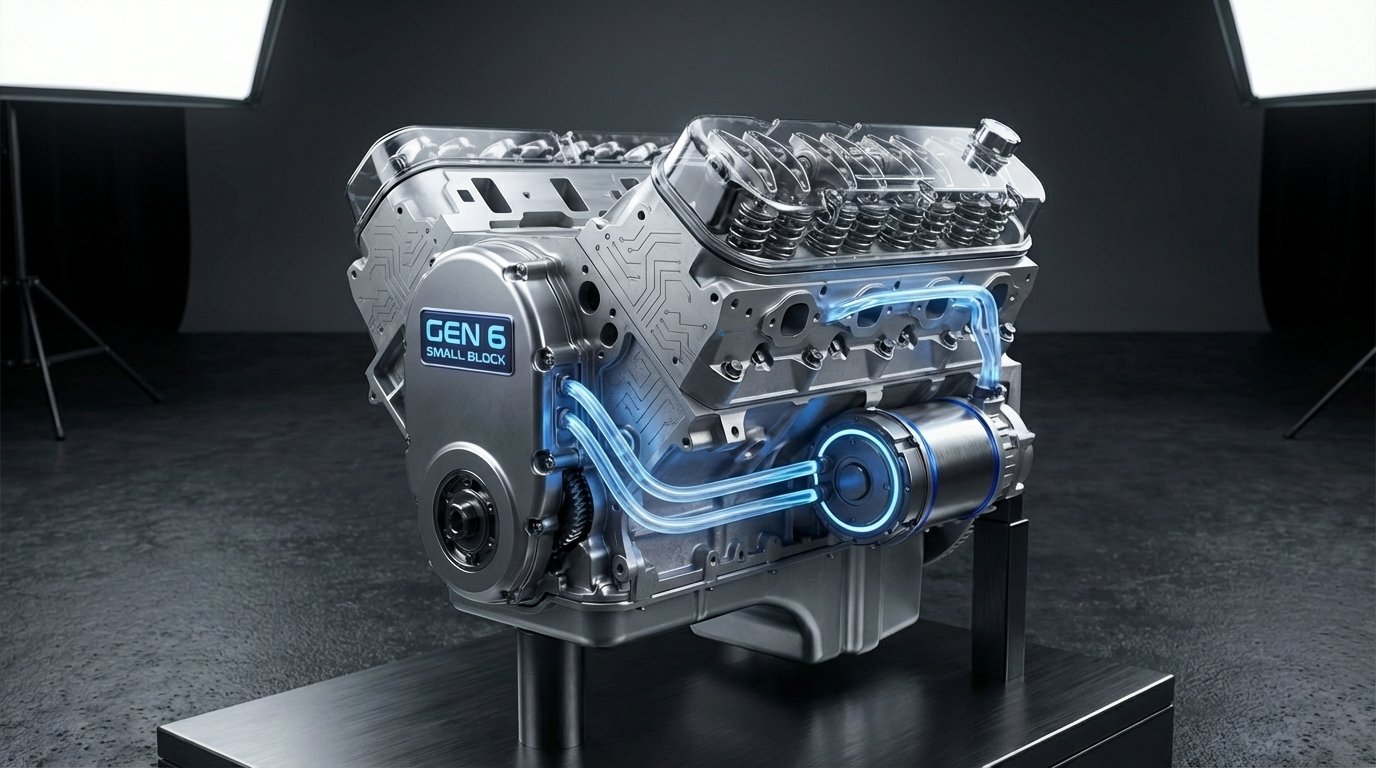
Listen up: the Gen 6 Small Block is the phrase you should remember as you read this. General Motors just announced a 30-day shutdown at two critical plants, and the timing tells a deeper story. Officials called the stoppage “scheduled maintenance,” yet insiders disagree and are hinting at major retooling. Flint Assembly and Bowling Green are both in the shutdown plan, and those sites build GM’s most important V8-powered vehicles. As a result, this pause looks less like routine upkeep and more like a manufacturing pivot. Moreover, the blackout starts December 24th, which aligns with a holiday slowdown and makes the move strategically neat. In short, GM appears to be preparing hardware and tooling, not merely fixing robots. Consequently, observers believe the automaker is readying these lines for a next-generation V8 rollout. Overall, the shutdown reads like a quiet declaration of intent.
The “Official Story” is Full of Holes
First, consider the corporate explanation and then weigh the context around it. Automakers do schedule maintenance, and usually those stops run a week or two during slow periods. However, a full month-long shutdown that begins on December 24th behaves very differently from a typical maintenance window. The duration and the holiday timing together suggest an overhaul rather than ordinary tune-ups. Additionally, both plants affected build high-value products—so idling them for a month carries meaningful cost and risk. Therefore, GM would need a significant operational reason to halt production on vehicles like the Silverado HD, Sierra HD, and Corvette. Executives rarely take such measures for minor repairs. Instead, the company more plausibly uses the downtime to install new tooling, calibrate assembly processes, and validate production changes needed for a major powertrain update. In that light, the “scheduled maintenance” line looks incomplete.
Connecting the Dots: Flint and Bowling Green
Flint Assembly: The Workhorse Factory
Flint Assembly makes the heavy-duty pickups that deliver steady cash flow for GM, and that position matters in this story. The plant produces the Chevy Silverado HD and the GMC Sierra HD, both of which depend on robust V8 torque and proven pushrod architecture. Competitors have been pushing into this space, and the pressure to respond has grown accordingly. Consequently, a retooling at Flint fits a plan to introduce an updated or new truck-focused engine. In addition, modern truck buyers demand improved efficiency alongside torque, so engineers must balance both goals. Therefore, updating fuel systems, valvetrain control, and assembly fixtures at Flint would prepare the plant to build a next-gen V8 that serves towing customers and fleet buyers. Finally, this move would protect one of GM’s most profitable lines while enabling a coordinated rollout across other divisions.
Related Post




Bowling Green: The Cathedral of Speed
Bowling Green, Kentucky operates as GM’s performance showcase, and the Corvette there often debuts new small block technology. The current C8 Corvette Stingray uses Gen V architecture, and the Z06 already pushes that platform hard. Yet the halo models traditionally introduce higher-performance powertrains, so preparing Bowling Green at the same time as Flint is telling. Moreover, synchronizing changes at a truck factory and a performance plant suggests a unified engine strategy across product lines. As a result, GM could leverage shared core architecture while calibrating each variant for distinct duty cycles and outputs. In short, the simultaneous shutdowns function as a smoking gun that GM plans to equip both its workhorse trucks and its halo sports car with the same next-generation V8 foundation. Ultimately, that alignment would simplify development and broaden parts commonality across multiple vehicle families.
Why Now? The V8 Arms Race is White-Hot
GM faces clear competitive pressures that make the timing urgent. Ford, for example, fields a large-displacement 7.3L pushrod V8 that emphasizes torque and durability in Super Duty trucks. Consequently, that engine creates a benchmark GM cannot ignore. In addition, Stellantis is moving in a different direction by replacing some traditional V8 duties with advanced inline-six designs that deliver comparable power more efficiently. Therefore, GM must evolve on two fronts: preserve torque and improve emissions and efficiency. The automaker cannot rely on incremental tweaks alone while rivals reshape customer expectations. Moreover, regulatory and market trends push toward hybridization and smarter fuel control, which forces legacy V8 platforms to adapt quickly. As a result, the next-generation engine has to be both powerful and technologically modern to remain competitive across fleets and enthusiasts.
Decoding the Gen 6 Small Block: What We Expect
More Displacement? Or Smarter Displacement?
One clear question is whether GM will increase displacement to match competitors or instead refine existing architectures. A larger V8 could challenge Ford’s bigger units on sheer torque, and that approach remains plausible for truck-focused variants. However, engineers often gain more by improving combustion efficiency and control systems than by simply enlarging displacement. Consequently, GM may keep familiar displacements around 6.2L and 6.6L while significantly upgrading direct injection, dynamic fuel management, and combustion calibration. In addition, improved cylinder deactivation with much finer control could boost economy without sacrificing peak output. Therefore, the likely path blends proven displacement sizes with smarter internal systems. Finally, that strategy preserves packaging benefits while delivering the performance and efficiency buyers now expect.
Hybrid Power is Non-Negotiable
Hybridization looks set to play a central role in the Gen 6 small block strategy, and GM already has hybrid experience in performance models. The Corvette E-Ray demonstrates how electric assist can enhance traction and torque instantly. Therefore, adapting similar concepts for trucks makes practical sense, especially for towing duty where electric torque at low speeds proves valuable. In addition, a mild- or integrated-hybrid system could cut city fuel use while boosting low-end performance. Consequently, engineers can balance emissions targets with customer demands for power and capability. Moreover, hybrid assistance would offer smoother cylinder deactivation and better transient response. As a result, pairing electric torque with a refined V8 addresses both regulatory concerns and the torque war in one integrated package.
The Pushrod Lives On (But It’s Getting Smarter)
GM will likely retain the pushrod layout because of its compact packaging and torque advantages, yet the valvetrain will evolve substantially. Expect next-generation variable valve timing that expands control across load and RPM ranges, and that change will improve efficiency and emissions. In addition, combining direct injection with port injection appears plausible to optimize combustion under diverse conditions. Consequently, a dual-injection strategy can deliver cleaner low-load operation while preserving high-RPM power. Moreover, smarter controls and more precise actuation will allow the pushrod architecture to meet stricter standards without losing its torque edge. Therefore, the Gen 6 design can honor the small block’s heritage while integrating modern systems that make it relevant for the next decade.
Built for Boost, Ready for Anything
Durability and strength will be central design goals, and engineers will likely reinforce the block and rotating assembly accordingly. Forged internal components and beefier main caps would prepare the platform to handle forced induction and high-output builds. Consequently, that robustness enables factory performance models to arrive with big power figures while maintaining reliability. In addition, designing the block to accept supercharging or turbocharging simplifies variant development across Corvette, Cadillac, and truck lines. Therefore, a stronger base architecture helps GM scale performance from work trucks to halo cars without redesigning core internals. Finally, preparing for future extreme applications preserves tuning headroom and supports aftermarket development, which in turn strengthens the small block’s long-term appeal.
The Timeline: When Will We See the Gen 6 V8?
The plant changes suggest a phased schedule that aligns with standard industry development cycles. A month-long retooling beginning in winter 2025 implies substantial factory work up front, and that activity would likely feed into validation and pilot production during 2026. Consequently, GM could use spring and summer of 2026 for testing, calibration, and production ramp trials. In addition, engineers will need time to finalize hybrid integrations and emissions compliance on both truck and performance variants. Therefore, a late-2026 announcement followed by 2027 model-year introductions fits the available timeline. Moreover, staggering the launch between the Corvette and heavy-duty pickups allows marketing to concentrate on each segment while leveraging shared engineering. Ultimately, that rollout pattern would maximize impact and minimize risk during an ambitious product transition.
The Final Word: A Calculated Gamble on V8 Power
This shutdown looks like more than a temporary halt; it reads as a strategic investment in the V8’s future. GM appears willing to modernize the small block rather than abandon it, and that choice reflects confidence in continued demand from truck buyers and performance enthusiasts. In addition, the Gen 6 Small Block strategy combines heritage pushrod benefits with hybridization and smarter fuel systems to meet modern expectations. Consequently, GM hopes to keep its torque advantage while improving efficiency and emissions performance. Moreover, synchronizing changes across Flint and Bowling Green signals a company-wide commitment to this approach. Therefore, expect a generation of V8s that blend classic characteristics with contemporary technology. Get ready: GM seems poised to press its V8 advantage into the next decade.