California’s CDL Scandal Just Got Worse — And It Puts Every Driver At Risk
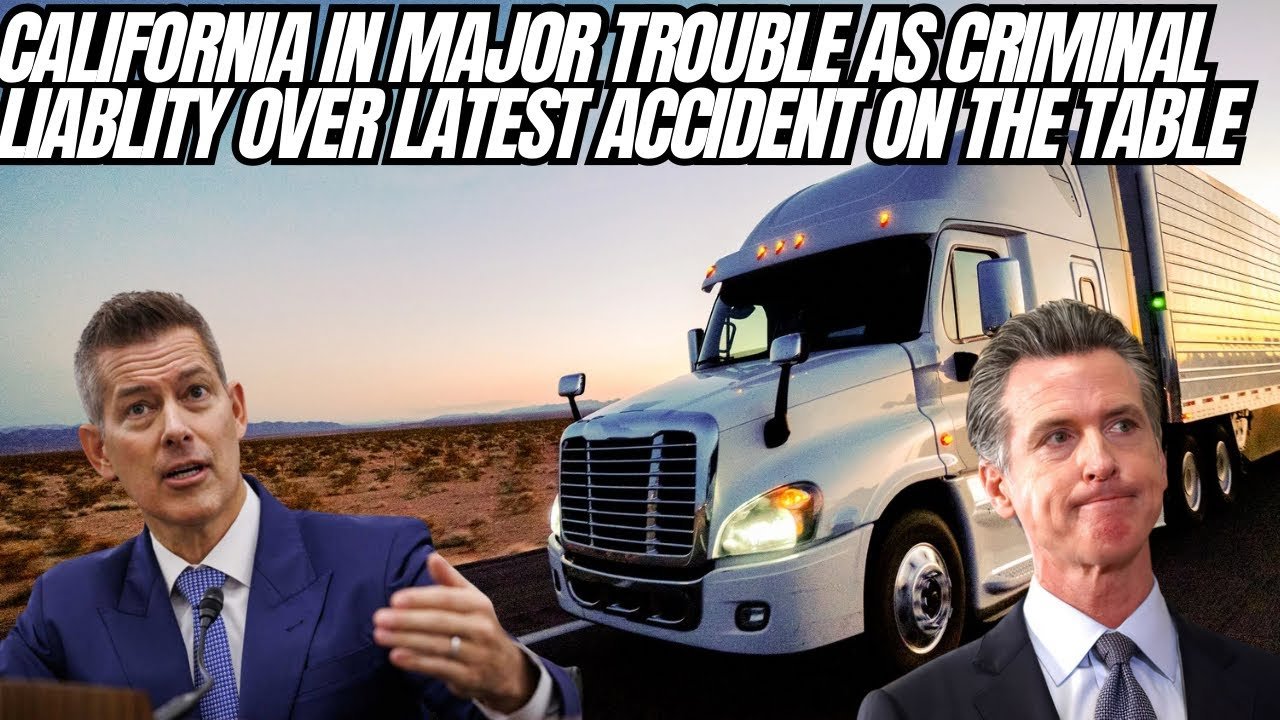
I held this story back a beat to make sure what I’m about to say is tight. Multiple sources, on-record federal guidance, and new reports all point to the same ugly truth: California issued (and recently upgraded) a commercial driver’s license to a non-citizen driver after the feds told states to stop — and within days, three people were dead on the 10 Freeway in Ontario. Yahoo+2Reuters+2
Let’s deal in facts, not vibes:


1) English proficiency isn’t optional.
Federal law has long required CDL operators to “read and speak the English language sufficiently to converse with the general public, to understand highway traffic signs and signals…, to respond to official inquiries, and to make entries on reports and records.” That’s 49 CFR 391.11(b)(2). It’s not new, it’s not political — it’s baseline safety. FMCSA
2) “Non-domiciled” CDLs are tightly controlled.
A “non-domiciled CDL” is defined in federal regulation (49 CFR 383.5). States do the issuing, but they must follow federal eligibility and vetting rules. When USDOT tightens those rules, states don’t get to freelance. FMCSA
3) The feds say California didn’t comply — and pulled money.
According to new reporting, USDOT (under Secretary Sean Duffy) withheld $40.6 million from California for allegedly failing to enforce the English-proficiency and licensing restrictions and warned of ~$160 million more at stake if the state doesn’t comply. California’s response is that it’s following federal law and its crash rate is lower than the national average — but the money clawback and the threat are real. Reuters
4) The crash that lit the fuse.
Dashcam video shows the red semi barreling into slowed traffic on I-10 near Ontario; three people died, four were injured. Follow-up reporting says California had upgraded that driver’s license six days before the crash despite the federal order. This is exactly the scenario English-proficiency rules are meant to prevent: if you can’t read the signs or communicate with law enforcement under pressure, 80,000+ pounds at highway speed becomes a missile. FOX 11 Los Angeles+1
5) This is bigger than one crash.
Even before Ontario, other states were confronting licensing problems — including a Florida case where investigators found a driver had repeatedly failed CDL knowledge and air-brake exams before a fatal wreck. That’s not “paperwork.” That’s a systems failure with real body counts. eCFR
What I Verified (and why it matters)
- The law is crystal clear on English: 49 CFR 391.11(b)(2) is black-and-white. If a state’s testing, training, or enforcement lets drivers through who can’t meet it, that state is out of bounds. Period. FMCSA
- States issue CDLs, but under federal guardrails: Definitions and eligibility for “non-domiciled” CDLs live in 49 CFR 383.5; oversight of third-party testers is covered under 49 CFR 383.75. The feds can and do audit states and third-party testing outfits — and they can squeeze funding when a state shrugs. FMCSA+1
- USDOT’s enforcement posture changed this month: New reporting shows the department not only pulled funds but publicly tied the Ontario tragedy to California’s non-compliance — saying “three more people would be alive” if the state had followed the rule. Whether you agree with the rhetoric or not, the policy hammer has already dropped. Yahoo+1
What this means for drivers, carriers, and families
For drivers (and schools): If you’re a legit operator, this crackdown helps you. Expect stricter English checks at testing sites, more audits of third-party examiners, and fewer licenses issued to anyone who can’t clear the bar. If your program can’t stand up to a federal audit, fix it now. 49 CFR 383.75 gives FMCSA plenty of teeth. FMCSA
For carriers: Assume heightened roadside scrutiny, especially in California and neighboring corridors. Re-verify every driver’s credentials, document English proficiency, and be ready to prove training on signage, LAW-interaction, and emergency procedures. That’s not “overkill” — it’s litigation insurance when a plaintiff’s lawyer drops the dashcam in front of a jury.
For families on the road: The boring truth of safety is standards. When the standards slip — whether by corruption, political games, or sloppy testing — crashes like Ontario happen. Rebuilding confidence starts with enforcing the rules already on the books. FMCSA
My take
I love performance and freedom, but 85,000 pounds doesn’t care about your politics. If the feds say “no English, no CDL,” and a state shrugs, don’t act surprised when the money gets yanked and the hammer drops after a fatal pileup. California can argue process all day, but families are planning funerals. Fix the pipeline. Audit the testers. Enforce the standard. Then we can argue the rest.