







The 3-Page Hand Grenade: Breaking Down the Diesel Truck Liberation Act
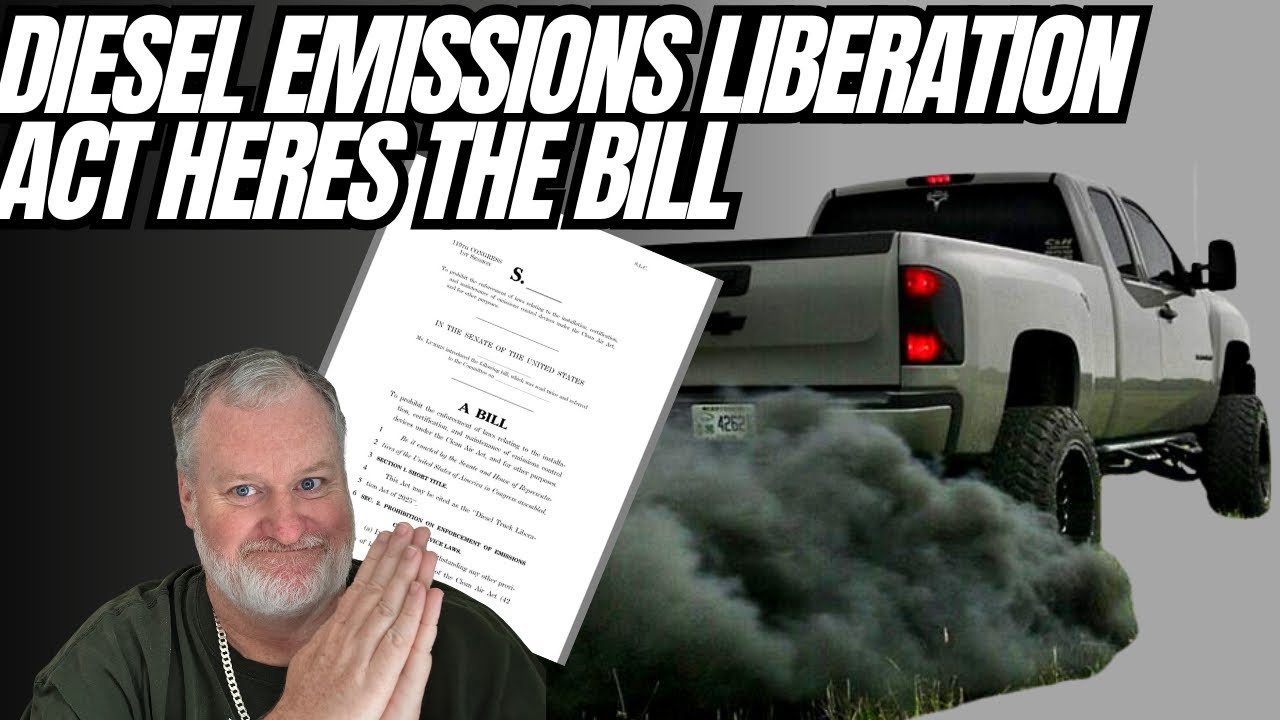
What is up, guys—welcome back to TK’s Garage. You asked for the specifics, so I pulled the bill text and went line by line. The Diesel Truck Liberation Act of 2025 is only three pages—no fluff—and it’s written in plain English. If this passes as-is, it would:
- Shut off federal authority to require emissions hardware or OBD monitoring on vehicles.
- Block EPA from enforcing Clean Air Act provisions against vehicle emissions controls.
- Vacate prior sentences, expunge records, and refund fines tied to emissions violations.
- Legalize “deletes” and protect parts makers, sellers, shops, and owners from federal liability.
That’s not hyperbole—that’s the text. Let’s walk it.
Related Post




What the bill literally says (plain English)
The opening pages carry the title and scope: “to prohibit enforcement of laws relating to the installation, certification, and maintenance of emission control devices under the Clean Air Act.” It then lays out the punch list:
1) No federal requirement to install or maintain emissions gear or OBD.
Manufacturers, importers, distributors—no one can be required by federal law, regulation, or executive order to put emissions control devices or OBD systems on any motor vehicle or engine. Why that matters: OBD is the spine of modern smog programs. Pull that thread and the inspection sweater unravels.
2) EPA loses authority to promulgate or enforce those requirements.
It explicitly pulls EPA’s power under the Clean Air Act to issue or enforce rules that require emissions devices or OBD on vehicles/engines. That’s the foundation, not a side wall.
3) No civil or criminal liability for anything on that list.
Manufacture, sale, import, purchase, use, or modification of a vehicle or engine without emissions devices or OBD cannot trigger federal civil or criminal penalties. Translation: shops, tuners, parts makers, and owners stop living in fear of federal “tampering” actions for deletes.
4) Prior regs are repealed—no force or effect.
Any regulation previously issued under the Clean Air Act (or other federal law) that touches installation, modification, or removal of emissions controls/OBD is void. That is the broom through decades of rulemaking.
5) Vacate, expunge, refund.
If you were fined, found civilly liable, or even imprisoned over these violations, the bill orders vacatur of sentences, expungement of records, and return of money paid in fines. That’s the clean slate section—and it’s huge.
Why the wording matters more than the tweets
Two quiet phrases carry big weight:
- “Notwithstanding any other provision of law.” This is the legal bulldozer that tells courts “start here.”
- “Including regulations and executive orders.” That fences out quick reversals via pen-and-phone. To undo this, opponents would need new legislation, not just a new memo.
That’s why I keep calling it structural. You’re not carving exemptions—you’re changing the rules of the game.
What happens on the ground if it passes
- Deletes become legal at the federal level. Products and calibrations come out of the shadows, and shops can put their name on the invoice again.
- OBD-based smog checks implode. Most states rely on readiness monitors and emissions DTCs, not tailpipe probes. If OBD can’t be required or used as the gate, inspection programs have no teeth.
- Legacy cases get wiped. People like the mechanics prosecuted over “tampering”—even where the mission was keeping school buses, fire trucks, and ambulances running—see sentences vacated and records cleared. Fines go back.
Will states try to stand up their own rules? Sure. But this bill is written to knock down the federal scaffolding those programs rely on. Without OBD as the standardized enforcement layer, a lot of state code gets toothless in practice.
Why three pages beats 300
I like bills you can read without a translator. This one says: no mandate, no enforcement, no liability, repeal the old rules, clear the books. That’s it. You don’t need a footnote to figure out what it does to smog programs, OBD flags, or the “tampering” cottage industry—it’s obvious.
My take
You know where I land: common-sense enforcement has to protect air and reality. The current setup too often punishes by process—sidelining working vehicles over sensor drama, weaponizing OBD codes, and bankrupting small shops through lawsuits that do nothing provable for air quality.
This bill doesn’t nibble, it resets. If it passes intact, diesel owners breathe first; gas vehicles feel the aftershocks when OBD-based inspection regimes lose their backbone. If it gets narrowed in negotiation, watch for a diesel-only core or carve-outs around OBD language—because that’s the pillar.
What to watch next
- Does leadership attach it to must-pass legislation, or keep it standalone?
- Do they keep the vacate/expunge/refund clause? That’s the most politically explosive piece.
- How fast do states pivot if OBD is off-limits for enforcement? Tailpipe probes are slower, costlier, and easier to challenge.
Final word
For years, the system made criminals out of mechanics and held families hostage to check-engine light politics. In three pages, this bill aims to end that. Agree or disagree, at least it’s honest about what it does—and it does a lot.
Drop your thoughts below—keep it respectful, bring receipts, and as always, stay petty, my friends.