






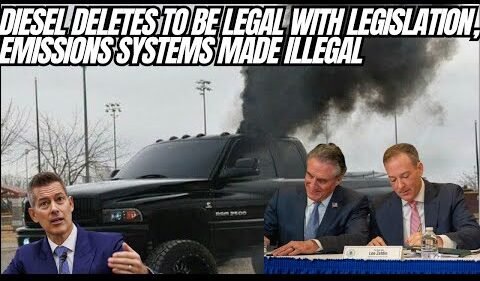
Auto Intel Daily: The “Diesel Truck Liberation Act” Could End Smog Checks—Here’s What’s Really in It
What is up, guys—welcome back to Auto Intel Daily. Quick reset: D.C.’s budget knife fight is dragging on, and while one side is pushing to keep expanded ACA subsidies alive, the other side just put a monster on the table. Wyoming Sen. Cynthia Lummis dropped the Diesel Truck Liberation Act, and if it moves with a funding package, emissions policy in the U.S. flips overnight—diesel first, with massive spillover to gas vehicles.
This isn’t a tweak around the edges. It’s a structural rewrite: no federal mandate for emissions hardware or OBD-based monitoring on diesels, broad limits on the EPA’s ability to enforce vehicle emissions controls, and language that would kneecap the very inspection systems states lean on to run smog checks. That’s why this bill matters far beyond the diesel crowd.
Related Post



Why now—and why it’s different
The political calculus is simple: if must-pass funding needs votes, riders get leverage. Earlier House ideas (like HR 4117) chipped at specific issues; Lummis’s Senate bill goes further. It wraps a headline case—Wyoming mechanic Troy Lake, prosecuted under the Clean Air Act—into a broader push to stop what supporters call overreach that punishes essential services (school buses, fire trucks, ambulances) in cold-weather reality.
Agree or disagree with the framing, the policy stakes are massive: do we keep federal emissions enforcement anchored to OBD and hardware mandates, or do we step back and let operation-ready vehicles run without that surveillance layer?
What the bill aims to do (plain English)
- Ban federal requirements that manufacturers install or maintain emissions control devices and OBD monitoring on diesel vehicles.
- Remove EPA authority to enforce Clean Air Act provisions tied to vehicle emissions controls for diesels and repeal related regs on installing, modifying, or removing those devices.
- Block prosecutions and civil suits over “tampering” when the work is framed as improving or maintaining function—cutting off the nonprofit “citizen-suit” pipeline that’s hammered small shops.
- Vacate prior sentences, expunge records, and refund fines related to diesel emissions-control violations.
Supporters argue that by targeting monitoring itself, the bill would effectively collapse OBD-based inspection regimes, making smog checks unworkable in most states. That’s why you’re hearing “diesels first, but gas gets hit too” in the same breath—because state programs are built around OBD readiness more than tailpipe probes.
The technical hinge: OBD as the enforcement spine
Most modern inspections aren’t sticking a probe in your tailpipe; they’re checking readiness monitors via OBD-II and looking for emissions-related fault codes (O₂ sensors, EVAP, NOx controls, DEF/DPF/EGR on diesels). Remove the legal basis for using that data as an enforcement gate, and you’ve erased the practical backbone of smog checks. You also silence the “check engine” cascade that bricks a truck over a DEF sensor or clogged DPF even when the vehicle otherwise runs safely.
Proponents also cite testing and field experience where properly tuned, de-restricted diesels can perform as well or better than malfunctioning emissions hardware in real-world duty cycles. Critics will challenge those claims, but that’s the scientific fight you’ll see next if this advances.
What changes first if it moves
If leadership actually straps this to a continuing resolution, the immediate shockwaves look like this:
- Shops & fleets: From back-room whispers to front-counter service on repairs and tunes that are currently off-limits.
- States: OBD-centric inspection programs lose their teeth; any state-level workaround hits federal preemption walls.
- EPA & nonprofits: The enforcement model that leans on OBD flags and third-party litigation gets narrowed, maybe neutered.
- Consumers: Fewer “stranded” vehicles over sensor failures; more emphasis on safe operation and verifiable performance, not just codes.
The politics: full send or narrowed deal?
Watch two things. First, does Senate/Hill leadership actually attach this to must-pass funding? Second, if negotiations force changes, does it come out as a diesel-only core (hardware + OBD limits) or does it keep the broad monitoring language that blows up state inspections across the board? Even a narrowed diesel-only version would be the biggest shift in emissions enforcement in decades.
Where I land
You already know my bias: I’m for common-sense enforcement that protects air quality and keeps essential vehicles alive. We can acknowledge real pollution concerns and still admit the current system often punishes by process—OBD faults, parts delays, and lawsuits that wreck small businesses long before facts are sorted.
This Senate bill is the first time in a long time someone has said the quiet part out loud: if the monitoring regime itself is the problem, you can’t fix it with another exemption—you’ve got to change the regime.
Keep it respectful, but get involved
If you care about this—pro or con—now is the window to speak up. Contact your senators, keep your comments civil, and come prepared with data, not just vibes. If you’ve got real-world examples (fleet downtime, safety impacts, inspection failures that stranded emergency vehicles), document them. That’s the kind of story that sways staffers writing compromise language at 2 a.m.
Final word
If this rides with the budget deal, the emissions landscape changes overnight. Diesel owners get relief first; inspection regimes face a reset; the aftermarket will explode, then professionalize. If it stalls, remember—just introducing a bill like this shifts the leverage for whatever comes next.