










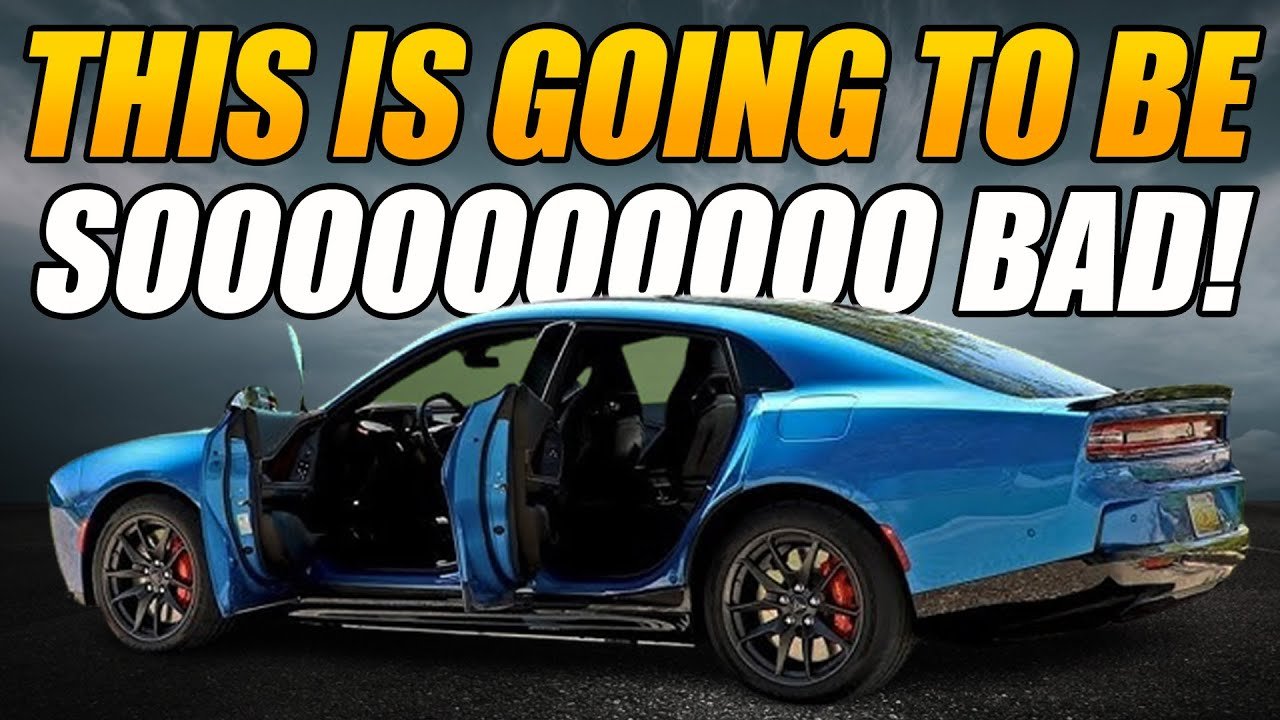
Four-Door Charger Daytona EVs Are Hitting Dealers—Here’s the Reality Check
I’ve been talking about this car for months, and now it’s here: the four-door Dodge Charger Daytona EV is landing at dealerships. I’ve seen the transport pics, heard from sales floors, and watched the forum threads light up in real time. On paper, this thing is a knockout—670 horsepower and 627 lb-ft in a handsome, family-friendly package with a modern cabin and that big-body stance Dodge does so well.
But I’m not going to pretend the last few months didn’t happen. The RT got shelved, the Banshee won’t be here anytime soon, and first-wave Daytona owners have been posting a steady stream of headaches: long service stays, cars bricking on the highway, warning lights galore, and dealers struggling to fix what the software won’t explain. I’ve interviewed some of them on the channel. I’ve watched others document 50–70+ days at the dealer without reliable loaners. That’s not FUD—that’s the reality many folks are dealing with.
Related Post




So here’s how I’m framing this launch, as someone who actually likes the way the car looks and drives when it behaves, and who wants Dodge to get this right.
What’s arriving—and what it costs
The build that’s showing up most in my inbox right now is the Scat Pack four-door. Window stickers I’ve seen show:
- Base around $61,000
- $69,7xx for cars with the Track Pack and popular options
- ~$2,000 destination, which pushes transaction price north of $70K quickly
That’s serious money—especially with the federal EV tax credit gone for this car. Dodge has hinted at factory discounts to compensate, and I believe they’ll have to get aggressive to move volume. The two-door already proved that cheap lease math can outweigh early bugs for a lot of buyers. Without that baked-in $7,500, manufacturers have been quietly replacing the “credit” with direct cash; I won’t be shocked if the Daytona follows the same playbook.
The part nobody wants to hear (but needs to)
The owner forums are still a daily drumbeat of problems. Not “one or two outliers” problems—every single day a new owner posts about a failure, a tow, or a car that won’t handshakes its way out of a software tantrum. Some issues have been patched. Others haven’t. I’ve seen highway shut-offs and weeks-long diagnostic limbo.
If you’re buying early, assume you might be one of the unlucky ones. That doesn’t mean everyone will get burned—some owners are reporting 5,000–10,000 trouble-free miles—but you can’t bank on being that guy.
Why Dodge is launching the four-door anyway
Because the pipeline’s already loaded. These builds were locked months ago, and the four-door opens up the buyer base—families, daily drivers, folks who want the space and stance but don’t want a coupe. If Dodge had a magic pause button until every gremlin was solved, they’d be tempted to press it. They don’t. So the cars ship, and the brand fights fires while they’re on the lot.
Where the value could (and should) land
If Dodge wants momentum, the number that matters isn’t MSRP—it’s the payment. When the two-door moved, it wasn’t because everyone suddenly fell in love with an EV muscle car; it’s because $250–$350/month leases make people say, “For that price, why not?” My prediction: we’ll see factory cash and subvented leases pull the four-door down to that neighborhood fast—especially if early reliability headlines keep stacking.
At $70K+, shoppers cross-shop everything: performance sedans with proven drivetrains, luxury badges with strong dealer networks, even gas Chargers when the Six-Pack and (eventually) V8 configurations arrive. Price this wrong and cars sit. Price it right and people will take a flier—even knowing they might get familiar with a flatbed driver.
If you’re considering a four-door Daytona right now
I’m not here to tell you what to do with your money. I am here to help you avoid surprises.
Do this first:
- Join the owner groups and read the last two weeks of posts. Don’t cherry-pick—take the whole pulse.
- Ask your dealer about EV loaners and turnaround times. If they don’t have a plan, you need one (ride share budget, second car, etc.).
- Get everything in writing—hardware revisions, software levels, any promised updates.
- Push for real discounts or lease support. If the deal isn’t aggressively good, wait.
And set this expectation: make sure this isn’t your only vehicle. If it is, know what you’ll do if it’s down for a week (or longer).
“You’re bashing the car.” No—I want it to win
I’ve driven a demo with friends in the community. When it’s working, the Daytona is genuinely fun—instant torque, composed chassis, and a cabin that finally feels current. The four-door looks right in person, and as a daily you could do a lot worse. If Dodge lands the software, boosts charging performance, and tightens quality, this could be an awesome family hot-rod—especially once the Six-Pack (and hopefully a V8) is in the mix for those who don’t want the EV trade-offs.
But we don’t buy potential—we buy the car that shows up in our driveway. Today, the risk is still real.
My call, on record
- Four-door Daytona Scat Packs will pile onto lots quickly.
- Without the tax credit, factory cash/lease subventions will do the heavy lifting.
- Deep discounts will come faster than people expect—because they have to.
- Reliability will improve over time, but early adopters are still playing beta tester.
If Dodge proves me wrong and these first retail four-doors arrive bulletproof, I’ll be the first to say it and eat this whole article with hot sauce. I want that to happen. I want to tell you, “Green light—go have fun.”
Until then, I’ll keep it simple: if the deal is silly-good and you have a backup car, enjoy the ride. If not, wait for the fixes or cross-shop the upcoming gas variants. The Charger looks the business either way—make sure the ownership experience matches it.
Drop your dealer quotes and forum finds below. If you snag one, tell me what price/payment made it a yes—and keep us posted on how it behaves after delivery.