




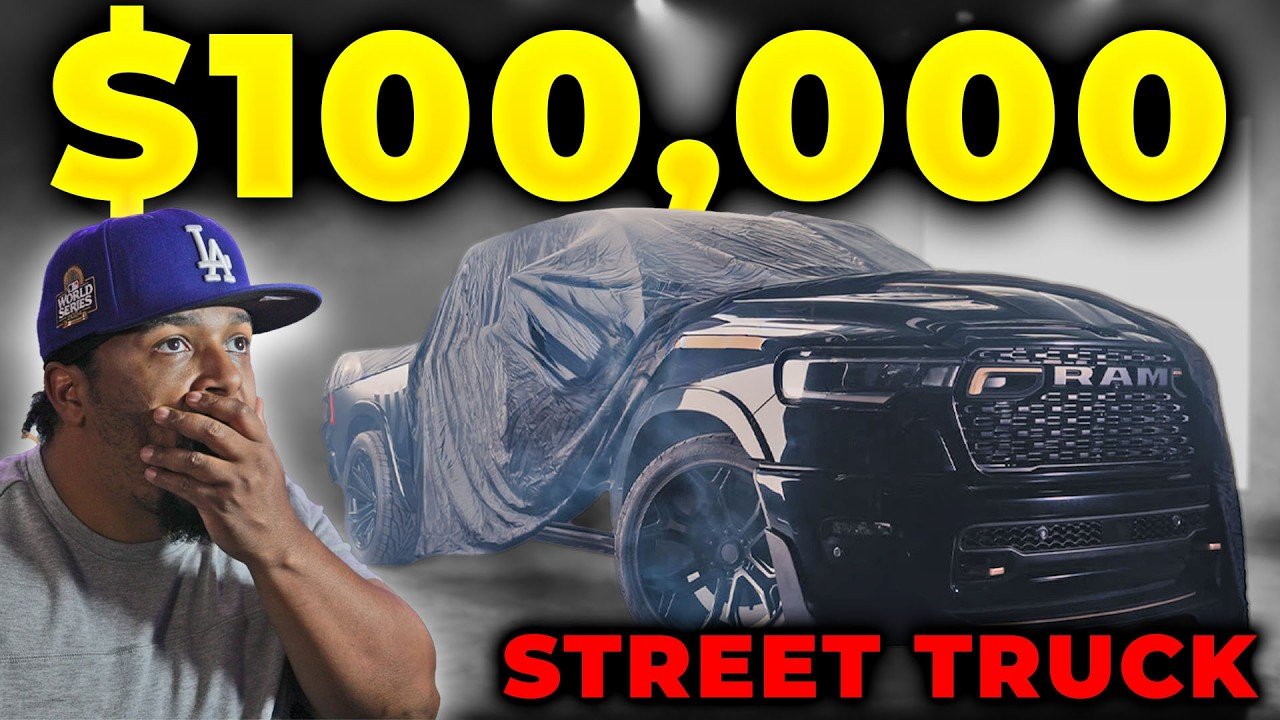
Ram’s $100,000 Street Truck: Parts-Bin Math, Warranty Gotchas, and What It Signals for TRX
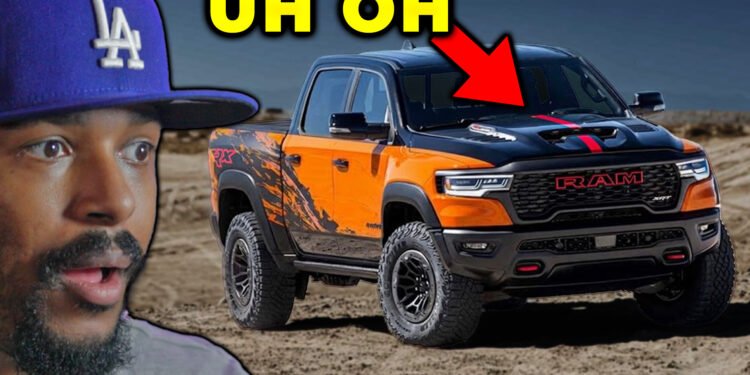
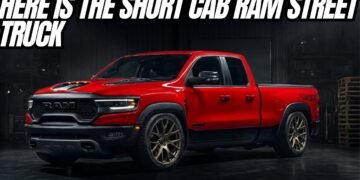
What if I told you Ram’s long-teased street truck finally arrived—and it’s stickered like a tungsten-trim luxury rig without actually being one? That’s the gut punch: a Big Horn-based build ringing the register at ~$100,000, dressed with a lowering kit, cat-back, and a blower, yet missing many features buyers expect at that price—then capped with just a 3-year/36,000-mile warranty while the rest of the Ram lineup waves around 10-year/100,000-mile powertrain coverage. Let’s dissect what this truck really is, why the math doesn’t pencil, and how it could foreshadow TRX pricing.
The Build, Unmasked: Big Horn + Upfit = Six Figures
Strip away the smoke: the bones are Ram 1500 Big Horn with “Night Edition” vibes. The rest is upfitter frosting:
- Supercharger kit (on the 5.7 HEMI): roughly $10–15K retail reality.
- RideTech/Fox-style lowering & suspension: typically $4–5K for hardware; calibration and install add more.
- Cat-back exhaust & intake: call it $2–3K.
- Wheels/tires, ground effects, cosmetics: many thousands more depending on spec and size.
- Fox Factory handling/logistics: the real wallet-vac—engineering, assembly, shipping, and margin stacked on top.
On paper, you might spot ~$20–25K in tangible parts. But once you feed the truck through a third-party performance pipeline (Fox Factory), you’re paying for engineering time, coordination, liability, and two profit centers (Fox + dealer). That’s how a mid-$40Ks Big Horn becomes a near $100K conversation.



Missing at $100K: The Content Gap
Here’s the part that stings: at this price, a buyer expects Limited/Tungsten kit as table stakes—yet this street truck doesn’t bring the full tech suite. The transcript notes no HUD, no adaptive cruise, no hands-free driver assist, no ventilated fronts, and the smaller 12″ Uconnect instead of 14″. You’re paying super-premium money for less luxury and less tech than Ram itself sells on its top trims.
Verdict: It’s the wrong trim ladder for the ask. If Ram wanted to justify six figures, this should’ve been a Limited/Tungsten Street Pack with the lot—then a budget Big Horn Street at $50–$60K for volume.
Warranty: The Deal-Breaker
The hottest potato: no 10yr/100K safety net. This street truck reportedly sticks you with 3yr/36K, and we’ve got no clear upgrade to internal hardware (forged pistons/rods, cooling, driveline) that would make a blown 5.7 a worry-free long-term play. That means you’re gambling six figures on a short warranty while Ford buyers can grab a Lobo and add a factory-friendly blower with much cleaner warranty optics.
Translation: At this price, the risk belongs to Ram, not the customer. Yet the risk is being pushed onto the customer.
Ford Lobo: The $60K Checkmate
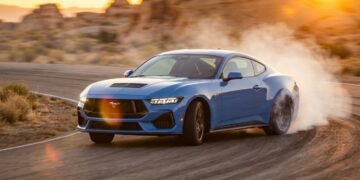
Ford’s Lobo nails the street-truck brief: low, mean stance on a 5.0 with an MSRP around $60K. Here’s the killer move: you can add a supercharger via Ford’s ecosystem and still land around $70–$75K for ~700 hp—$20–30K less than Ram’s build, with cleaner warranty paths and comparable speed.
If you want a fast, lowered, usable street pickup with manufacturer support, the Lobo blueprint simply makes more sense.
What Happened to the 392 Street Truck?
Early chatter suggested a 392 HEMI would headline Ram’s street play. The teaser clues (bronze accents, etc.) even lined up with Wrangler 392’s color language. Now the word is: 392s may appear on high trims (Limited/Tungsten)—aka expensive again—while this first street edition got the 5.7 + blower. It’s the opposite of what the market wants: put the 392 in a Big Horn RT-style build, price it $50–$55K, and print orders. Instead, Ram chased a boutique upfit at luxury money.
The Sales Picture: How Ram Lost the Plot
Ram once sniffed at #2 in full-size trucks. Then prices ballooned, engines aged, and the lineup drifted upscale while the value delta went the wrong way. Result: share slid; GMC is nipping at #3. The fix isn’t to double down on $100K specials. The fix is to own the $50–$60K fun zone with authentic performance and daily livability.
What This Implies for TRX
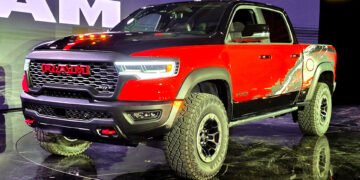
Read the tea leaves. If Ram is comfortable charging ~$100K for a Big Horn upfit, what happens when the TRX returns with genuine long-travel hardware, tires, cooling, driveline, and the big powertrain? The fear: Ram will target Raptor R money instead of undercutting to win back volume.
Smart play: Relaunch TRX from $80–$85K (real transaction), then ladder options. If Ram pins TRX near or above Raptor R, it will sell—but not enough to move market share.
The Build Ram Should Have Launched
Two trims, clear lanes:
- Ram 1500 Street RT (Big Horn-based)
- 392 HEMI (or a stout 5.7 with forged internals)
- Factory drop and Fox-validated calibration
- 22s, W-rated street rubber, genuine cooling upgrades
- Ventilated seats, adaptive cruise, 14″ Uconnect optional
- MSRP $50–$55K → true volume
- Ram 1500 Street Hellcat (Limited/Tungsten-based)
- Supercharged 6.2 or a factory DC kit with warranty clarity
- All the tech (HUD, hands-free, ventilated, big screen)
- MSRP $75–$85K depending on spec
This approach covers both buyers and removes the “why am I paying six figures for fewer features” question.
The Fox Factory Factor: Great Hardware, Wrong Economics
Fox tuning can make a lowered half-ton ride and handle without turning crashy. The problem isn’t Fox; it’s where you put Fox in the value chain. If the upfit happens outside the Ram plant with separate logistics and margins, you inflate cost. Sell the kit through Direct Connection, build it in-plant, and you preserve value and warranty.
The 10-Year/100K Gap: Ram Must Fix This—Now
Ram’s brand just rolled out a headline warranty. Then this halo street truck shows up with none of it. That undercuts the entire message. Either:
- certify this street package under the 10/100 umbrella, or
- offer a factory extended powertrain plan as a $0 add on street trucks to restore parity.
If Ram can’t stand behind the package, why should a buyer?
Buyer’s Playbook (If You Still Want One)
If you’re street-truck-or-nothing and your heart says Ram:
- Demand documentation: exact blower kit part numbers, cooling upgrades, axle specs, and what warranty covers (engine, transmission, diff).
- Price protection: get a signed buyer’s order; lock MSRP; no ADM unless agreed in writing.
- Plan B financing: have a credit union pre-approval ready to dodge dealer games.
- Compare the Lobo build end-to-end—payment, warranty, power, features. Make Ram beat it on value, not noise.
Bottom Line
This street truck should’ve been Ram’s $50–$55K volume hero. Instead, it’s a six-figure Big Horn that asks super-premium money for fewer features, thin warranty coverage, and boutique upfit economics that don’t favor the customer. It telegraphs an ugly risk: a too-expensive TRX comeback that chases prestige instead of share.
The fix is simple—even if the spreadsheets hate it: 392 the budget build, warranty the hardware, integrate the kit in-plant, and price like you want to win. Do that, and Ram doesn’t just launch a cool special—it rebuilds a fanbase.