









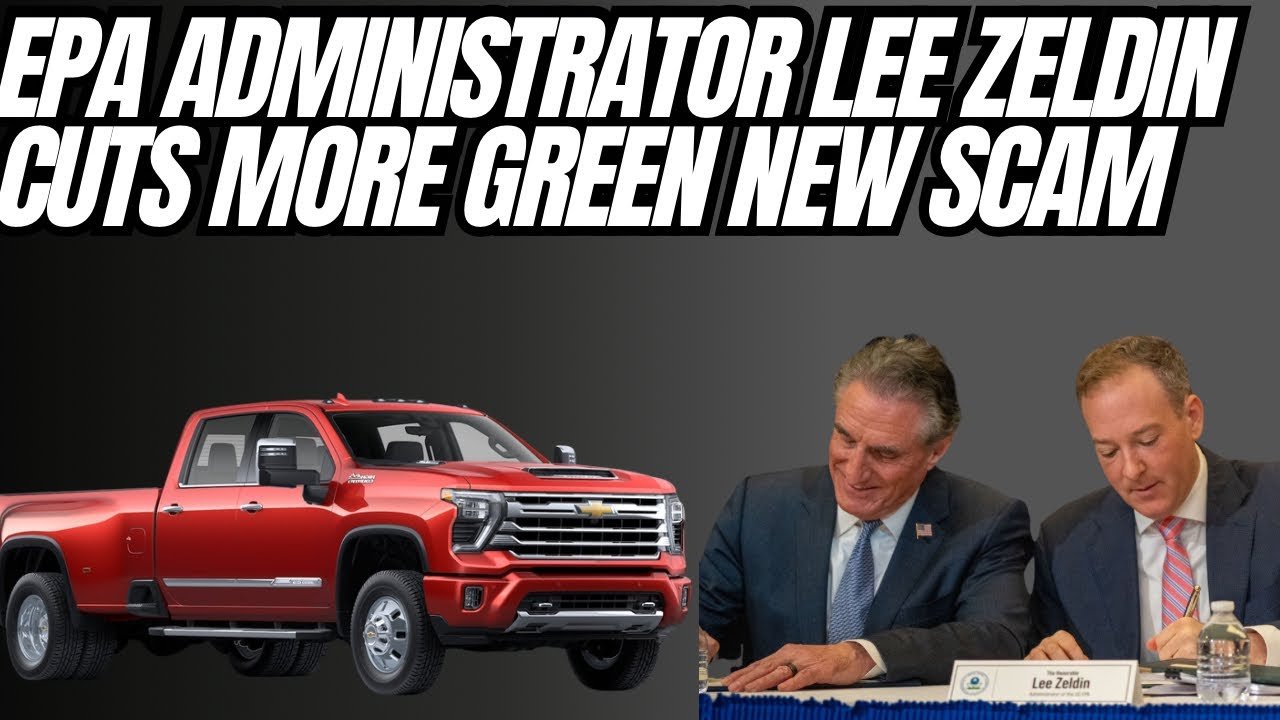
EPA’s Lee Zeldon says $27B in climate grants axed, signals more rollbacks ahead
EPA Administrator Lee Zeldon says his agency has pulled the plug on a sweeping slate of climate-funded grants, arguing they were structured for waste and political favoritism rather than direct benefits to taxpayers. In a Fox Business interview, Zeldon claimed the EPA has now canceled over $29B in total commitments when you include grants, real-estate consolidations, staffing efficiencies, and program closures—roughly three times EPA’s annual operating budget, by his math.
While trade groups for solar installers and labor unions are already suing over the move, Zeldon sounded unmoved—and hinted that bigger policy reversals (like changes to the greenhouse-gas Endangerment Finding) are still on the docket once the White House finishes higher-priority foreign policy business.




What was canceled—and why
- “Solar for All” ($7B): Zeldon said Congress rescinded administration funds for the program and that EPA’s review found a “four-layer pass-through” design where multiple intermediaries would each take a cut before dollars reached end users.
- Greenhouse Gas Reduction Fund (GGRF) balance: In total, he said the EPA has canceled $27B from the GGRF universe.
- Other savings: He cited office space downsizing, staffing efficiencies, media subscription cancellations, and even shutting a “Biden EPA Museum” few people used.
Zeldon’s bottom line: no tolerance for waste, and an expectation that lawsuits will follow every reversal—but that litigation won’t change his course.
Why the solar industry is suing
For installers, financiers, and unions, the GGRF and Solar for All buckets were designed to seed projects in lower-income communities, de-risk loans, and accelerate rooftop adoption. Pulling them back mid-stream scrambles hiring plans, pipelines, and state-level rollout timelines. The suits argue the EPA has overstepped, and that rescinding funds will kill jobs and raise costs for households that were counting on incentives.
The road ahead: Endangerment Finding & fuel rules
Zeldon acknowledged the administration is juggling priorities (he referenced fast-moving Middle East peace developments) but reiterated two tracks are moving:
- Endangerment Finding review. Rolling back or revising the 2009 determination that greenhouse gases endanger public health would reframe how EPA regulates CO₂ under the Clean Air Act. Expect legal fireworks if/when this drops.
- Fuel standardization push. EPA and DOT have been exploring a single national fuel standard, which could flatten boutique blends, reduce supply friction, and, in theory, lower pump volatility. (Separately, the agency has been weighing changes around ethanol content and diesel specifications—hot buttons for both motorists and the trucking industry.)
What it means for consumers and the auto world
- Short term: If grant cancellations stick, expect slower growth in subsidized rooftop solar markets and more courtroom drama than construction activity.
- Medium term: Should EPA finalize national fuel standardization, refiners could simplify output and logistics—potentially lowering costs in blend-heavy states and smoothing supply shocks.
- Long term: Any move on the Endangerment Finding would ripple across vehicle emissions, aftertreatment strategies, and state waiver fights (think CARB vs. federal baselines). Automakers would likely re-model compliance plans yet again.
Why Zeldon keeps saying “we’ll get sued—and that’s fine”
The EPA chief framed the past cycle’s climate funding as a politicized slush that funneled money through layers of friendly NGOs and intermediaries. He’s betting that process flaws—plus Congress rescinding parts of the program—give the agency firm legal footing to unwind it. Whether courts agree will decide how durable these reversals are.
Key takeaways
- $27B in climate-related grants (including $7B Solar for All) are canceled, per Zeldon; lawsuits are already filed.
- Administrator signals more changes coming, including a potential Endangerment Finding rollback and fuel standardization.
- Expect policy whiplash for solar developers, states, and auto compliance teams as the legal dust settles.
- For drivers: standardized fuel could mean less regional price weirdness, but details will determine winners and losers.
Editor’s note: These developments are evolving. We’re tracking the lawsuits and any official rulemaking dockets. If/when the Endangerment Finding review lands—or EPA/DOT publish proposed national fuel standards—we’ll break down the practical effects for drivers, shops, fleets, and builders.