









Alright, let’s cut the noise and set one thing straight: the Dodge Viper changed Dodge forever. You might argue the Charger Hellcat or Demon are peak Dodge, but those cars owe a debt to what came before. For example, Hellcat and Demon lean heavily on superchargers and electronic aids to achieve straight-line dominance. However, the Viper arrived as a ten-cylinder statement of raw ambition and mechanical purity that refused to conform to trends. It wielded a naturally aspirated V10, demanded driver skill, and reshaped how people saw the brand almost overnight. Moreover, this article lists five reasons why the Viper remains, in my view, Dodge’s greatest creation. In addition, I will cover the engine, the analog driving experience, its racing record, brand impact, and timeless design in plain terms. Read these points carefully, and then try to convince me otherwise. Ultimately, the Viper’s story is about courage, audacity, and a refusal to compromise on character. So buckle up: the case for the Viper starts now.
1. The V10 Engine: The Dodge Viper’s Unholy Masterpiece
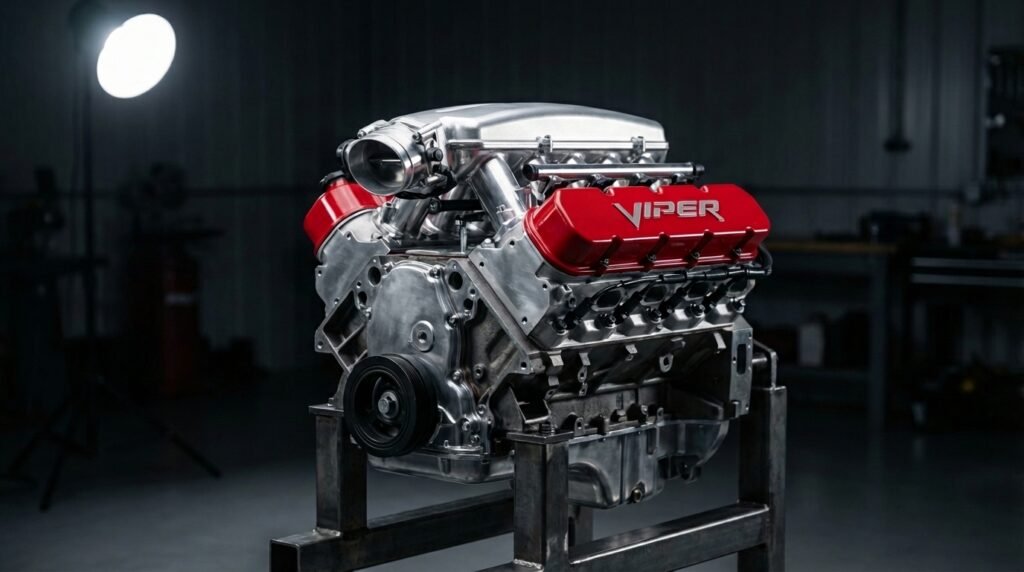
From the start, Dodge rejected a sensible V8 and chose a ten-cylinder layout for effect. That decision made the engine the defining element of the Dodge Viper’s identity and the core reason people still talk about it. Moreover, Chrysler owned Lamborghini in the late 1980s, and engineers in Italy helped refine the concept in important ways. For example, Lamborghini helped recast the iron block into aluminum to cut weight and improve responsiveness. Consequently, the Viper’s V10 emerged as a lightweight, pushrod engine focused more on torque than on high-rev horsepower. In 1992, it delivered about 465 lb-ft of torque, a figure that translated into an almost seismic shove on the road. The engine began as an eight-liter unit making roughly 400 horsepower. By the final generation, the V10 grew to 8.4 liters. It made around 645 horsepower and 600 lb-ft of torque without turbos or superchargers. Importantly, the power came naturally aspirated and unapologetically raw. Overall, the Viper’s V10 became a monument to simple, brutal engineering.
2. The Ultimate Analog Driving Experience
The Viper offered an ultimate analog driving experience that many modern supercars stopped offering. First, the original 1992 RT/10 had almost nothing in the way of electronic aids and it required complete focus. It lacked ABS, traction control, and stability control, and it demanded constant driver attention through every corner. Moreover, the car had quirks such as no real windows, missing exterior door handles, and side-exit exhausts that emphasized function over comfort. For instance, the exhaust could literally burn your leg, so the Viper punished carelessness and rewarded respect. Consequently, driving one felt like an event rather than a convenience. Crucially, every Viper rolled out with a manual transmission, and Dodge never offered an automatic for the model. That fact held across roughly 25 years and five generations and defined the car’s ethos. In addition, while rivals embraced electronics and paddle shifters, the Viper kept faith with drivers who wanted pure control. Ultimately, this commitment made the Viper a pure, unfiltered sports car until the end. It rewarded skill and punished mistakes in equal measure.




3. It Didn’t Just Look Fast, It Won Races
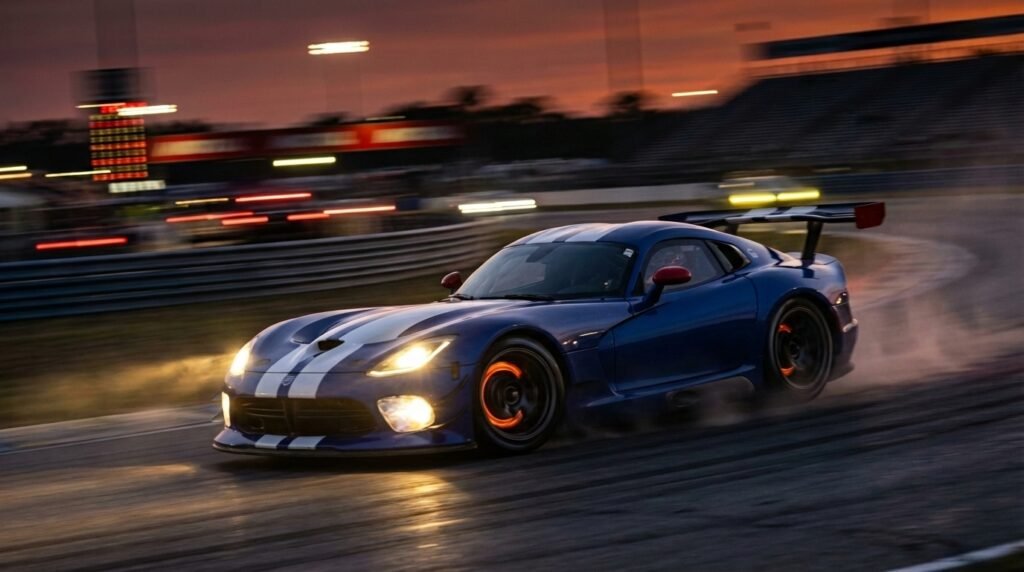
A halo car must prove itself on track, and the Viper did just that and more against established competition. When Dodge introduced the GTS coupe, it created a platform suited for full racing development and endurance duty. Consequently, Dodge partnered with French team Oreca to build the Viper GTS-R for competition in major international events. That race car used the same V10 principles: big displacement, reliability, and straightforward power delivery that favored endurance racing. Furthermore, the Viper GTS-R proved brutally effective against sharper, more sophisticated rivals that relied on more complex technology. From 1998 through 2000, the GTS-R won its class at the 24 Hours of Le Mans three years running, defeating entries from Porsche and Ferrari. In addition, the Viper achieved an overall victory at the 24 Hours of Daytona in 2000, confirming its endurance credentials. Therefore, the Viper’s racing pedigree is not a footnote; it helped define the car’s legend and global reputation. Overall, the Viper showed a raw American brute could out-race Europe’s finest on long circuits.
4. It Single-Handedly Saved the Dodge Brand
In the early 1990s, Dodge built a reputation for minivans and K-cars, not performance excitement, and the Viper changed that perception almost overnight. Then the Viper arrived, and it stunned the public by proving Dodge could produce something wildly different and thrilling. Bob Lutz wanted a modern-day Cobra: simple, brutally fast, and undeniably cool, and the Viper fulfilled that brief as a bold production car. As a result, the Viper emerged from a “what if” project into a genuine production halo that made perfect, improbable sense. Moreover, its existence proved a company making the Caravan could also build a V10 monster that captured imaginations. Consequently, the Viper functioned as the ultimate halo car, demonstrating that Dodge had a pulse and appetite for risk. Importantly, it also created a culture of performance that led to the Street & Racing Technology division. In fact, it paved the way for SRT and high-horsepower models like the Hellcat and the Demon. Ultimately, every wild Dodge you see today owes a debt to the original snake. Therefore, the Viper gave Dodge permission to be audacious again.
5. A Design That Is Both Timeless and Terrifying
You will never mistake a Viper for anything else; the design is instantly recognizable and fierce, and that clarity still turns heads. First, the formula emphasized a ridiculously long hood to house the massive V10 upfront, and proportion became the point. Then the cockpit sat far back over the rear axle, and the decklid stayed short to keep weight distribution and visual balance in check. Consequently, the RT/10’s flowing, muscular lines read as raw American aggression rather than subtlety or nuance. For example, the GTS coupe added a double-bubble roof and a fastback profile that quickly became an icon of the 1990s. Moreover, details like deep side scallops and the crosshair grille cemented an unmistakable profile few designers could replicate. Even today, an older Viper draws more attention than most new supercars. That reaction comes because the design does not hide its intent and because it reads as predator, coiled and ready to strike. Overall, the Viper was a loud, unapologetic celebration of performance and American audacity. Ultimately, it remains an icon and, for many enthusiasts, the best thing Dodge ever made.