










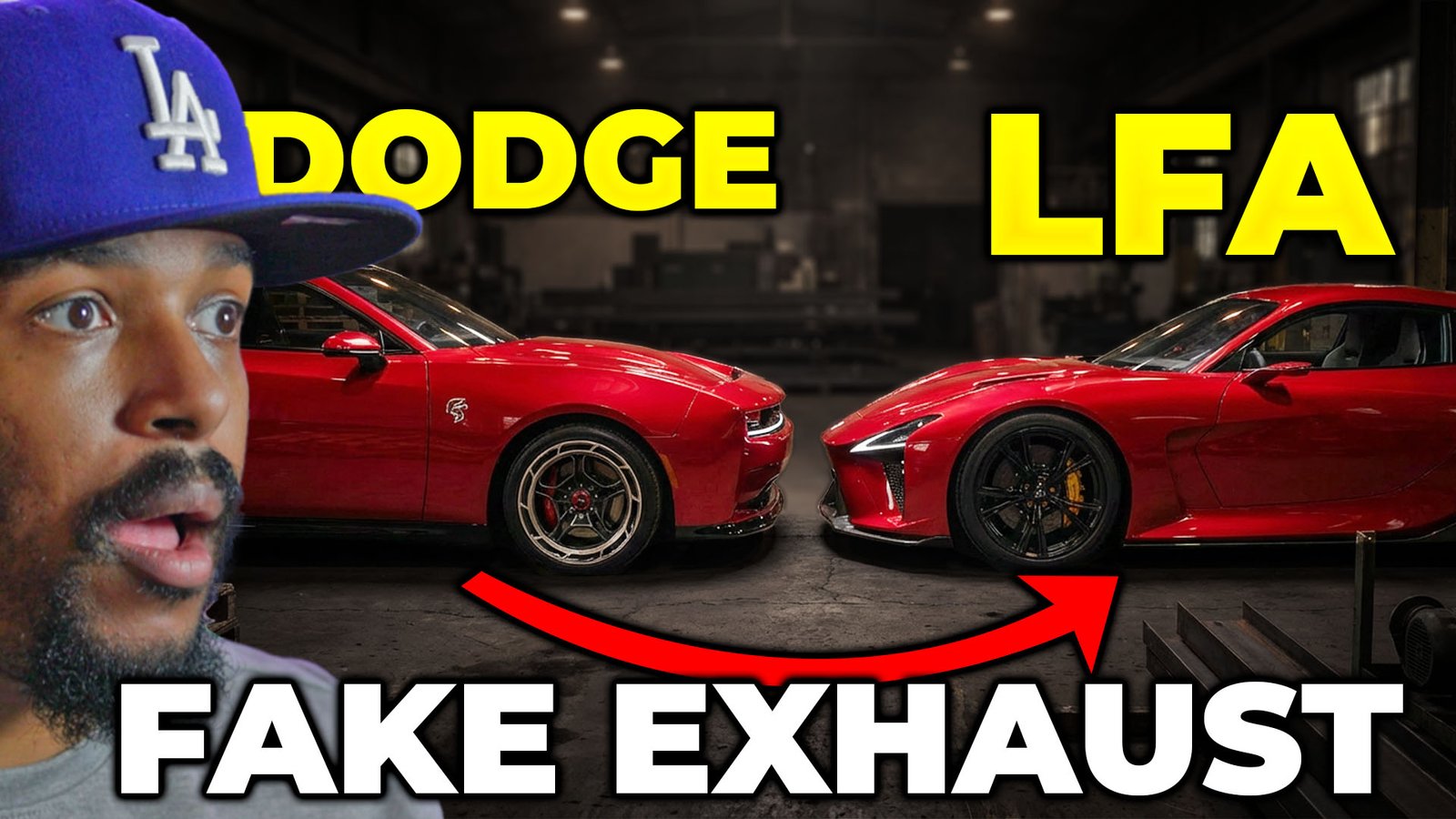
A story of strength often begins with a story of humiliation. Unfortunately, Lexus is walking directly into a trap that has already decimated Dodge. Specifically, reports confirm that the upcoming 2029 Lexus LFA EV will feature an artificial exhaust system. In addition, the manufacturer is testing a simulated manual transmission for this electric flagship. Consequently, they are ignoring the clear warning signs from the market. For instance, the Dodge Charger Daytona EV has faced a disastrous launch due to similar gimmicks.
Fans have begged for a successor to the V10 king for over a decade. However, you must be careful what you wish for in the era of electrification. Lexus is indeed bringing the nameplate back. Yet, they are doing it in the worst way possible. Instead of a mechanical masterpiece, the new Lexus LFA EV is shaping up to be a battery-powered appliance with a speaker. This move mirrors Dodge’s disastrous “Fratzonic” chambered exhaust strategy. As a result, this strategy risks ruining the most sacred badge in Lexus history.




The Dodge Charger Daytona Warning Signs
Lexus should be looking closely at the disaster currently unfolding at Dodge. Dodge took a legendary muscle car and ripped the Hemi V8 soul out of it. Subsequently, they installed a “Fratzonic” system to mimic engine roar using resonators and pipes. However, the industry laughed at this attempt. In fact, Dodge even added a stealth mode because the noise was so annoying. Most drivers simply turn it off because it feels like a child making car noises with their mouth.
The market response to this strategy has been brutal. For example, Dodge effectively suspended production for the 2026 Charger Daytona R/T due to weak demand. Furthermore, executives canceled the Dodge Banshee, which was supposed to feature simulated shifts and the loud exhaust. The “Brotherhood of Muscle” simply refused to buy it. Consequently, Dodge lost nearly 50% of its sales by stepping out of its V8 lane. Despite this, Lexus seems determined to execute the same failed playbook.
Destroying The V10 Legend
To understand why this is an insult, we must look at the original car’s legacy. The original LFA, built from 2010 to 2012, was a religious experience. Lexus produced only 500 units. Crucially, it featured a front mid-mounted 4.8-liter V10 engine co-developed with Yamaha. This engine was a mechanical marvel. It revved to 9,000 RPM so quickly that an analog needle physically could not keep up. Therefore, Lexus had to install a digital tachometer.
Today, that legacy commands a massive premium. For instance, good examples of the original LFA are trading for at least $600,000 on sites like Bring a Trailer. Moreover, special Nürburgring package versions are hitting prices between $1 million and $3 million. The primary reason for this value is the sound. Experts consider it the best-sounding road car ever made. It screams like a Formula 1 car from the golden V10 era. In short, the engine character is the soul of the car.
Electric Cosplay vs. Mechanical Soul
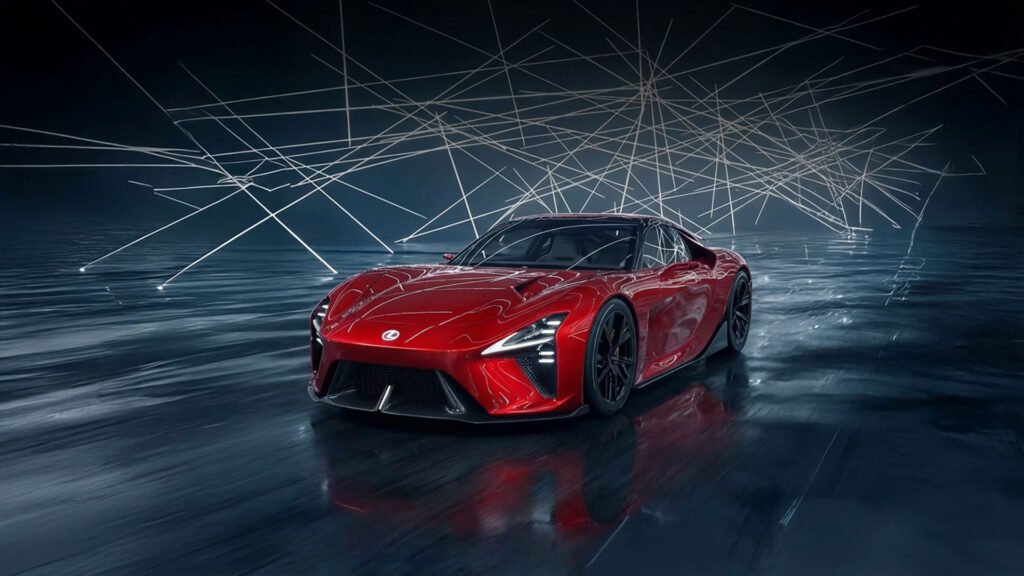
The new Lexus LFA EV concept completely abandons this mechanical heritage. Lexus positions it as a battery-electric technology showcase. The brand has stated that the LFA name is not bound to internal combustion. However, because it is an EV, it is naturally silent. Lexus knows enthusiasts do not buy supercars to drive around in silence. Therefore, reports confirm that fake noise is a lock for the production model. Even worse, they are developing an interactive manual drive system to simulate gear shifts.
This approach turns a legendary supercar into a piece of expensive cosplay. Who wants to pay $500,000 for a fake sound when the original was authentic? Basically, they are stripping the engine out and replacing it with an amplifier and a subwoofer. If a driver wants noise and emotion, they will buy a gasoline car. Conversely, if they buy an EV, they usually accept the silence and instant torque. Adding a Bluetooth speaker to the rear bumper only adds weight. Ultimately, this reduces the LFA from a legend to a meme.
The Toyota V8 Solution Exists
The most frustration comes from the fact that a solution already exists. Technically, the Lexus LFA EV shares its architecture with the upcoming Toyota GR GT3 race car. However, the Toyota version is receiving a glorious powertrain. Specifically, a twin-turbo hybrid V8 engine will power the GR GT3. Since both cars share the same chassis, we know the platform can physically accommodate a gas engine.
Lexus has a clear option here. For example, they could simply put that twin-turbo V8 inside the LFA successor. They could make it a hybrid if necessary to meet regulations. This would give the car a real heart, a real exhaust, and a real mechanical soul. While V10s are disappearing, a high-performance V8 is a worthy alternative. Fans would undoubtedly prefer a real V8 over a fake V10 soundtrack blasting through speakers. Yet, Lexus currently chooses the software route over hardware engineering.
The EV Market Reality Check
Lexus is not just ignoring Dodge; they are ignoring the entire industry. The formula of slapping an iconic nameplate on a battery pack is failing across the board. For instance, Ford F-150 Lightning sales have crashed. Specifically, losses have piled up for years, and Ford is reconsidering the truck’s future. In addition, GM had to pause production at their Factory Zero plant. This layoff occurred because vehicles like the Hummer EV and Escalade IQ are not selling as projected.
Legacy automakers assumed customers would blindly line up for EVs. However, time has proven this assumption wrong. The F-150 is a tool, and the Charger is a muscle car, yet both failed to convert their audiences. The LFA is even more special; it is a mystical unicorn. Turning it into a tech gadget with fake soul creates a product that nobody asked for. Fans did not ask for better software. Instead, they asked for the feeling of the original.
Preserve The Badge Or Rename It
If Lexus insists on making this a battery-electric vehicle with a speaker system, they must not call it an LFA. They should create a new nameplate for this experiment. For example, they could call it the “Lexus E-GT.” Protecting the LFA badge is paramount. You do not build a condo on top of a cathedral. Similarly, you do not put a soundbar on an LFA. The original car is an appreciating asset that enthusiasts dream of owning. In contrast, this new EV successor risks becoming a joke before it even hits the showroom floor.
Currently, Lexus has two distinct choices. Option A is to use the V8 hardware from the Toyota GR GT3. Option B is to rename the car and save the LFA legacy from embarrassment. Dodge learned this lesson the hard way after alienating their fanbase. Lexus still has time to correct course. Unfortunately, doubling down on fake “Fratzonic” style technology proves that legacy automakers still lack understanding of enthusiasts.