

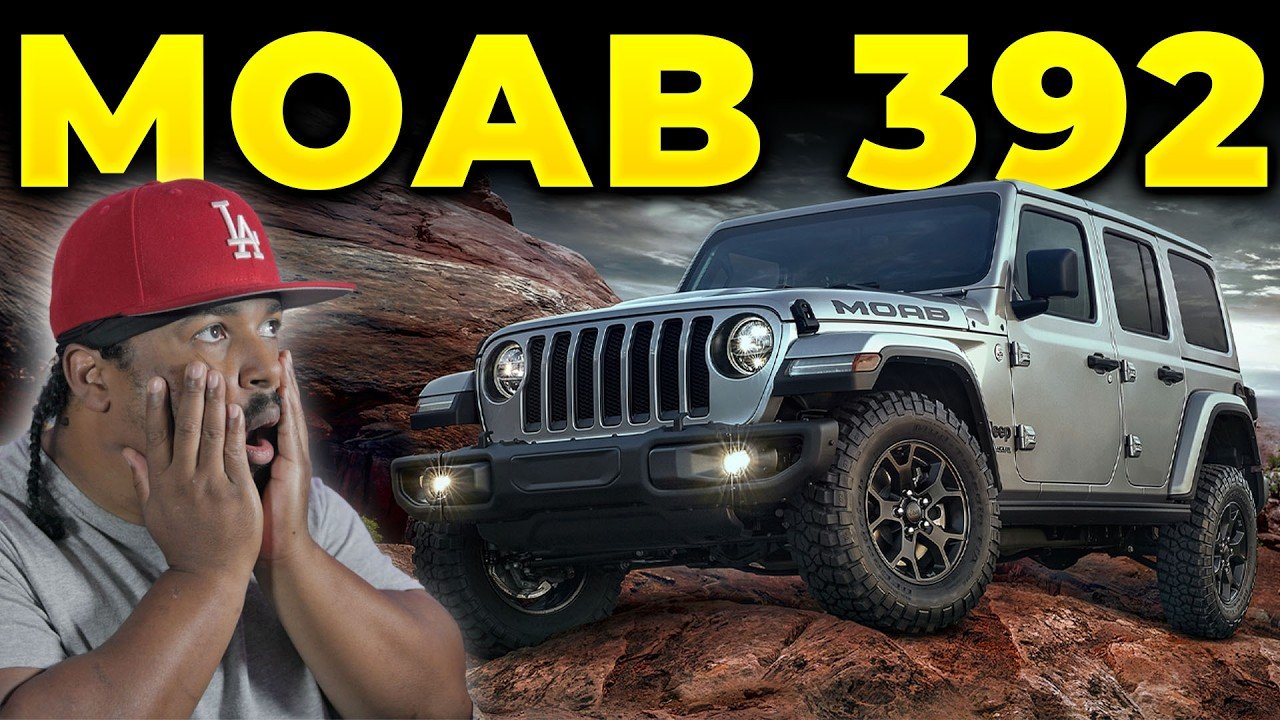
Wrangler 392 MOAB (Leaked?): How Jeep Could Sneak a Cheaper V8 Into Showrooms
Jeep might be cooking up the 392 Wrangler people would actually buy: a MOAB edition that ditches the Rubicon’s most expensive off-road hardware, keeps the V8 grin, and lands at a price that doesn’t make you question reality. A source screenshot from dealer systems lists a “Wrangler 392 MOAB”, and if you know Jeep history, that badge isn’t random—MOAB has been Jeep’s way to blend daily-friendly Sahara road manners with selective Rubicon hardware. If Jeep applies that formula to the 6.4L Hemi, we could be staring at a sub-$100K 392 that finally makes sense.
Why a MOAB 392 Exists (On Paper)
- Rubicon 392 pricing is out of orbit. A six-figure Wrangler narrows the buyer pool to collectors and diehards. Meanwhile, within Stellantis, a Durango 392 (now R/T) hovers around the high-$40Ks, which makes the Wrangler 392 look wild by comparison.
- Compliance pressure eased. With emissions penalties and targets in flux, brands have air cover to offer V8s in trims that sell rather than quarantining them at ultra-high prices.
- Jeep needs momentum. Wrangler volume and excitement depend on attainable hero builds, not just halo stickers. A MOAB 392 can be that “I can swing it” V8.
What a MOAB 392 Likely Is (and Isn’t)
Likely the base: Sahara (on-road comfort, nicer cabin)
Borrowed bits from Rubicon: Select transfer case/lockers or gearing where feasible, but not the full heavy-duty bill of materials that drives price (think a more street-biased suspension, less hardcore tire/wheel, and fewer costly rock-crawl parts).
Powertrain: 6.4L (392) Hemi V8 with the familiar 8-speed; Jeep doesn’t need to reinvent the driveline for a MOAB.
Rubber & stance: Street-oriented all-terrains or performance A/Ts; less lift than a Rubicon, better aero, calmer highway manners.
Interior: Keep premium touches (heated/ventilated seats where available, nicer trim), skip the most expensive specialty hardware.
Price target: If Rubicon 392 stickers at six figures, MOAB could trim $10–$20K by deleting hardcore equipment and bundle creep—landing somewhere in the $80Ks–low $90Ks (and potentially transacting under $100K). That’s still pricey, but it stops competing with German luxury and starts competing with reality.



What it isn’t:
- A rock-crawl king. MOAB is about a balanced Wrangler—daily first, weekend trail second.
- A parts-bin special with no identity. Historically, MOAB brought real equipment changes, not just stickers.
Why Jeep Would Choose MOAB Over Simply Slashing Rubicon 392 Price
- Residuals & goodwill. Deep-cutting Rubicon 392 nukes used values and angers recent buyers. A new trim provides a price off-ramp without devaluing existing owners.
- Manufacturing logic. Swapping to a Sahara-centric bill of materials means lighter weight and lower cost without re-certifying an entirely new powertrain.
- Marketing clean room. MOAB signals intent: “street-friendly V8 Wrangler” instead of “discount Rubicon.”
The Competitive Math (Finally) Looks Reasonable
- Versus Wrangler Rubicon 392: You trade a bit of trail supremacy for thousands off and better daily manners. For most buyers, that’s a win.
- Versus Bronco V8 (which doesn’t exist): Jeep restores bragging rights at a broader price band—big sound, big torque, still a Wrangler.
- Versus Durango 392: Different missions. Durango wins on family practicality per dollar; MOAB 392 wins on open-top, short-wheelbase charm you can’t get from a three-row.
What to Watch for in the Spec Sheet
- Axles/lockers: Rear locker only? Selectable modes? Expect simpler, lighter than Rubicon.
- Transfer case/low range: A street-friendly ratio is likely; full Rubicon crawl gear would add cost Jeep is trying to avoid.
- Tires: Expect less aggressive tread and sizes that keep gearing sane and top speed higher.
- Cooling & brakes: V8 + highway duty demands upgraded cooling and beefier brakes, even without Rubicon’s trail focus.
- Weight: Dropping heavy trail hardware can shave tens of pounds, improving ride, braking, and fuel economy (relatively speaking).
Pricing Scenarios (Realistic Lanes)
- Best-case enthusiast win: High-$70Ks to low-$80Ks starting—instant line out the door.
- Likely lane: Mid-$80Ks–low $90Ks MSRP, transacting under $100K; still a meaningful gap below the Rubicon 392.
- Worst case: Cosmetic MOAB with Rubicon pricing—buyers shrug.
How This Ripples Across Stellantis
- Ram & TRX: A saner Wrangler 392 price pressures Ram to stop floating six-figure builds on mid-trim bones.
- Charger/Challenger future: If Jeep proves V8s can sell with balanced spec (not just max hardware), Dodge has a blueprint for 392 street trims that aren’t boutique money.
- Dealer strategy: A MOAB 392 is easier to stock and sell than a six-figure rock-crawler. Expect fewer ADMs if volume is real.
Buyer Playbook (If You’re Interested)
- Get on a list early. Even rumor-stage MOABs attract deposits; insist on written terms (price protection, refundable until order code).
- Spec smart. Don’t re-Rubicon your MOAB—keep it light and street-biased to preserve the value proposition.
- Warranty clarity. Confirm powertrain coverage and any differences from Rubicon 392. Street duty is easier on parts, but V8s love cooling—verify what’s upgraded.
- Cross-shop reality. If dealers push ADM, compare payments against Durango 392 and even Ram builds; make Jeep earn the premium with uniqueness, not just the badge.
Bottom Line
If the leaked “Wrangler 392 MOAB” is real, Jeep is finally reading the room. A Sahara-centric, V8-powered MOAB trims the fat Rubicon doesn’t need for Monday–Friday life, keeps the heart (392 thunder), and opens the door to sub-$100K transactions that bring more buyers back into the fold. That’s not just a new trim—it’s a reset button.
If Jeep nails the spec (cooling, brakes, gearing) and the price (clear gap below Rubicon 392), the MOAB 392 becomes the Wrangler V8 most people actually want to drive—and can plausibly afford.