










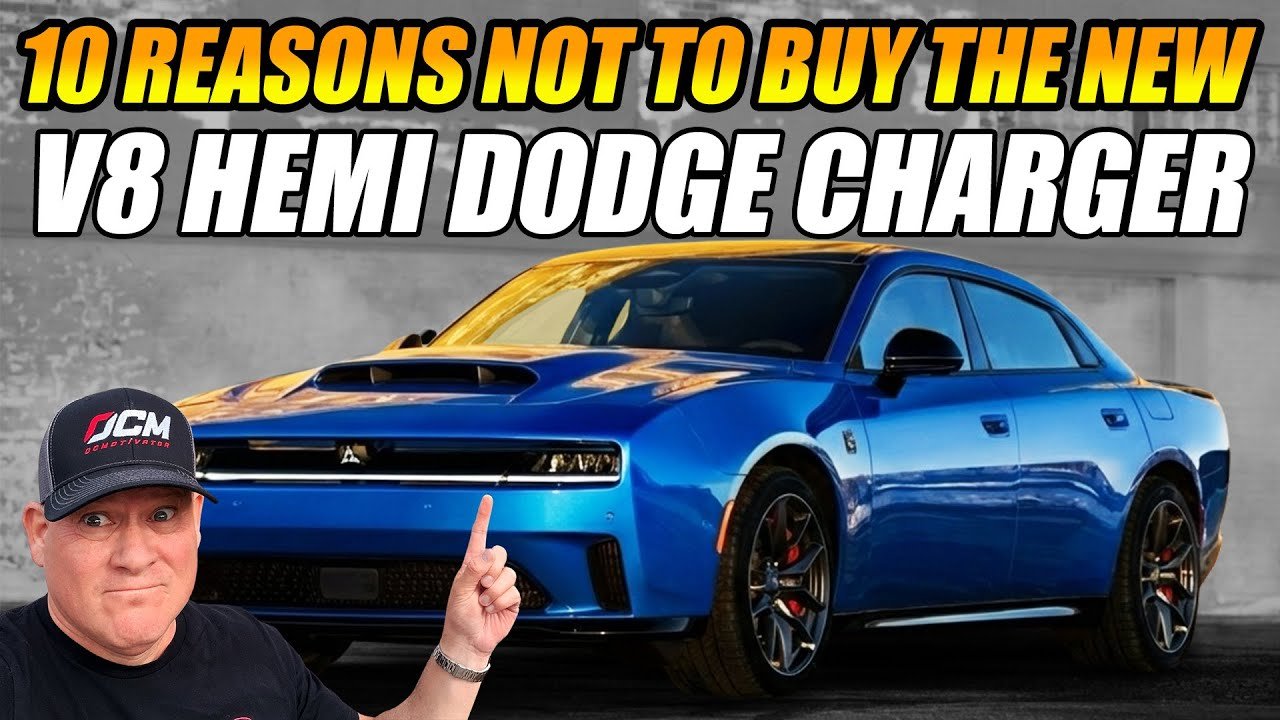
We are back with a major update regarding the future of muscle cars. Recently, Dodge has touted their new models repeatedly. For example, they have shown us the Daytona, the Six-Pack, and the Cat Pack RTS. Additionally, they have pushed inline-six engines and electric powertrains aggressively. However, the number one comment I receive on every video remains the same. Everyone says, “I am going to wait for the V8.”
Personally, I am confident the V8 is coming. Dodge knows they need to deliver a new V8 Dodge Charger to the faithful. In fact, they absolutely should bring back the Challenger as well. Ending the Challenger production was a massive strategic error. If they kept selling the Challenger as a Hellcat alone, sales would likely dwarf the Daytona. Unfortunately, killing the Challenger left no bridge to the future. Consequently, we are stuck in a bad place waiting for this “abomination” electric thing.
Related Post




Now, everyone is simply waiting for the Hemi return. However, I have compiled 10 reasons why you should probably not wait. Instead, you should go find a nice “Last Call” Dodge Challenger or Charger today. Find a clean 2021 or 2022 Hellcat with a good Carfax. Buy that car and drive it like you stole it. Here is why waiting for the new model is a risk.
1. The “First Run” Problems
The first run of any new vehicle is notoriously problematic. Unfortunately, there is simply no way around this fact. For the first couple of years, manufacturers must work through significant bugs. For example, we saw this clearly with the new Hurricane engines in the Grand Wagoneers. As a result, early adopters often face frustrating reliability issues immediately.
Personally, I do not want to be the test subject working through those initial bugs. Conversely, a used Challenger with 177,000 miles often runs perfectly if maintained. If you change the oil and stay on top of maintenance, older models are solid. Furthermore, if you do encounter a problem, the fix is usually cheap and easy.
2. Excessive Complexity
Modern cars have become insanely complex. Despite talk of rolling back emissions regulations, cars will remain highly technical. For instance, new models will feature massive iPad-style screens, ambient lighting, and heads-up displays. Although this technology looks flashy, it eventually costs a fortune to fix.
Any failure under the hood of the new Dodge Charger will require a dealership visit. Sadly, you simply cannot work on these cars in your driveway. In contrast, the outgoing Dodge Challengers and Chargers are accessible. In fact, they are likely the last cars where you can still dig under the hood yourself.
3. Unproven Parts and Supply Issues
The new V8 Hemi Dodge Charger will utilize brand-new, fabricated parts. However, these components remain largely untested in the real world. Recently, we discovered that Dodge did not produce enough unique parts for the Charger Daytona EV. Consequently, owners faced delays.
Even with the Demon 170, there was no surplus of parts when problems arose. Therefore, if you buy the new model immediately, expect supply chain headaches. You might deal with durability issues and cheapness that you simply must endure. Overall, these unproven parts are a significant gamble for early buyers.
4. The Corporate Cost-Cutting Culture
Stellantis spent years under Carlos Tavares focusing aggressively on cost efficiencies. This situation reminds me of a story about a famous soup shop in New York City. Originally, the owner made the best soup, and lines formed daily. Eventually, however, a massive conglomerate bought him out to run it “like a business.”
First, the new owners fired the old-time employees and replaced them with cheaper labor. Then, finance guys suggested adding a little more water to the soup to increase profit margins. Customers didn’t notice at first. So, the next quarter, they added even more water and used cheaper ingredients. Eventually, the soup was just hot water, and the business went bankrupt.
Unfortunately, this mirrors the situation at Stellantis. They traded experienced engineers for cost cuts. While leadership changes are happening now, the team developed the new Charger during that era of extreme cutting. Therefore, quality issues are highly likely.
5. Depreciation vs. Appreciation
Depreciation on new cars is currently astronomical. For instance, a brand-new Daytona might lose 40% to 50% of its value in just six months. This rapid loss of value forces you to lease because owning the asset is financial suicide.
On the other hand, five-year-old Hellcats are still selling for over $60,000. Surprisingly, these older cars are holding value or even appreciating. Effectively, the older models are assets; the new ones are financial liabilities.
6. Loss of Heritage
The 2023 and prior body styles are downright iconic. Twenty or thirty years from now, people will still love the look of the “Last Call” generation. Additionally, the aftermarket catalog for these cars is massive.
For example, if you own a current Hellcat, you can buy catch cans, exhaust upgrades, or brake pads anywhere. Parts are everywhere. In contrast, the new cars will not have this support ecosystem for a very long time.
7. Higher Maintenance Costs
Routine maintenance on the new platform will be a nightmare. For instance, you often have to remove significant amounts of equipment just to perform a simple oil change. Consequently, this labor time drives up regular maintenance costs significantly.
Furthermore, if they add systems like e-Torque to the new V8, complexity skyrockets. We are not dealing with simple mechanics anymore. Overall, keeping the new car on the road will cost more money year after year.
8. Losing the Purist Appeal
Dodge vehicles traditionally do not lose weight. If the new Charger arrives with a V8, it will likely be All-Wheel Drive. Consequently, it will be extremely heavy. It might be one of the fastest cars on the road, but the feel will change.
Between the weight and a potentially different transmission, it may lose its “muscle car” soul. As a result, purists might reject the modern driving dynamics in favor of the raw, RWD feel of the older generation.
9. Boosting the Value of Old V8s
Many assume a new V8 will kill the value of the old ones. However, I believe the opposite will happen. The new car will essentially make the older models instant collectibles. Specifically, the new version will be full of computer technology that won’t translate well in 20 years.
However, the analog dashes and Uconnect systems of the 2023 models will still work decades from now. They are simple. Therefore, long-term resale value will likely favor the 2023 and prior models over the new “junk” coming out.
10. Expectations vs. Reality
Finally, we must manage our expectations. Buyers expect the return of an affordable, iconic muscle car. In reality, however, they will likely get a mass-produced, cost-cut vehicle with a staggering price tag.
Sure, it will have glass roofs and digital screens. But the price will be too high. For example, a fully optioned Scat Pack is already near $70,000. Thus, a new V8 Charger will likely start around $80,000 and push $100,000 with options. We want cheap horsepower, but that era is gone.
Conclusion
If Dodge were smart, they would strip out the screens, put in roll-up windows, and sell a cheap V8. We would buy that instantly. However, I don’t give their board of directors that much credit. So, do not wait for a car that will be overpriced and complicated. Instead, find a Last Call model now and enjoy it.